









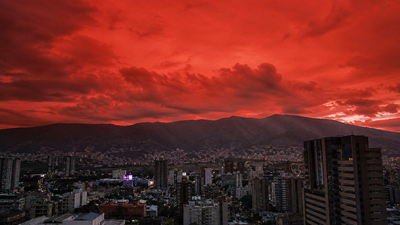
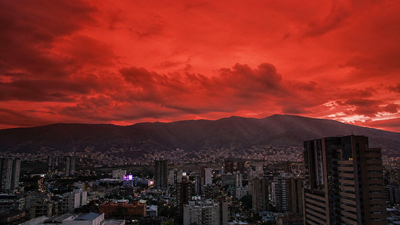
Just days after powerful earthquakes devastated parts of Venezuela, residents of Caracas looked up to witness another extraordinary sight: a sky glowing an intense crimson red as the Sun dipped below the horizon. Videos of the spectacle quickly spread across social media, prompting speculation that the phenomenon was connected to the recent seismic disaster. While the timing fuelled rumours of so-called “earthquake lights” and other unusual explanations, atmospheric scientists say the striking display has a far more familiar cause. Known locally as a candilazo, the vivid red sunset results from a combination of sunlight, airborne particles and atmospheric conditions. Although the recent earthquakes may have heightened public anxiety, researchers say the crimson sky was an example of well-understood atmospheric optics rather than evidence of seismic activity.
What caused the blood-red sky over Caracas after the Venezuela earthquakes
On the evening of 30 June, the sky above Caracas turned an unusually deep shade of red, with videos showing neighbourhoods bathed in crimson light. One widely shared clip posted by Venezuelan social media accounts captured the dramatic scene as residents watched the glowing horizon in astonishment.The viral footage by an X user @Ultimahsv can be seen here:The spectacle occurred less than a week after Venezuela was struck by a rare seismic doublet, in which two powerful earthquakes occurred just 39 seconds apart, causing widespread destruction across parts of the country. The close timing led many people online to wonder whether the crimson sky was somehow related to the earthquakes.
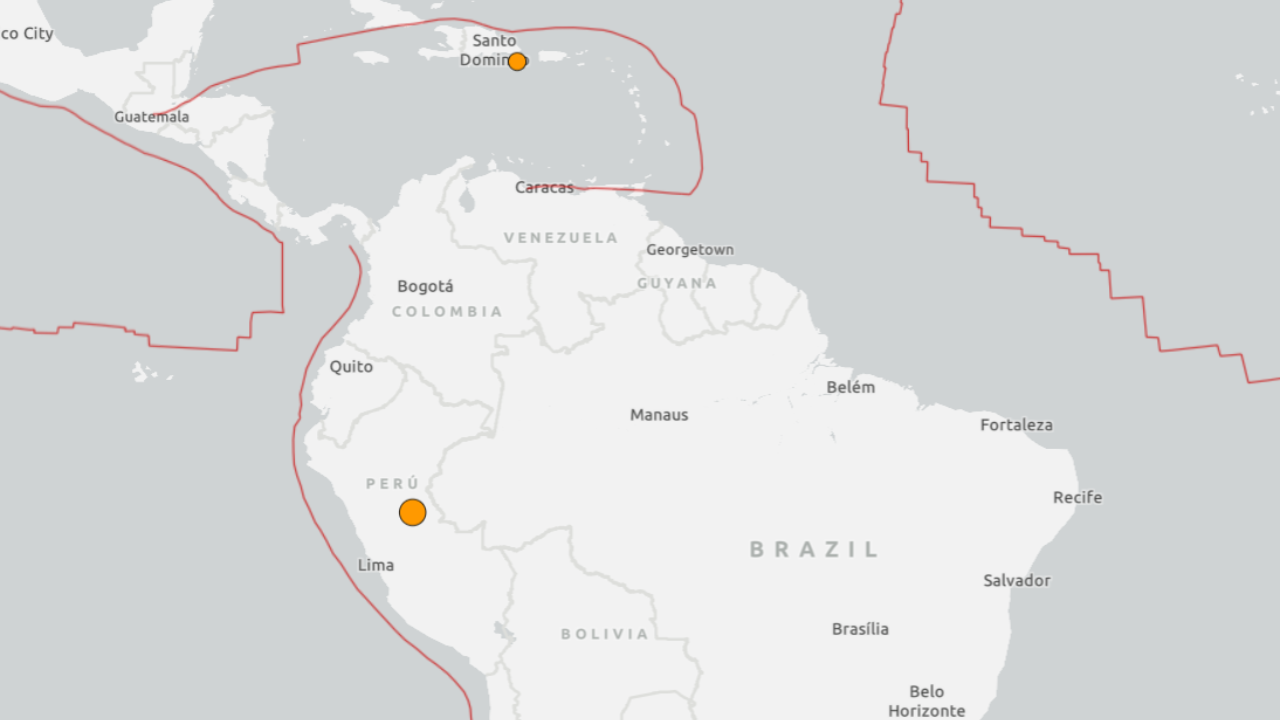
Image: U.S. Geological Survey (USGS)
There is no evidence that the red sky was caused by seismic activity. While dust from collapsed buildings may have added small amounts of fine particles to the atmosphere locally, researchers explain that the dominant cause was a naturally occurring atmospheric phenomenon known in Venezuela as a “candilazo.”
What is a ‘candilazo’ and why does it occur
The term candilazo is widely used across Venezuela and parts of northern South America to describe exceptionally vivid red or orange sunsets. Although the name is regional rather than scientific, the underlying physics is well understood.As the Sun approaches the horizon, its light must travel through a much greater thickness of Earth’s atmosphere than it does during the middle of the day. Along this longer path, shorter blue and violet wavelengths are scattered away by molecules in the atmosphere through Rayleigh scattering, leaving longer red and orange wavelengths to dominate the sky.According to NASA, Rayleigh scattering is:“Rayleigh scattering is an important process affecting the travel of light through the atmosphere. This is particularly true in the ultraviolet region, since the amount of light that is scattered is much greater at shorter wavelengths than at longer wavelengths.”
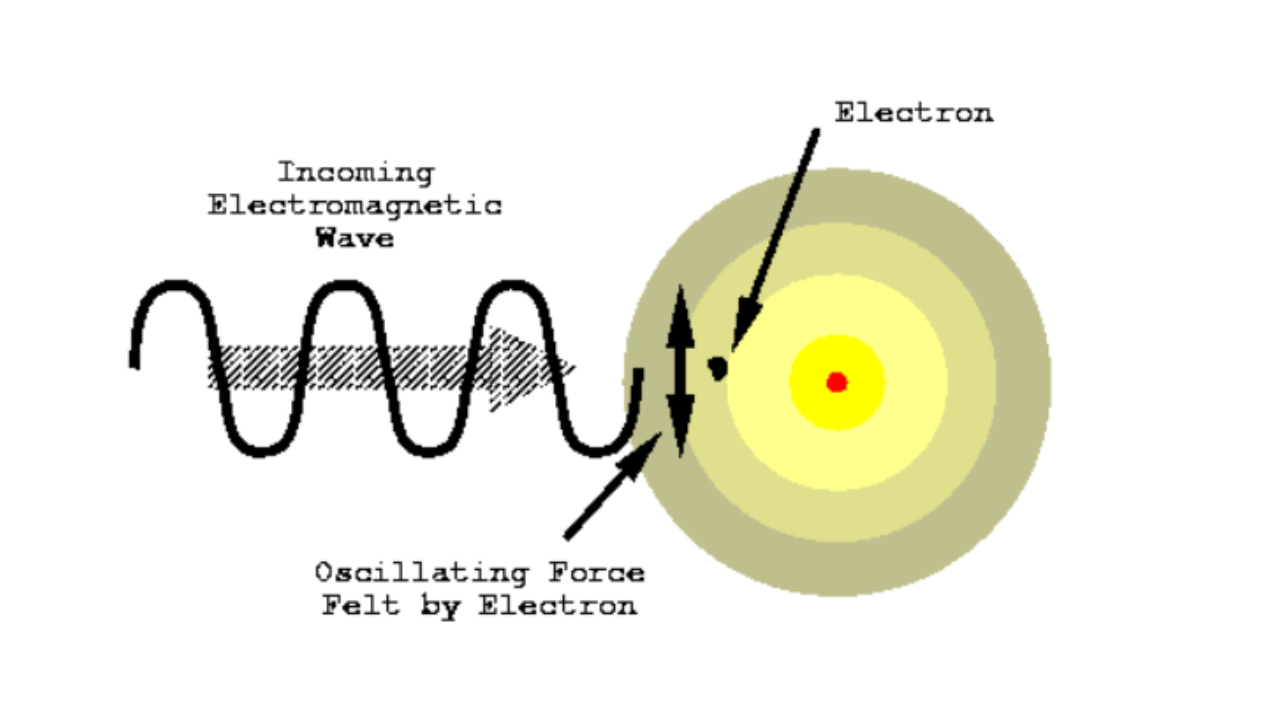
Image: NASA
The effect becomes even more dramatic when the atmosphere contains additional fine particles such as dust, smoke, sea salt or aerosols. These particles enhance the scattering of shorter wavelengths while allowing reds and oranges to become increasingly prominent, producing the intense glow associated with a candilazo.Meteorologists note that northern South America periodically experiences episodes of Saharan dust, carried thousands of kilometres across the Atlantic Ocean by trade winds. These dust plumes can further intensify sunset colours by increasing the concentration of airborne particles that scatter sunlight.According to NASA’s Earth Observatory, Saharan dust regularly reaches the Caribbean and northern South America, influencing air quality, cloud formation and the appearance of sunsets across the region.
Is the red sky linked to earthquakes or a natural atmospheric phenomenon
The appearance of the crimson sky shortly after Venezuela’s deadly earthquakes inevitably encouraged speculation about a connection between the two events. However, geophysicists stress that earthquakes cannot be predicted from atmospheric colours, nor is there scientific evidence linking ordinary red sunsets with seismic activity.Researchers have investigated reports of unusual luminous phenomena associated with some earthquakes, often referred to as earthquake lights. These rare events, if they occur, are believed to involve transient electrical discharges generated by stresses within certain types of rocks before or during seismic activity. They appear as brief flashes or glowing lights near the horizon and bear little resemblance to the broad, evenly illuminated crimson sky seen over Caracas.Experts commenting on the recent Venezuela earthquakes also emphasised that the earthquakes themselves were the result of movement along the boundary between the Caribbean Plate and the South American Plate, where shallow strike-slip faults regularly generate powerful seismic events. They noted that while earthquakes cannot be predicted, dramatic sunsets remain an atmospheric phenomenon governed by the interaction of sunlight with particles suspended in the atmosphere.The remarkable scenes over Caracas therefore illustrate how natural events can overlap in time without sharing the same cause. The earthquakes were geological; the crimson sky was atmospheric. Together they created a powerful visual moment, but science indicates that the spectacular candilazo was simply nature producing one of its most striking displays of light.