








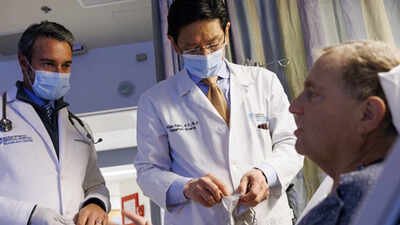
A world first: Man lives withpig kidney for nine months

A world first: Man lives withpig kidney for nine months

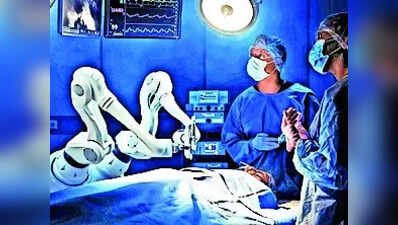
Surgeons Leonardo Riella and Tatsuo Kawai with patient Tim Andrews after Andrews’ xenotransplant in 2025. A genetically engineered pig kidney kept a 66-year-old man off dialysis for a record 271 days before he successfully received a donor organ, marking a major advancement towards using animal organs to “bridge” the widening gap between organ demand and…


Read More
Meet Alexander Du, the 17-year-old Sewickley student who built $170 AI-powered glasses to help visually impaired users navigate after his grandmother lost her sight

Meet Alexander Du, the 17-year-old Sewickley student who built $170 AI-powered glasses to help visually impaired users navigate after his grandmother lost her sight

Alexander Du, a 17-year-old student from Sewickley, Pennsylvania, has been named a 2026 Presidential AI Challenge National Champion for inventing IRIS, an AI-powered wearable designed to help blind and visually impaired people navigate their surroundings. The teen built the $170 system after watching his grandmother struggle to navigate the world differently after losing her sight….

Read More
Dublin thought a 13th-century Norman castle had been demolished about 150 years ago; a researcher has now shown its walls, courtyard and medieval features were hiding inside a university building all along

Dublin thought a 13th-century Norman castle had been demolished about 150 years ago; a researcher has now shown its walls, courtyard and medieval features were hiding inside a university building all along

A medieval castle believed to have disappeared around 150 years ago has turned out to be hiding in plain sight inside a university building in Dublin, with researchers finding that its ancient walls and courtyard survived beneath the later structure.The discovery concerns Roebuck Castle on the Belfield campus of University College Dublin (UCD). The Norman…

Read More
An invasive insect first found in Pennsylvania in 2014 spread across 18 US states; Canada has now confirmed its first spotted lanternfly detection in Windsor, putting grape-growing regions on alert

An invasive insect first found in Pennsylvania in 2014 spread across 18 US states; Canada has now confirmed its first spotted lanternfly detection in Windsor, putting grape-growing regions on alert

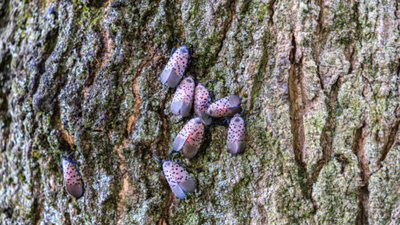
Canada has recently confirmed the first detection of spotted lanternfly in the country. On September 15, 2026, the Canadian Food Inspection Agency (CFIA) confirmed the first detection of SLF in Canada in Windsor, Ontario. Movement restrictions have been placed to prevent the movement of regulated materials, including potentially infested plant materials. Moreover, surrounding areas are…

Read More
Meet Benjamin Davis, a 16-year-old student from Massachusetts who designed a low-cost machine to recycle 3D-printer waste and won $75,000 science award |

Meet Benjamin Davis, a 16-year-old student from Massachusetts who designed a low-cost machine to recycle 3D-printer waste and won $75,000 science award |

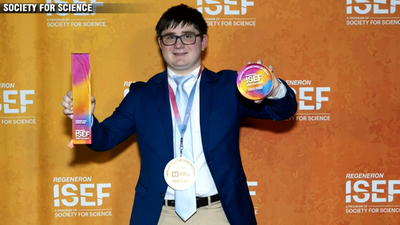
A 16-year-old student from Massachusetts has turned an everyday item into an award-winning recycling project. Benjamin Davis, a junior at Bishop Feehan High School in Attleboro, developed a desktop machine that processes 3D-printed waste and other plastics into reusable filament for 3D printers. His work earned him the $75,000 Regeneron Young Scientist Award at the…

Read More
Quote of the day by Stephen Hawking: "We are just an advanced breed of monkeys on a minor planet of…" |

Quote of the day by Stephen Hawking: “We are just an advanced breed of monkeys on a minor planet of…” |

Humanity has achieved extraordinary things, from exploring distant planets to developing technologies that have transformed everyday life. Yet, despite these accomplishments, our place in the universe remains remarkably small. British physicist Stephen Hawking often encouraged people to look beyond their immediate surroundings and consider the vastness of the cosmos. His thought-provoking words, “We are just…

Read More
Researchers turned waste eggshells into powder and replaced 10% of cement, producing stronger mortar after 28 days |

Researchers turned waste eggshells into powder and replaced 10% of cement, producing stronger mortar after 28 days |

Researchers have found that waste eggshells can be processed into a fine powder and used to replace part of the cement in mortar without reducing its compressive strength. A study tested calcined eggshell powder at replacement levels ranging from 2.5% to 12.5%. The strongest result came at 10%, where the mortar reached a compressive strength…

Read More
A new study found human activity adds more nitrogen than all natural sources combined in a quarter of the world's coastal waterways, with the Gulf of Mexico among the major hotspots

A new study found human activity adds more nitrogen than all natural sources combined in a quarter of the world’s coastal waterways, with the Gulf of Mexico among the major hotspots

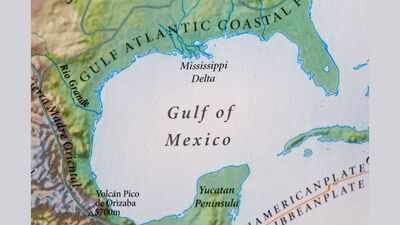
Coastal waters that feed billions of people with food, jobs and recreation are being pushed past their limits by a surge of human-made nitrogen. A new studytitled ‘Coastal Nitrogen, Phosphorus, and Silicon Sources: Integrating Land, Sea, and Human Inputs’ led by Washington State University estimates that in about one in four of the planet’s coastal…

Read More
In 1992, scientists moved 30 pregnant skinks to a New Zealand island; years later, their population showed a genetic surprise |

In 1992, scientists moved 30 pregnant skinks to a New Zealand island; years later, their population showed a genetic surprise |

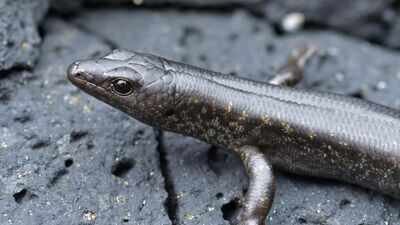
Egg-laying Skink (Oligosoma suteri) in New Zealand. Image Credit: Wikipedia A conservation effort in New Zealand took a surprising turn when 30 egg-laying skinks were moved from Green Island to Korapuki Island in 1992. The group consisted of 10 males and 20 gravid females (already carrying eggs). Years later, researchers compared the skinks on both…

Read More
Australian researchers sent edible fungi to the ISS for nearly a month; after returning to Earth, the mushrooms grew and were eaten in pasta |

Australian researchers sent edible fungi to the ISS for nearly a month; after returning to Earth, the mushrooms grew and were eaten in pasta |

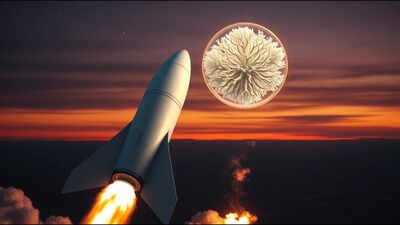
Representative Image of a rocket carrying mycelium fungi launching into space on a mission to the International Space Station (AI Generated Image) In August 2024, researchers at Swinburne University of Technology in Australia sent 36 small vials containing fungi into space aboard a SpaceX Falcon 9 rocket bound for the International Space Station. The vials…

Read More