










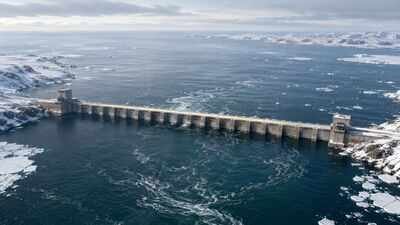
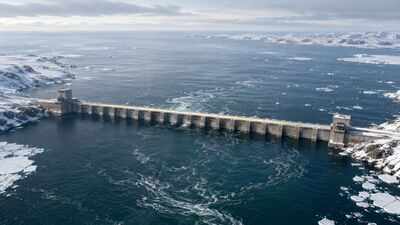
Ideas for reshaping the planet have appeared long before the term geoengineering entered public discussion. During the Cold War, some engineers believed that large-scale construction projects could permanently alter climate, rivers and even entire regions. Among the boldest was a proposal to block the Bering Strait, the narrow stretch of water between Siberia and Alaska, and use enormous pumps to redirect ocean currents. The aim was straightforward, reduce Arctic sea ice, make northern Siberia significantly warmer and transform frozen land into a more productive landscape. Decades later, the same stretch of water has returned to scientific debate, although for a very different reason. Rather than warming Siberia, researchers are examining whether changes at the Bering Strait could influence a vulnerable part of Earth’s climate system.
What was the Soviet plan to dam the Bering Strait and warm Siberia
The proposal emerged in the early 1950s from Soviet engineer Petr Borisov, who believed geography itself could be redesigned to benefit society. His concept centred on building a massive barrier across the Bering Strait, which is roughly 80 kilometres wide at its narrowest point. Powerful pumping stations would then force cold Arctic water southwards into the Pacific while allowing relatively warmer Pacific water to move north. Borisov argued that this exchange would reduce sea ice across the Arctic Ocean and encourage warmer conditions over northern Eurasia. Reportedly, he believed the resulting climate shift could extend growing seasons, open new agricultural areas and make parts of Siberia more habitable. The proposal reflected an era when vast engineering schemes were often viewed as practical solutions rather than environmental risks.The project never progressed beyond the planning stage. Even at the time, it demanded construction and energy resources on a scale that far exceeded existing capabilities, while many scientists questioned whether the climate would respond as predicted.
Why the Bering Strait plays a key role in Earth’s climate
The Bering Strait is more than a geographical boundary between Russia and Alaska. It also forms a connection between the Pacific Ocean and the Arctic Ocean, allowing relatively fresh surface water to move northward.According to the study published in Science Advances, titled “The effects of a constructed closure of the Bering Strait on AMOC tipping behaviour,” this throughflow influences the amount of freshwater entering the Arctic before eventually affecting conditions in the North Atlantic. Freshwater is less dense than salty water, meaning changes in this balance can influence how ocean circulation behaves over long periods.This scientific understanding helps explain why Borisov regarded the strait as a strategic location. His reasoning differed from modern climate science, but both recognise that altering the exchange of water at this narrow gateway could have consequences extending far beyond the Arctic itself.
Why scientists are studying what happens if the Bering Strait is closed
More than seventy years after Borisov’s idea, researchers from Utrecht University examined what would happen if the Bering Strait were artificially closed. Their work was not designed to recreate the Soviet warming scheme. Instead, it explored whether such a structure might help stabilise the Atlantic Meridional Overturning Circulation (AMOC), a system of ocean currents that transports heat through the Atlantic.According to the study, the researchers used climate simulations rather than engineering plans. Their results suggested that, under specific conditions, closing the strait could extend the AMOC’s resistance to climate-driven weakening if the circulation remained relatively strong when the closure occurred. They also found the opposite could happen if the AMOC had already weakened substantially, making timing a decisive factor.According to The New York Times, lead author Jelle Soons described the research as a proof of concept rather than a proposal ready for construction. He said further work would be needed to understand whether such an intervention would function as intended and what environmental consequences it might bring.
Why scientists remain cautious about damming the Bering Strait
Although Borisov’s proposal faded into history, it illustrates how attitudes towards environmental engineering have changed. Mid-20th century plans often assumed that nature could be reshaped through sufficiently ambitious construction projects. Modern researchers approach similar ideas far more cautiously, treating them as theoretical possibilities rather than practical solutions.The recent study also highlights why many scientists remain hesitant. According to The New York Times, researchers and outside experts pointed out that a permanent dam across the Bering Strait could affect marine ecosystems, fisheries and shipping, while any mistake would be difficult to reverse. The study’s authors likewise emphasised that reducing greenhouse gas emissions remains the preferred way to lower the risk of AMOC disruption, with any large-scale engineering intervention considered only as a hypothetical option under exceptional circumstances.The comparison between the two eras is striking. One proposal sought to deliberately melt Arctic ice and warm Siberia through enormous mechanical intervention. The other uses computer models to explore whether blocking the same waterway might help preserve a major ocean circulation system. The location is unchanged, but the questions being asked have shifted from transforming the climate to understanding how best to avoid destabilising it.