










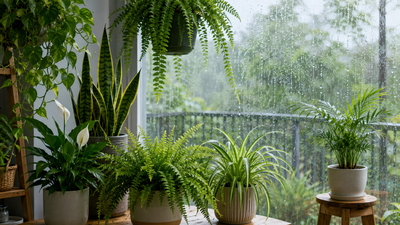
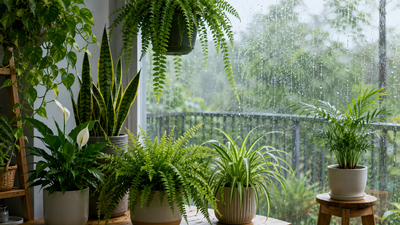
Monsoon brings problems of damp walls, musty cupboards and rooms that never quite feel dry. The extra moisture in the air has to go somewhere, and in homes with limited ventilation, it tends to settle indoors. A dehumidifier and better airflow will always do the heaviest lifting against this problem, but there is a simpler, lower-cost step many people overlook. Certain houseplants pull moisture out of the air as part of how they grow, which makes them a small but genuine ally during the wetter months. They also need little upkeep and fit easily into a living room, bedroom, kitchen or hallway. The ten varieties below are a good place to start if you want your home to feel less sticky this monsoon.
Indoor plants that help absorb excess humidity naturally
1. Peace LilyThe peace lily is a familiar recommendation for humid interiors, as it naturally thrives in warm, moisture-rich air. It settles well into living rooms and hallways where direct sunlight is scarce, though bright, filtered light tends to encourage more flowering. Keeping the soil lightly moist, rather than sitting in water, is usually all it needs to keep growing steadily.2. Spider PlantSpider plants are known for being low-maintenance, which makes them a sensible starting point for anyone new to growing houseplants. They handle humid air without fuss and produce long, arching leaves that suit shelves or hanging planters. In a spot with bright, indirect light, they grow quickly and eventually send out small offshoots that can be potted separately to create new plants.3. Snake PlantThe snake plant has a striking, upright shape but is genuinely undemanding to care for. It copes with everything from bright rooms to shaded corners and rarely needs frequent watering. Through the wetter months, it continues growing steadily and is often credited with helping improve indoor air quality, making it a dependable choice for bedrooms, hallways and living areas.4. Boston FernBoston ferns do best in spaces where moisture is fairly constant, so the monsoon period often suits them particularly well. Their delicate, feathery fronds can lose their vibrant green if the surrounding air turns too dry, so a well-lit room that holds steady humidity, such as a kitchen or conservatory, generally works best.5. Bird’s Nest FernThe bird’s nest fern manages well in lower light, provided humidity stays reasonably high. Its broad, glossy leaves unfurl gradually from the centre of the plant, forming a neat rosette that sits nicely on a shelf or side table. The naturally damp air during monsoon season often means it needs less extra care than usual.6. TillandsiaAir plants are unusual among houseplants in that they don’t need soil at all. Instead, they take in most of the moisture and nutrients they require straight from the surrounding air. Displayed on decorative stands, driftwood or hanging mounts, they suit any room with gentle airflow and soft natural light.7. OrchidMany orchid varieties originate in tropical climates, where warmth and humid air are simply the norm. A bright windowsill with indirect sunlight generally offers similar conditions indoors. While orchids appreciate moisture in the air, they don’t like sitting in soggy compost, so watering should stay fairly restrained even during the rainier months.8. Aloe VeraAloe vera is better known for its thick, gel-filled leaves than for tolerating humidity, but it remains a practical choice for the season. As a succulent, it stores water efficiently and needs comparatively little watering. Kept in a bright spot, it benefits from humid air without excess moisture building up around its roots. The gel inside its leaves is also commonly used to soothe minor skin irritation.9. AzaleaAzaleas do well in warm, humid conditions and reward decent care with colourful blooms. Morning sunlight paired with regular watering keeps them healthy, and the naturally moist air of the monsoon often supports stronger flowering. Blooms range from white and pink through to deep red and purple, bringing a splash of colour indoors.10. BegoniaBegonias originate from naturally moist tropical regions, so they generally settle comfortably into humid homes. Fibrous and rhizomatous types are popular houseplants because they pair attractive foliage with clusters of flowers when grown in bright, filtered light. During the rainy season, they typically need less attention than in drier months, as long as the soil drains freely.