










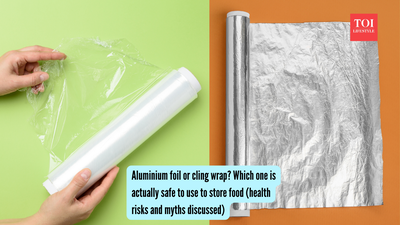
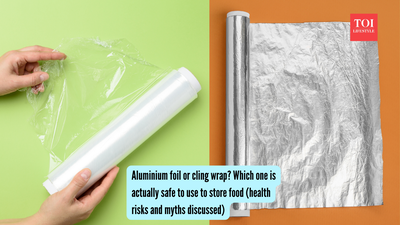
We have all been there at that moment in the kitchen with a half watermelon, a plate of someone’s dinner, to pack a lunchbox or roast something mouth-watering in the oven, wondering what to cover it with, foil or cling wrap.Although it might not seem like something to think about profoundly, choosing rather to grab and go, what first comes to sight. But it turns out the material we choose actually matters more than most of us think.Let’s dig in to find out how.
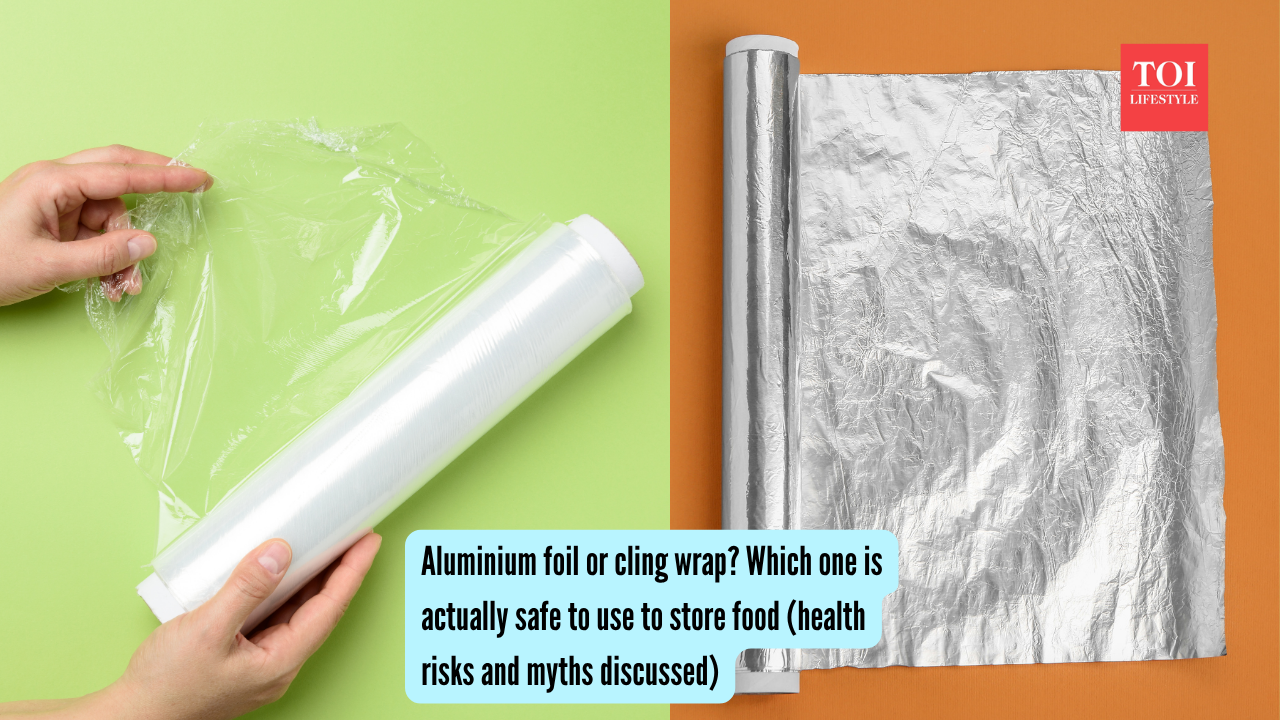
Representative Image (Photo via canva)
Neither option is entirely risk-free, so which of the two types is the “safer” choice?Well, the answer lies in what you’re storing.James Rogers, director of food safety at Consumer Reports a nonprofit product-testing and consumer advocacy organization, has spent years fielding exactly this question, and his answer is not limited to picking just one of them every time.Plastic wrap can shed chemicals into fatty foods, and Aluminum foil can react with acidic or salty foods. Heat makes both problems worse.
Why plastic wrap isn’t as harmless as it seems
According to a Kitchn.com report, Rogers explains that chemicals can migrate from wrap into food, especially fat, and worse with heat. Apart from this, he said chemical leaching is also common if you heat your food in the plastic wrap, so be sure to avoid that.Moreover, PVC film typically needs plasticizers like phthalates or adipates to stay stretchy, and those additives are what migrate into fatty or hot food, which studies show may lead to plenty of harmful effects.
The chemistry behind aluminum foil and acidic foods
Foil isn’t non-reactive either. Research published in the International Journal of Electrochemical Science tested tomato, onion, potato, and other vegetable extracts cooked in aluminum, and found aluminum leached into every extract, varying by vegetable, temperature, cooking time, and salt, with tomatoes accumulating the most aluminum likely because they’re acidic. Rogers also agrees with this, that acidity and salt trigger a reaction that pulls aluminum into the food itself.
What impact does heat have on both materials?
Temperature is the multiplier in both cases. A paper titled “Quantification of the Aluminum Content Leached into Foods Baked Using Aluminum Foil” found that release depends on factors like pH, salinity, fat content, temperature, and exposure time, with low pH and salty conditions favoring greater aluminum migration. Similarly, plastic wrap leaches more when microwaved directly against food. Rogers advises not to heat food while it’s touching either material, whichever one you’ve chosen.
Why acidity and saltiness are the real culprits
It is just basic chemistry. Aluminum is a reactive metal, and acids strip electrons from its surface, dissolving tiny amounts into whatever it touches. A ScienceDirect study on foil safety in food prep said that leaching was high in acidic solutions and even higher once spices were added, with the resulting values considered unacceptable by World Health Organization standards. Tomatoes, citrus, marinades, and vinegar-based dishes are the ones that get affected the most.
So, which wrapping paper should be chosen for which food material?
It all comes down to matching the wrap to what’s actually in the food
- For fatty foods like meat, cheese, paneer, butter, and fried items, it is better to go with foil, as it does not react with fats; it reacts to acid and salt.
- For acidic or salty food like tomato-based curries, pickles, citrus, chutneys, marinades, it is better to choose the cling wrap and avoid foil.
- For hot food or reheating, it is better to keep either material off the food itself , as heat speeds up leaching for both foil and wrap, or at least make sure the wrap or foil isn’t touching the food directly.
- For neutral, dry, or plain foods like rotis, rice, bread, sandwiches, either of the two works fine.
And when in doubt, use glass or a lid instead of either for leftovers you’re not eating soon.