







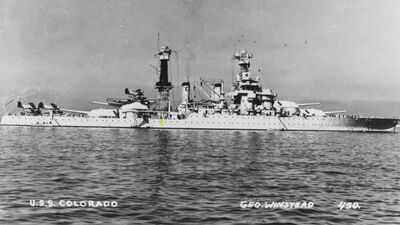
As American forces moved to capture Tinian in the Mariana Islands during the Second World War, hidden Japanese coastal batteries opened fire on USS Colorado. The battleship was hit 22 times in quick succession, killing 43 crew members and wounding 198 others. Despite the heavy damage, USS Colorado remained in action and continued supporting the invasion.According to US Navy’s Naval History and Heritage Command (NHHC), the attack on July 24, 1944 was the worst casualties suffered by naval forces during the bombardment phase of the Tinian operation. The incident took place during Operation Forager, the US campaign to capture the Mariana Islands from Japan.The battle became a key moment in the Pacific War. Tinian was captured within days, and the island later became the main base for B-29 Superfortress bombers that carried out missions against Japan, including the flights that dropped the atomic bombs in August 1945.
Japan hid guns inside caves
After American forces secured most of nearby Saipan in July 1944, attention shifted to Tinian, which lay only a few miles away. Around 8,000 Japanese troops defended the island, while more than 15,000 civilians, most of them Japanese, were also living there.The island’s geography played an important role in the battle. Much of Tinian’s coastline was surrounded by cliffs, leaving only a few suitable landing beaches.Japanese commanders expected the invasion to come from the south-west near Tinian Town, where the best beaches were located. Instead, US planners chose much smaller beaches on the north-west coast, hoping to surprise the defenders.To strengthen the deception, American battleships, cruisers and destroyers began bombarding the south-western side of the island on July 16. Air attacks by bombers, carrier aircraft and US Army Air Force fighters also hit Japanese positions before the invasion.
Attack on USS Colorado
The landings on the north-west beaches began on July 24 and were initially successful. However, the naval bombardment supporting the deception operation faced an unexpected threat. According to the NHHC, three concealed 6-inch guns, captured earlier by Japan from British defences in Singapore, had survived the bombardment because they were hidden inside caves.At around 7.40 am, the battery found the range of USS Colorado, which was firing on Japanese positions from about 3,000 yards offshore. The shore guns struck the battleship 22 times within a short period.Although the shells could not penetrate the ship’s heavily armoured vital sections, the damage above deck was severe. The attack destroyed seven anti-aircraft guns and left 43 sailors dead. Another 198 personnel were wounded, including 97 whose injuries were serious enough to require hospital treatment. Rear Admiral Theodore Ruddock and Captain William Granat were also lightly wounded.
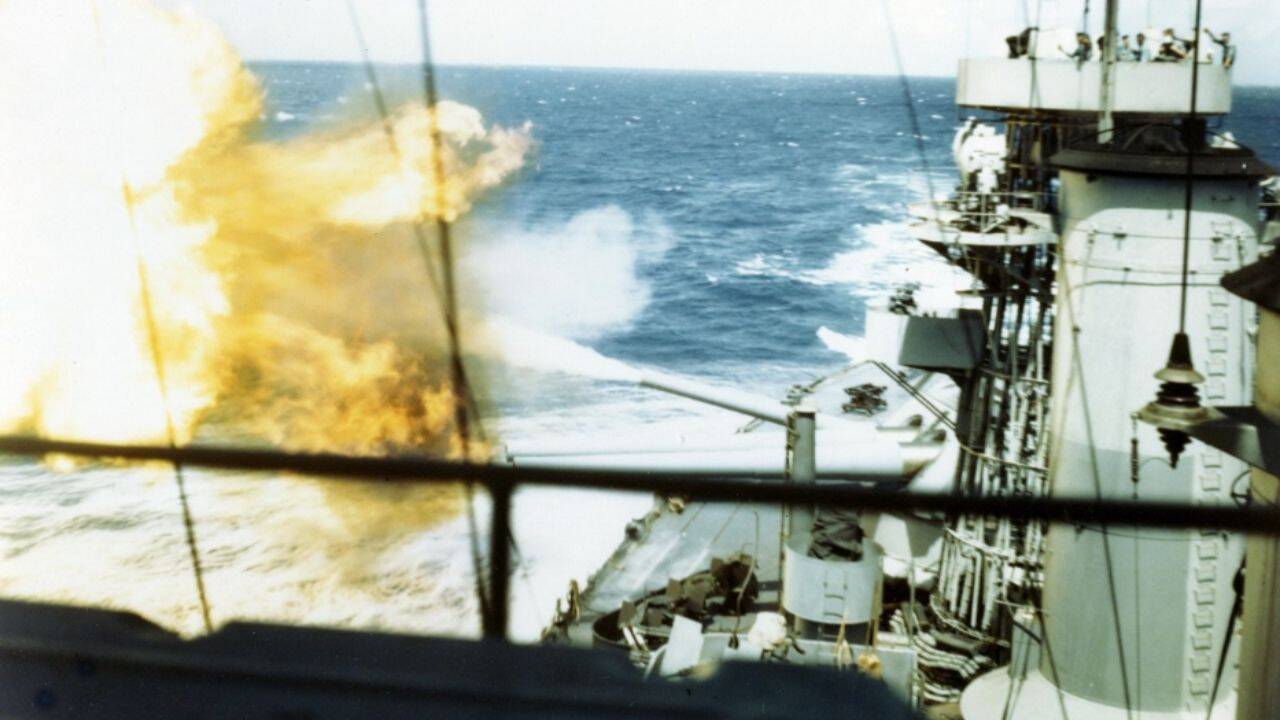
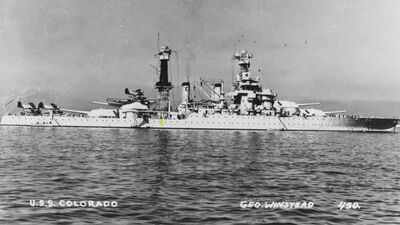
USS Colorado (BB-45) during the Tarawa campaign in November 1943. (Photo: U.S. Navy/National Archives)
Battleship continued firing
Even after suffering heavy casualties, USS Colorado stayed in the fight. The battleship identified the hidden Japanese battery and fired back. It was joined by the light cruiser USS Cleveland and the destroyer USS Remey.Together, the ships managed to silence the gun position, although the battery was not completely knocked out. This was until July 28, when the battleship USS Tennessee shelled it with 70 rounds from its 14-inch guns and another 150 rounds from its 5-inch guns. Despite the losses suffered by the naval force, the deception achieved its objective.Japanese defenders continued expecting the main assault from the south-west, while American Marines successfully landed on the north-west beaches with less resistance than anticipated.
Tinian became Allied air base
American forces captured Tinian after nine days of fighting. According to the NHHC, about 41,000 Marines defeated around 8,000 Japanese defenders. Only about 250 Japanese soldiers were taken alive.After the island was secured, military construction units quickly improved existing Japanese airfields and built new ones.Tinian later became the busiest B-29 bomber base in the Pacific. From there, American bombers carried out strategic missions against Japan, including the two atomic bomb missions in August 1945.
Colorado survives repeated attacks
USS Colorado had also avoided the Japanese attack on Pearl Harbor in December 1941 because it was undergoing an overhaul at Bremerton, Washington.However, according to the NHHC, the battleship later suffered more battle damage during the war than any other pre-war US battleship that survived Pearl Harbor.Following the attack off Tinian, the ship was struck by two kamikaze aircraft during operations near Leyte, killing 19 crew members and wounding 72 others. Later, at Lingayen Gulf, it was accidentally hit by friendly fire, which killed another 18 personnel and wounded 51.Even after surviving multiple attacks, USS Colorado remained in service until the end of the war. It later helped transport thousands of American veterans home before being placed in reserve in 1947.The battleship was removed from the Naval Vessel Register in 1959 and sold for scrapping the same year. During its wartime service, USS Colorado received seven battle stars.