











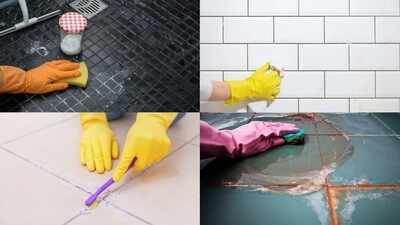
There’s a particular kind of despair that sets in when you notice just how grey your once-white bathroom grout has become, especially when you realise mopping over it for months did absolutely nothing. Grout’s rough, porous texture is brilliant at holding tiles in place and terrible at resisting dirt, soap scum, and mould, which is why it darkens faster than the tiles around it no matter how often you clean the floor. The good news is you don’t need harsh, fume-heavy commercial cleaners to sort it out. A handful of natural ingredients, most of which are already in your kitchen, can genuinely restore grout to something close to its original colour. Here are seven easy, natural ways to get it done.
Baking soda and water paste
This is the simplest starting point for grout that’s just everyday dirty rather than deeply stained. Mix baking soda with a small amount of water until it forms a thick, spreadable paste, then apply it directly along the grout lines using an old toothbrush or a small grout brush. Leave it on for 10 to 15 minutes to allow the mild abrasive action to loosen grime, then scrub in small circles and rinse well. It’s gentle enough for regular maintenance cleaning without eating away at the grout over time.
Baking soda and vinegar
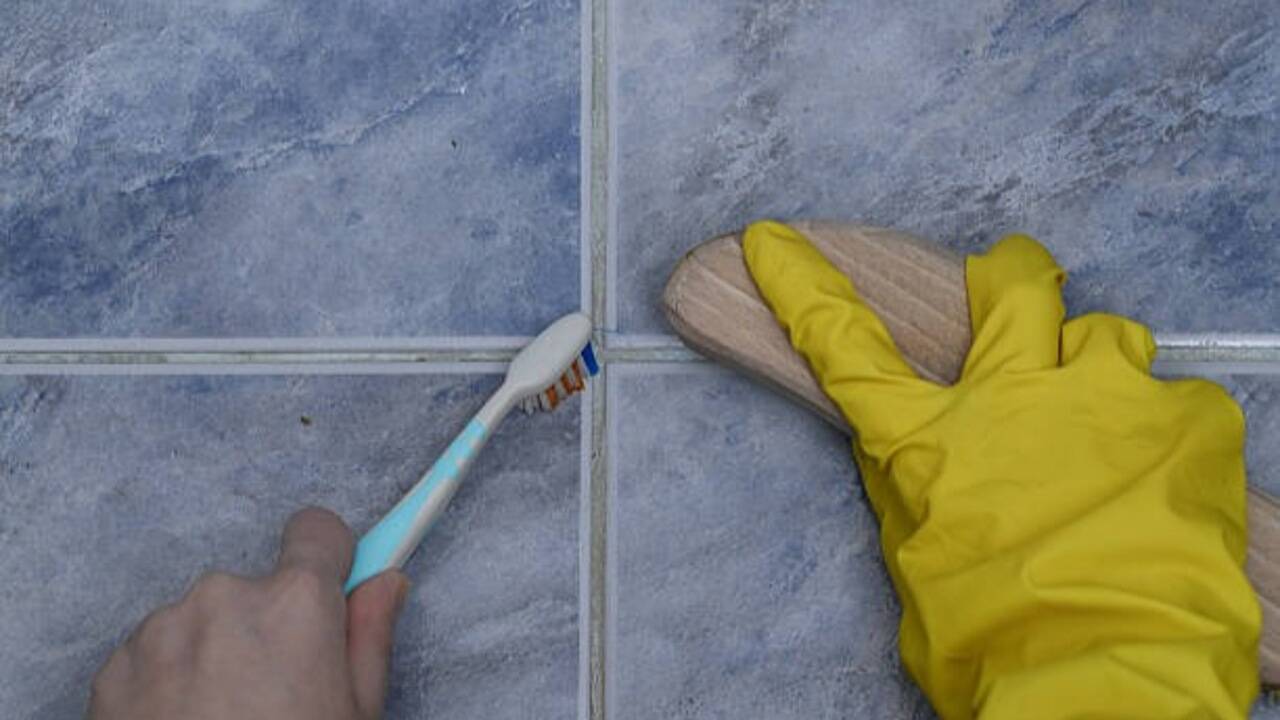
For routine dirt and light discolouration, this combination is hard to beat. Sprinkle baking soda generously along the grout lines, then spray or pour white vinegar over it, and let the fizzing reaction do the heavy lifting of loosening trapped dirt from the grout’s porous surface. Give it a few minutes to work, then scrub with a stiff brush and rinse well with clean water. It’s an easy, effective go-to for grout that’s just accumulated everyday grime rather than deep, set-in staining.
Baking soda and hydrogen peroxide
When grout has actually yellowed, greyed, or darkened over time, this pairing is the one to reach for, since hydrogen peroxide works as a mild, natural bleaching agent without the harsh fumes of chlorine bleach. Mix roughly two parts baking soda to one part hydrogen peroxide into a paste, spread it thinly and evenly along the grout, and let it sit for 15 to 20 minutes before scrubbing and rinsing. One important note: mix only as much as you need for that session, since this combination loses effectiveness once mixed and shouldn’t be stored for later use.
Lemon juice and baking soda
For grout dealing with hard water deposits or mineral buildup, lemon juice’s natural acidity adds real cutting power when combined with baking soda’s gentle abrasiveness. Mix fresh lemon juice into baking soda to form a paste, apply it to the affected grout lines, and let it sit for a few minutes before scrubbing. Beyond the cleaning power, lemon leaves behind a genuinely fresh scent, which makes it a popular choice for bathroom grout where lingering odours from mould and damp can be just as much of a problem as the visible staining.
Dish soap and hot water
Kitchen grout has a different problem entirely, usually grease and food residue rather than soap scum or mould, which makes an acidic or abrasive cleaner less effective than a good grease-cutter. Mix hot water with a small amount of dish soap, apply it along the grout lines with a brush or cloth, and let it sit for about five minutes before scrubbing. This gentler approach works particularly well on kitchen floors and backsplashes, where stronger, more abrasive cleaners aren’t always necessary or ideal.
Steam cleaning
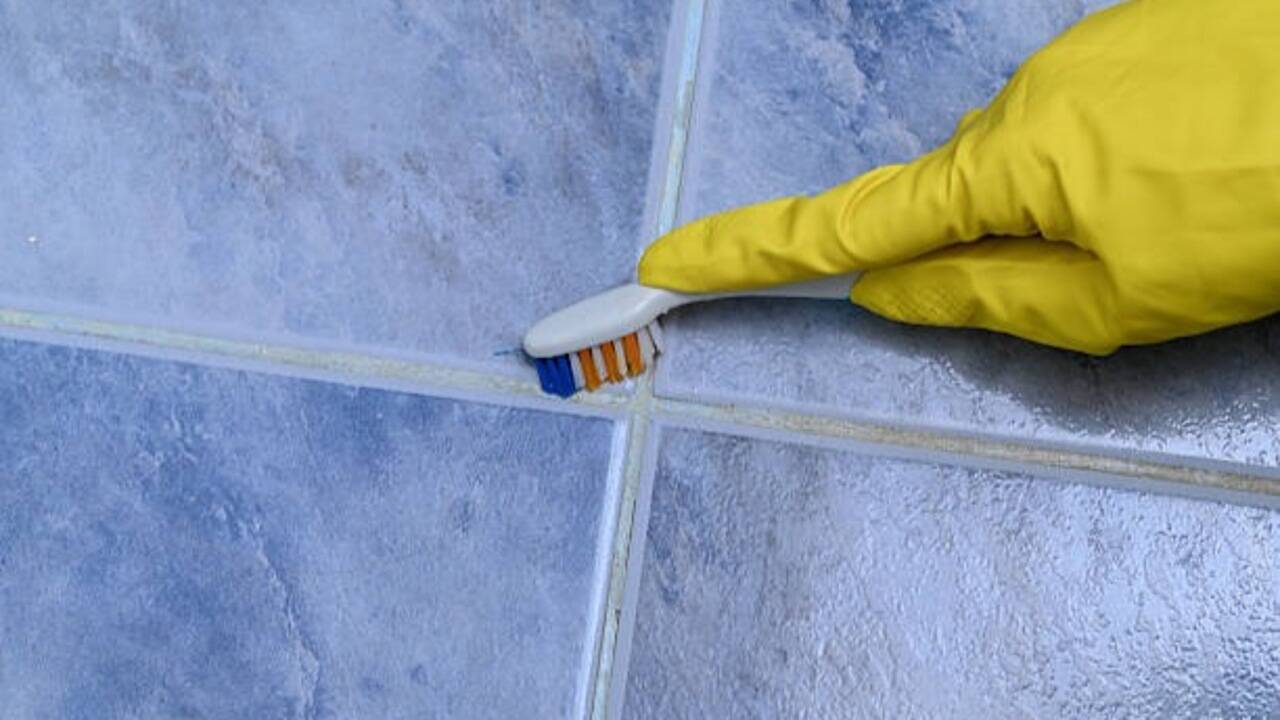
For a genuinely chemical-free deep clean, a steam cleaner fitted with a brush nozzle does an excellent job of loosening grime from grout without needing any cleaning solution at all. The high-temperature steam, typically over 90°C, breaks down dirt and buildup that’s settled deep into the grout’s texture, which you can then brush away and wipe up before it resettles. It’s a particularly good option for anyone who prefers to avoid mixing cleaning solutions altogether, though it does require access to a steam cleaner with the right attachment.
Hydrogen peroxide spray for mould and mildew
Grout that’s turned distinctly grey or black, especially around showers and tubs, is usually dealing with mould or mildew rather than ordinary dirt, and hydrogen peroxide on its own works well here as a mild disinfectant and bleaching agent. Spray it directly onto affected grout lines, let it sit for at least 15 minutes to properly penetrate, then scrub and rinse thoroughly. It’s a gentler alternative to chlorine bleach that still tackles mould effectively without the same risk of weakening or discolouring the grout over repeated use.
Disclaimer:
This article is intended for general informational purposes only. Never mix hydrogen peroxide, vinegar, or baking soda with chlorine bleach, as this can create harmful fumes; use these combinations in separate cleaning sessions, not together. Always wear gloves, ensure the area is well ventilated, and test any natural cleaning solution on a small, inconspicuous area first, especially on coloured grout or natural stone tiles, which can be sensitive to acidic ingredients