










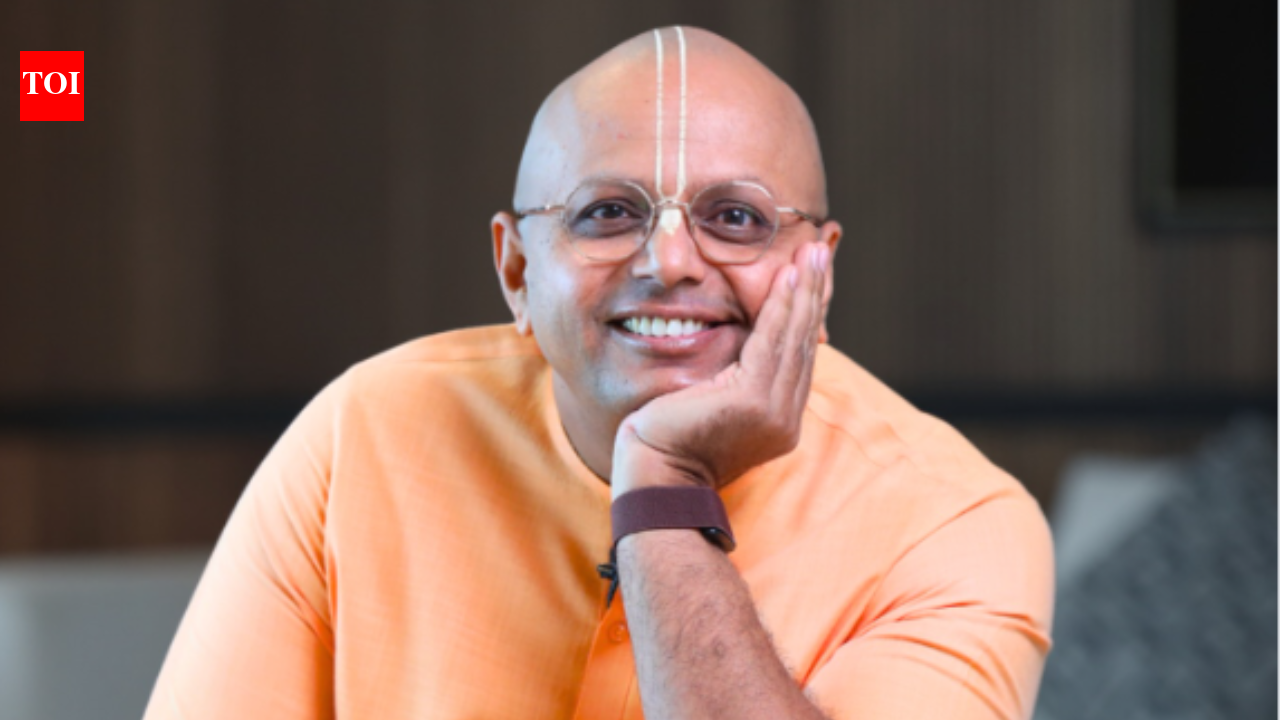
Relationships rarely break because of one big fight. More often, it is the small things like a harsh remark, a quick judgment, an assumption, or words spoken in anger that leave tiny wounds. What matters is what happens after that.Motivational speaker Gaur Gopal Das recently shared a simple story about a broken button and turned it into a thoughtful lesson about how we handle people we care about. In a recent video posted on his Instagram handle, Das recalled attending a flashy wedding where he was expected to deliver a speech. But just before the event, he noticed that the button on his outfit was coming off.“How many of you know how to sew a button? Wow! My God, last week I was at a wedding, a very flashy, flamboyant wedding, and a monk was with me, and over there my button was breaking,” he said in the video.The problem was more than just a wardrobe malfunction. “You know, wherever I go, cameras are on me. How is this button hanging like this? This button is hanging down from me, and I’m scared it’s going to fall off. I had to give the wedding speech. If it falls off, brother, it’s a loss of dignity here.”
A solution provided by his fellow monk
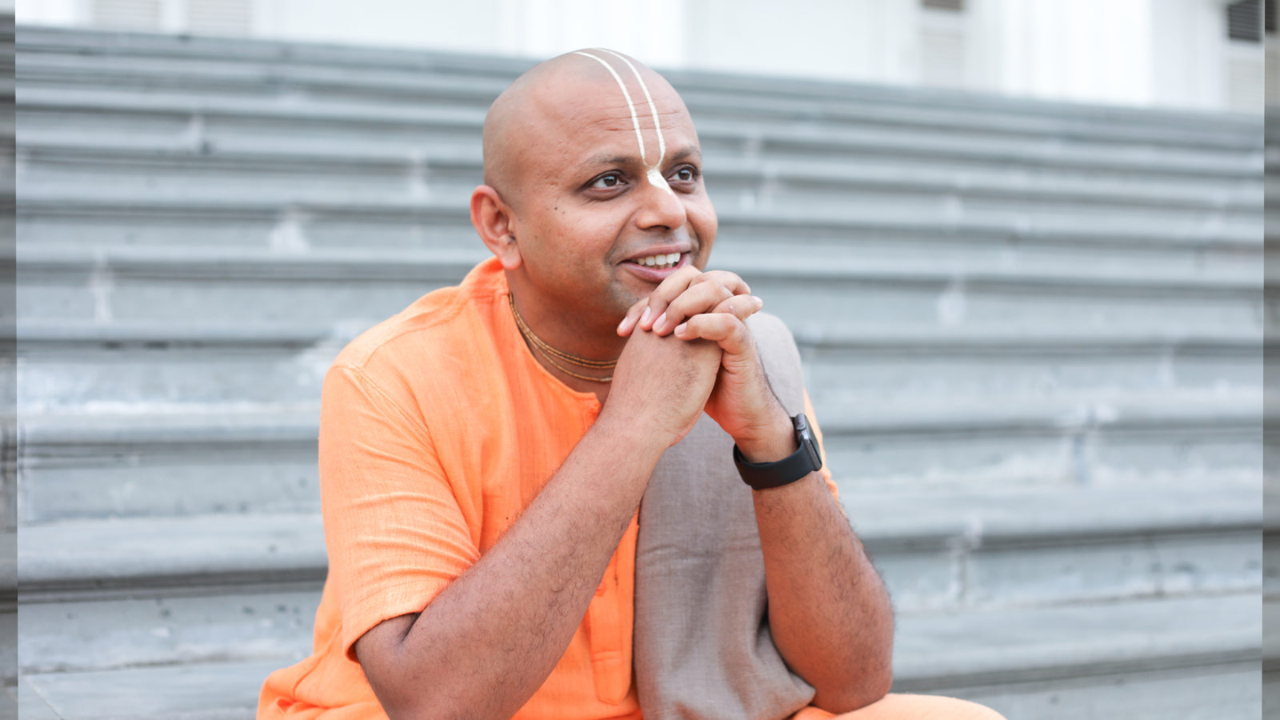
Image Courtesy: Thrive Global India
Luckily, another monk travelling with him had a rather unexpected solution. It was Blu Tack(adhesive). “So the other monk with me, we have this thing called a blue tack. You know what a blue tack is? A sticky stuff (adhesive). He had somehow, for some reason, had blue tack in his bag. ‘Let’s stick it on, Guru ji,’” added Das.The monk pulled the button off, applied some Blu Tack and pressed it firmly into place. “He took a bit of blue tack, put it on there, pushed it hard and it saved my day.” The temporary fix worked. But once the wedding was over, Das knew the button needed a proper repair.“I came back and I pulled the blue tack off. The same one here, by the way. I just pulled this tack off today and I decided to sew the button.”That is when the broken button became a lesson about relationships. “When they stitch that button, ladies, gentlemen, friends, you know what happens? There’s a needle, and first, the needle, it pierces a hole. Hole.”For Das, the needle represents the moments when we hurt people. “Sharp words, harsh words, judgments, jumping to conclusions, labeling people. It’s like a piercing with a needle.”But a needle is not used alone. It carries thread behind it, and that changes what the needle does. “But if there’s thread behind the needle, then it also seals the hole later,” he said.
Relationships need repair, not perfection
Every close relationship will have uncomfortable moments. Partners will misunderstand each other. Friends will say things they regret. Parents and children will disagree. Even people who genuinely love each other can sometimes be impatient, dismissive or unfair. The mistake is expecting a good relationship to be one where nobody ever gets hurt. A healthier way to look at relationships is to ask what happens after the hurt.A sharp comment can create a wound. An apology can begin to close it. A difficult conversation can clear up an assumption. Giving someone the benefit of the doubt can prevent a small misunderstanding from becoming a permanent distance.“Don’t just be the needle, be the needle and thread. The needle has to move. There will be some hole or the other every day. Just ensure there is thread behind. When there is thread, then the wound that is created will also heal, right? It will also heal,” he said in the video.
Don’t become good at hurting and bad at repairing
There is a practical takeaway here for modern relationships. Many people become very good at expressing anger but very poor at repairing the damage afterwards. They can point out what went wrong, explain why they were upset and list everything the other person did wrong. But when it comes to saying, “I shouldn’t have spoken to you like that,” they hesitate.That is where relationships slowly become exhausting. Being the “thread” does not mean tolerating everything or pretending hurtful behaviour did not happen. It means knowing how to return to the relationship after conflict. Sometimes the thread is a simple apology: “I was angry, but I shouldn’t have said that” or “That’s not what I meant. Let me explain.” Sometimes it is listening instead of immediately defending yourself. And sometimes it is giving the other person enough space to calm down before trying to solve the problem.
Don’t use every conflict to prove that you are right
One of the most useful applications of Das’s analogy is to everyday arguments between couples. When a disagreement starts, the instinct can be to collect evidence. Who said what first? Who forgot something last week? Who apologised last time? Who is more at fault? But relationships are not courtrooms.Winning an argument can sometimes leave you with a relationship that feels like it has lost something.
The “thread” is built in small moments
Repair does not always have to follow a major fight. Checking in after a difficult day, thanking your partner for something they usually do without recognition, asking your child what happened instead of immediately judging them, or telling a friend that you understand why they felt hurt, these are all forms of “thread”.Das’s story is ultimately not about avoiding the needle. A needle is necessary to sew a button back on. In the same way, difficult conversations are necessary in relationships. The lesson is about what we carry with us when we enter those difficult moments.“We will make mistakes, we will hurt each other, we will have disagreements,” the analogy suggests. “But don’t just be the needle. Be the needle and thread.”Because strong relationships are not necessarily those without wounds. They are often the ones where people know how to repair them.