










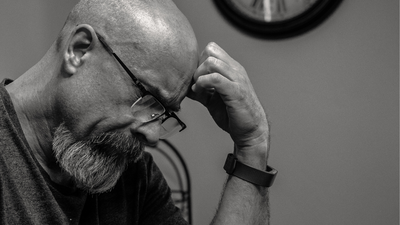
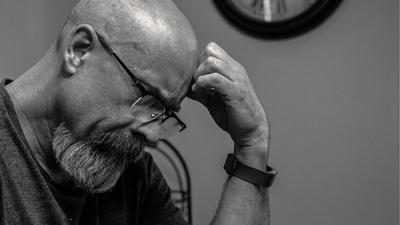
Have you ever tried to sit quietly for just a few minutes without any phone, music, or anyone to talk to?With just you and your thoughts.It doesn’t take long before the mind wanders off on its own, replaying an old conversation, worrying about tomorrow, or drifting into a memory you didn’t even ask for.Well, it seems that we all have been there.Centuries before modern psychology started studying it, the Bhagavad Gita described the very same restlessness with clarity.In one of its passages, Arjuna admits to Lord Krishna that his mind feels impossible to control, and Krishna doesn’t dismiss the complaint; he agrees with it. But what’s most interesting is how closely modern research on rumination and mind-wandering is quite similar to the essence of the teachings of the Gita from thousands of years ago.
Arjuna admits what most of us feel
In chapter six of the Gita, Arjuna tells Krishna that the that controlling his mind feels harder than controlling the wind.Arjuna: “The mind is restless, turbulent, strong, and obstinate. I think controlling it is more difficult than controlling the wind.”— Bhagavad Gita 6.34It is important to understand that, at this point, Arjuna isn’t pretending to have it all figured out. He simply names the problem honestly, which is exactly what makes the moment so relatable to anyone who has tried, and failed, to sit still with their own thoughts.
Krishna doesn’t deny this feeling
While responding to Arjuna, Lord Krishna’s response doesn’t correct Arjuna or claim the mind is easy to master.Krishna: “Undoubtedly, the mind is restless and difficult to control. But it can be trained by practice and detachment.”— Bhagavad Gita 6.35Lord Krishna agrees that the mind is restless and hard to control, but adds that it can still be trained through consistent practice and detachment. This is why it is important to understand that a wandering mind isn’t a personal failure or a sign of weakness; it’s simply the mind’s natural starting condition.
Why your brain keeps replaying old conversations
Psychology has a fairly precise explanation for this. Researchers trace the pattern back to the Zeigarnik effect, a nearly century-old discovery that unfinished or unresolved experiences stick in memory far more persistently than resolved ones.When you’re unsure whether you offended someone or missed a chance to speak up, your brain treats that moment as incomplete and keeps circling back to it. The mind’s so-called default mode network, active during idle moments, tends to generate exactly this kind of repetitive, self-focused replay.
Overthinking has a social root: Study
A 2024 meta-analysis found a moderate link between social anxiety and how intensely people keep coming back to conversations afterward in their minds, with the fear of being judged badly driving much of the habit.Another lab study published in PLOS ONE found that people prone to rumination or consistent deep thoughts showed measurable behavioural differences, including changes in eye movement and speech patterns, during social interaction tasks, suggesting this looping in the thoughts isn’t just uncomfortable; it can quietly affect how we engage with others in the moment.
So, how can this habit be perfected?
The Gita’s answer is not giving in to instant silence, but steady, repeated practice with detachment from outcomes. Practices like journaling or sharing disturbing thoughts with loved ones help the brain file it as complete rather than ongoing, easing the urge to keep replaying it.