










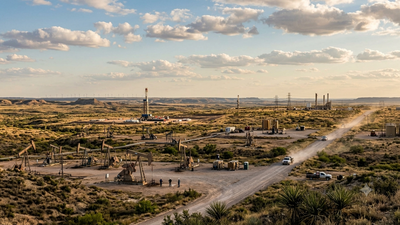
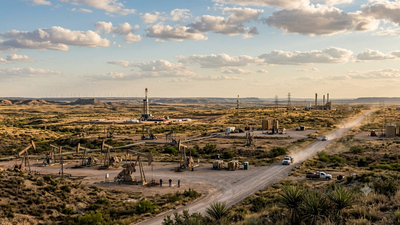
A century ago, the Permian Basin was hardly the place anyone would have picked as an engine of the American economy. Early observers were so unimpressed by parts of the landscape that the region was dismissed as a “graveyard” according to WorldOil. Today, the same stretch of West Texas and southeastern New Mexico sits at the centre of one of the country’s most important energy-producing regions. Its impact now reaches far beyond oil wells and drilling rigs.According to Permian Basin Petroleum Association (PBPA) 2024 report, the basin’s nationwide employment impact at 853,924 jobs, while activity connected to it generated about $18.2 billion in taxes for Texas and New Mexico. Roads, schools, hospitals, universities, suppliers and local businesses all sit within the economic chain created by the basin. And with projections pointing towards an even larger role by 2050, the Permian’s transformation is no longer just an oil story.
How one US oil basin became a lifeline for communities across two states
The 2024 report figures put the Permian Basin’s nationwide employment impact at 853,924 jobs. These positions are not limited to workers directly involved in drilling and production. The wider economic activity associated with the basin supports businesses, public revenues and services in communities connected to the energy industry.During the year covered by the report, activity linked to the basin generated about $18.2 billion in taxes across Texas and New Mexico. That money reaches parts of everyday public life that can seem distant from an oil well, including schools, roads, emergency services, hospitals and universities.Energy production is not simply a separate industrial activity in the region; it is woven into the finances of communities on both sides of the state line.
How a relatively small region became an economic powerhouse
The basin occupies only a relatively small share of the populations of the two states, yet its economic footprint is considerably larger.According to PBPA, in New Mexico, the Permian region accounts for 25.9% of private-sector gross domestic product while representing 9.2% of the state’s population. The contrast is also visible in Texas. There, the basin accounts for 8.1% of private-sector GDP despite containing just 1.6% of the state’s population.The financial contribution reaches higher education and public institutions, too. According to the report, $3.6 billion went to Texas’ Permanent University Fund and Permanent School Fund combined. Those funds provide a long-standing connection between energy activity and public education in the state.
A resource giant that could supply half of America’s oil by 2030
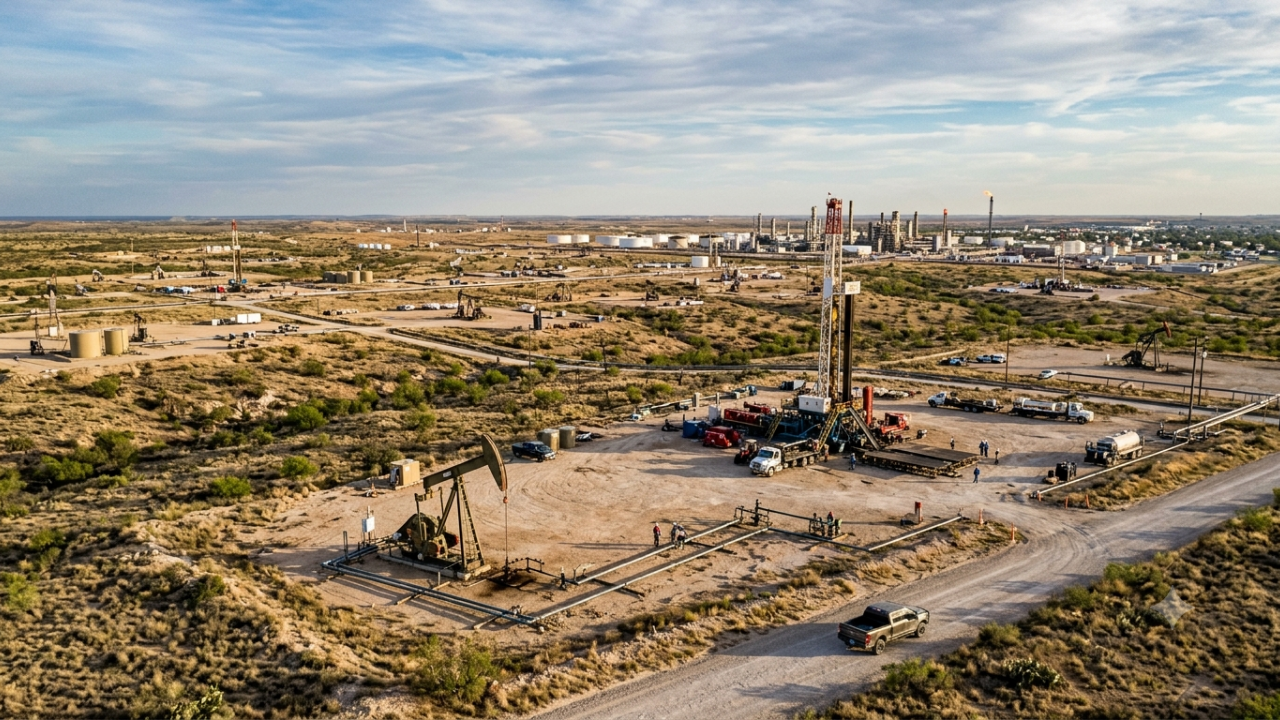
The scale of the resource beneath the basin remains a central part of the picture. The report estimates that the Permian contains 92.7 billion barrels of recoverable oil and about 211 trillion cubic feet of recoverable natural gas.That makes the basin significant not only for the states where it is located but also for the wider US energy system. Its production has grown into a major component of domestic oil supply, with the report projecting that the region could account for half of US oil production by 2030.The scale is large enough to put the basin in an unusual global position. If it were treated as an independent country, its oil output would place it among the world’s five largest producers.
How solar and wind are changing the Permian Basin
Energy development in the Permian is also taking place alongside expansion in renewable power. New Mexico was expected to increase its solar capacity by an estimated 115% in 2024, according to the report, while Texas was projected to record 76% growth.Wind and solar projects have been expanding around the basin as companies and communities add other forms of generation to an area long associated with oil and natural gas. The coexistence of these industries has become another part of the region’s changing energy landscape.The report also places the Permian relatively low in carbon dioxide emissions per barrel of oil equivalent when compared with other major onshore producing basins around the world. Its ranking was described as second lowest among those major basins.
Why the Permian needs more roads, schools and public services
Rapid industrial activity creates its own demands. Roads, utilities, schools, hospitals and other public infrastructure all have to accommodate communities where employment and investment can shift with the energy sector.That is why infrastructure spending features prominently in discussions about the Permian’s economic future. The region’s energy companies and public authorities have an interest in keeping transport networks and essential services capable of supporting continued activity.Don Evans, chairman of the Permian Strategic Partnership, said, “The Permian Basin provides indispensable resources to energy security, making significant contributions to our nation’s robust economy every year.”
How big could the Permian Basin become by 2050
The economic projections attached to the basin extend well beyond the current production cycle. The Permian Strategic Partnership’s report estimates that the region could generate roughly $350 billion in gross product and support around 1.2 million jobs nationally by 2050.Those numbers are projections rather than guarantees, and they depend on future production, investment, energy demand and infrastructure development. Still, they illustrate the scale that the basin’s economic role could reach if its expansion continues.For Texas and New Mexico, the stakes are particularly direct. Their public finances and private economies already benefit from the activity generated around the basin, while companies operating there remain important to the national energy supply.