





![Drishyam 3 Full Movie Collection: 'Drishyam 3 The Conclusion' box office collection Day 19 [LIVE]: Ajay Devgn thriller eyes Rs. 375 crore India net and Rs. 550 crore worldwide on third Tuesday | Hindi Movie News](https://usnewsflash.online/wp-content/uploads/2026/10/drishyam-3-the-conclusion-day-19-box-office-collection-image-credits-imdb-150x150.jpg "Drishyam 3 Full Movie Collection: ‘Drishyam 3 The Conclusion’ box office collection Day 19 [LIVE]: Ajay Devgn thriller eyes Rs. 375 crore India net and Rs. 550 crore worldwide on third Tuesday | Hindi Movie News")




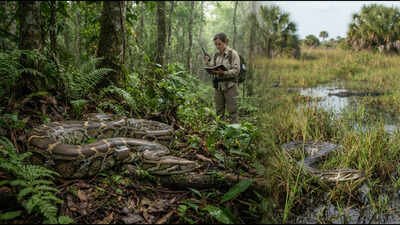
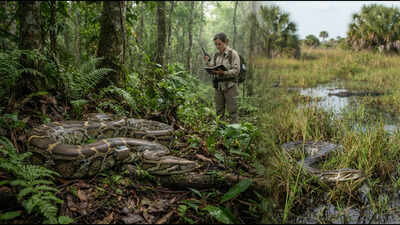
The Burmese python has become a symbol of two completely different conservation battles. In Florida, wildlife managers search for and remove the giant snake because its introduced population is threatening native wildlife in the Everglades. Thousands of kilometres away in Bangladesh, researchers are putting radio transmitters on the same species to understand where it moves, which habitats it uses and how it survives alongside people. The difference comes down to geography. The Burmese python is native to South and Southeast Asia, but introduced populations have become invasive in southern Florida. In Bangladesh, meanwhile, the species is listed as Vulnerable nationally and faces threats including habitat loss, hunting and persecution. Scientists say better knowledge of its behaviour could help protect the remaining populations.
Scientists track threatened Burmese pythons in Bangladesh with radio tags
Researchers have been conducting radio-telemetry research on Burmese pythons in and around Lawachara National Park in northeastern Bangladesh since 2012. The Creative Conservation Alliance says the programme has tracked 10 individual pythons in the area, with the aim of understanding their habitat use, home ranges, activity patterns and responses to relocation. The project also seeks to use the findings to guide conservation actions, protect and restore python habitat and reduce conflict between people and snakes. Earlier fieldwork involved surgically implanting small radio transmitters inside adult pythons. A preliminary study described four tagged animals, two males and two females, with transmitters weighing 25 grams and equipped with data loggers that recorded the snakes’ internal body temperature every hour. Researchers tracked the animals at least once a day and recorded their locations, habitat, microhabitat, temperature, humidity, activity and proximity to human settlements.
Why Bangladesh is trying to understand a snake people often fear
The Burmese python is listed as Vulnerable in Bangladesh’s national Red List, which says the species is rare despite having a wider historical distribution and that its habitat has been lost or degraded by human activities. Hunting for meat and skin and development are identified among the threats. Earlier conservation research also described python populations in Bangladesh as fragmented into small and separated populations and highlighted persecution by local people. The situation is complicated because Burmese pythons can live close to people and sometimes enter villages, where they may kill livestock, particularly domestic ducks. That can lead to retaliatory killing of the snakes. The Bangladesh project therefore combines ecological research with efforts to build local support for python conservation and develop ways of reducing human-python conflict. Local residents have also been trained as parabiologists and have helped researchers track the snakes and gather ecological information in the field.
Radio tracking revealed that relocated pythons can try to return home
One of the most useful discoveries from the Bangladesh research concerns what happens when conflict pythons are moved away from villages. Project researchers reported that long-distance translocations caused increased movement and that relocated animals displayed homing behaviour, travelling back towards the areas where they had originally been captured. The finding has important implications because moving a snake away from people may appear to be a simple conservation solution, but a relocated animal that attempts to return could face additional dangers during the journey. Researchers therefore argued that translocation needs to be undertaken cautiously and that understanding movement patterns is essential before deciding how conflict animals should be managed. The project has also recorded human-python conflict in the study area, showing why information from radio-tagged animals can have practical value beyond simply learning where the snakes spend their time.
Florida is using similar technology to find an invasive population
The picture is almost completely reversed in southern Florida, where Burmese pythons are an introduced invasive species. The snakes became established in the region after entering the exotic pet trade, including through releases and escapes, and have subsequently spread across much of the Greater Everglades. Their size, camouflage and secretive behaviour make them exceptionally difficult to detect, so researchers have used radio telemetry as one tool for locating them. In Florida, tagged snakes can effectively act as guides for researchers searching for other pythons. Scientists have also used radio-tagged animals to study movement, survival and habitat use in the introduced population. The ecological stakes are high because Burmese pythons prey on a wide range of native animals and have been associated with severe declines in several mammal populations in areas where the invasive population became established.
One species, two conservation strategies
The contrasting treatment of Burmese pythons in Bangladesh and Florida highlights how the conservation status of an animal depends heavily on where it occurs. In its native Asian range, the species is facing pressures from habitat degradation, exploitation and conflict with people, making information about its movements and habitat requirements valuable for conservation planning. In Florida, the same predator is outside its natural range and poses a threat to native ecosystems, so researchers and wildlife managers are trying to locate and remove it. The Bangladesh project is consequently not simply about putting trackers on snakes. It is an attempt to fill major gaps in knowledge about a poorly studied native population and use that information to improve protection and coexistence. The same technology that helps Florida find an invasive predator is helping Bangladesh understand a threatened native one, creating an unusual conservation story in which the question is not whether Burmese pythons are good or bad, but what role they play in the ecosystem where they are found.