










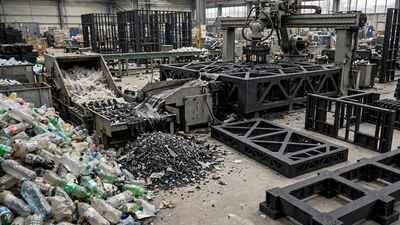
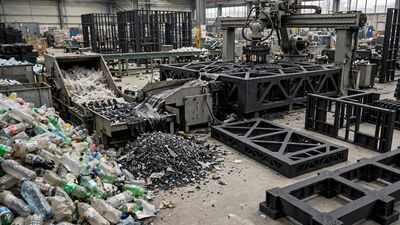
A new MIT-backed company is turning discarded plastic into structural parts for buildings and infrastructure. Atlas Building Composites has developed an AI-powered robotic manufacturing platform that shreds single-use plastic, melts it, and fuses it with American-made fiberglass. The resulting composite is then formed into parts such as foundations, decks, and trusses using large-scale 3D printing. According to MIT News, the company has already supplied recycled composite trusses for a 40-foot bridge built by the U.S. Army Corps of Engineers in a Massachusetts wetland. The system also uses waterless recycling, allowing low-grade plastic to be processed without the water and permitting needs linked to conventional recycling facilities.
How is MIT’s Atlas turning plastic waste into building materials
Atlas Building Composites uses a system that combines plastic recycling with large additive manufacturing. Single-use plastic from water bottles and other objects is first shredded and fed into the system. The plastic is then melted and fused with American-made fiberglass, producing a composite that is stronger than wood. A large 3D printer forms the material into structural components. These include trusses for floors, walls, roofs and bridges, as well as foundations and decks. The company emerged from MIT HAUS (Home Architecture for Universal Sustainability), a Department of Mechanical Engineering research effort focused on sustainable homes.
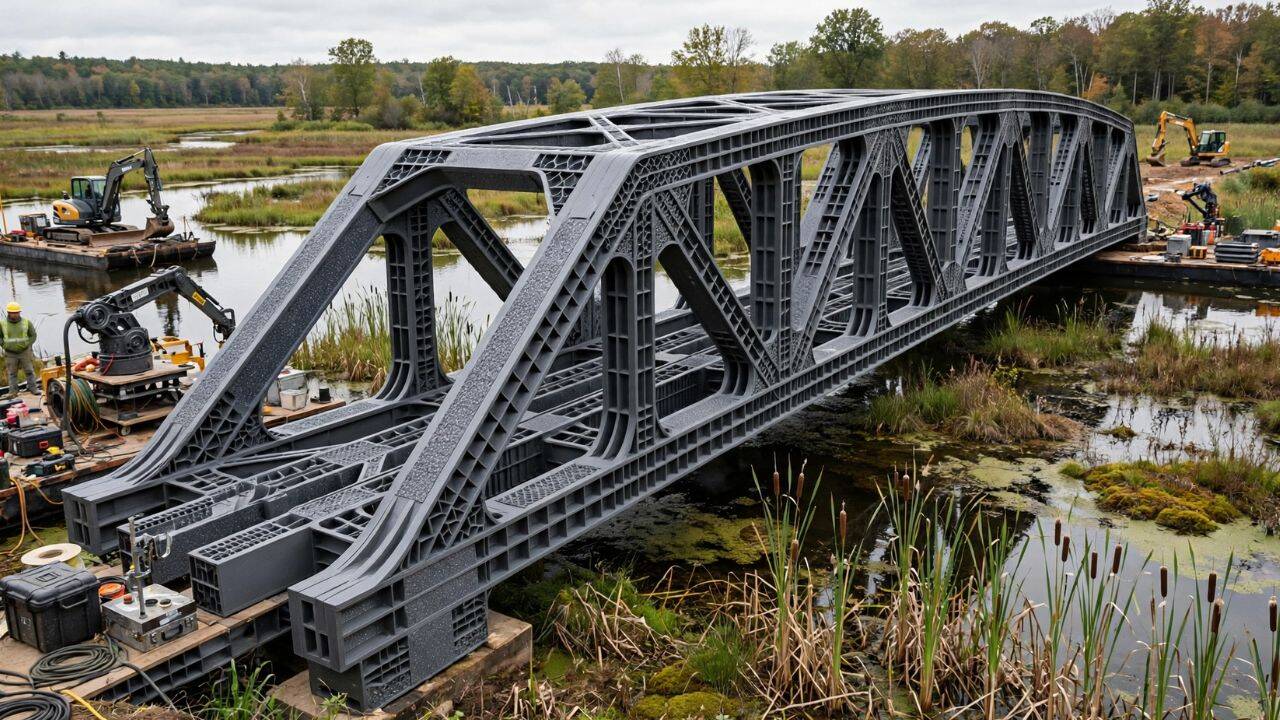
PC: AI Generated
Atlas tests recycled plastic composites in real construction projects
The technology has now moved from laboratory testing to real-world construction. Atlas says its recycled composite parts have been used for barns, sheds, decks and docks. In its latest project, the company supplied recycled composite trusses for a 40-foot bridge built by the U.S. Army Corps of Engineers in a Massachusetts wetland. The bridge was installed in less than a day. Research at MIT has also shown that large composite trusses can be 3D-printed in under 13 minutes and support more than 4,000 pounds, exceeding key building standards. Together, these projects and tests reveal how discarded plastic can be transformed into strong structural components for buildings and infrastructure.
How plastic waste can be recycled without using water
A central part of Atlas’ approach is recycling plastic without using water. The company says this allows it to process low-grade plastic while avoiding the water access, permits, and infrastructure required by conventional recycling facilities. It plans to place its systems close to both plastic waste sources and areas where new buildings are needed. Producing materials locally could also reduce the cost and environmental footprint of transporting them over long distances. The company also expects these local facilities to create jobs across recycling, manufacturing, and construction. By combining recycling and production in one system, it aims to make it easier for communities with limited water access to turn plastic waste into useful building materials.
Why local factories are central to the new manufacturing approach
Atlas plans to deploy its robotic manufacturing systems in local factories rather than rely on distant mega-factories that produce standardised parts. Each Atlas factory cell is designed to produce structural framing components for about one small home per day. The company also says its systems can produce parts at higher rates than those demonstrated in MIT research. MIT testing reached 60 to 80 pounds of parts per hour, while Atlas factories are designed to produce 150 to 200 pounds per hour. The robotic platform can make different components in varying sequences, giving each factory the flexibility to produce the parts needed for different construction projects.
How recycled plastic could help meet the growing demand for new homes
Atlas was developed in response to the growing material needs of large-scale home construction. Building homes at that scale would put pressure on existing supply chains and require much greater production of materials such as concrete. At the same time, vast quantities of plastic waste continue to enter oceans, rivers and cities.The company aims to address both challenges by turning discarded plastic into durable building materials. “Our mission is to convert waste plastic pollution into durable composites to build 1 billion homes,” says Atlas chair and co-founder A.J. Perez. The company is also exploring international partnerships as it works to expand its factory network beyond the US.