










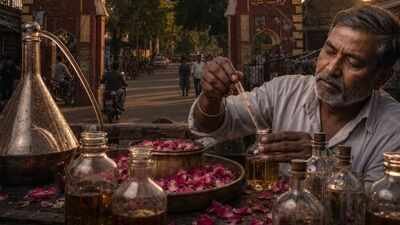
Tucked away in Uttar Pradesh, roughly 80 kilometres from Kanpur, sits a town most Indians have never heard of, yet it has quietly built a global reputation entirely around scent. This is Kannauj, officially and popularly celebrated across the country as the Perfume Capital of India. According to various industry estimates circulating in recent years, the town’s perfume trade generates a substantial annual turnover, though the often cited figure of over 1,000 crore rupees a year could not be independently verified through official government or industry body data and should be treated as an approximate, widely repeated estimate rather than a confirmed statistic.What is not in question is the scale of history behind the craft. Kannauj has been associated with perfume making since the seventh-century reign of Emperor Harshavardhana, with its fragrance trade later flourishing under Mughal patronage, particularly under Emperor Jahangir and Empress Noor Jahan, who are widely credited with elevating rose attar into a refined royal art form. Some perfumers in the region even trace their family lineage in the trade back 30 generations.
An ancient technique that refuses to modernise
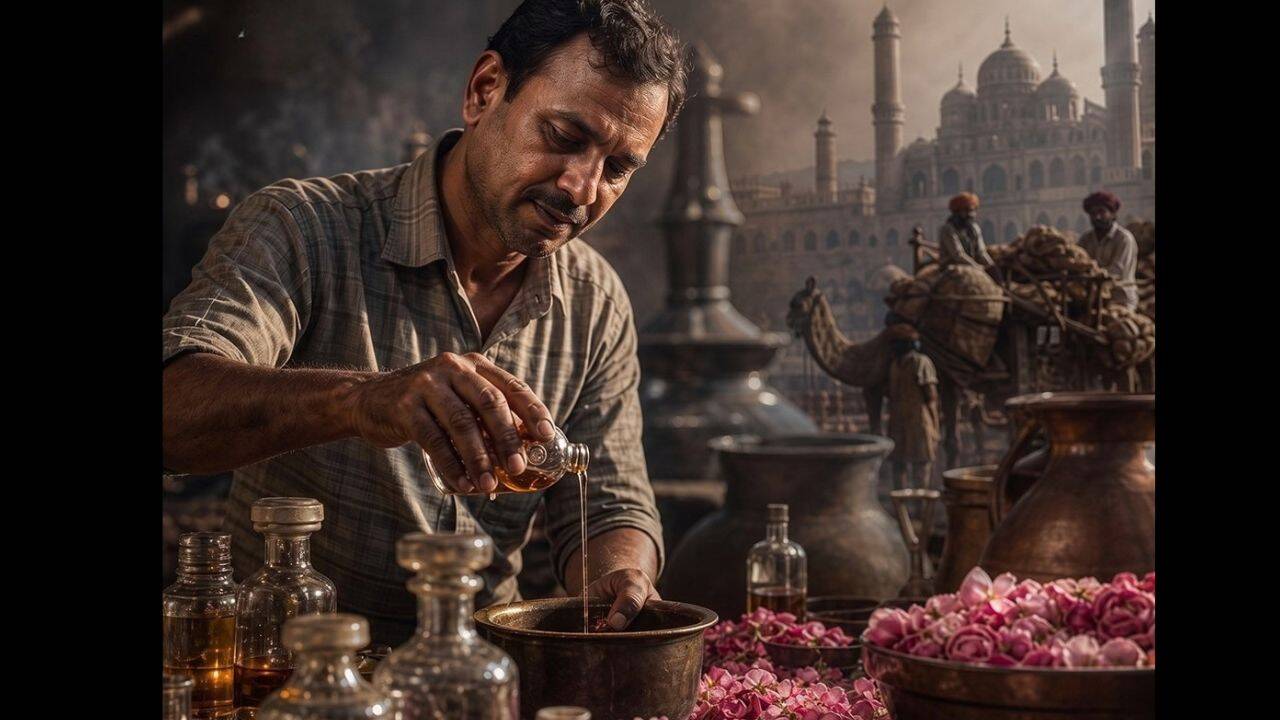
What makes Kannauj genuinely remarkable is not just its age but its stubborn refusal to abandon its original method. The town’s attar, a traditional oil-based perfume, is still made using a technique called deg bhapka, a slow, labour-intensive hydro distillation process that predates even the famous perfumeries of Grasse in France. In this method, flower petals and water are placed inside a copper still known as the deg, sealed with clay, and heated over a wood or cow dung fire. The resulting fragrant steam travels through a twisted bamboo pipe called the chonga into a receiving vessel, the bhapka, which sits in a cooling water bath. Inside the bhapka, a base of pure sandalwood oil slowly absorbs the fragrance carried by the steam, eventually forming attar. Unlike modern alcohol-based perfumes, this oil-based method has no synthetic shortcuts, and creating even a single small bottle can take up to two weeks of patient, hands-on work.
The astonishing math behind a single bottle
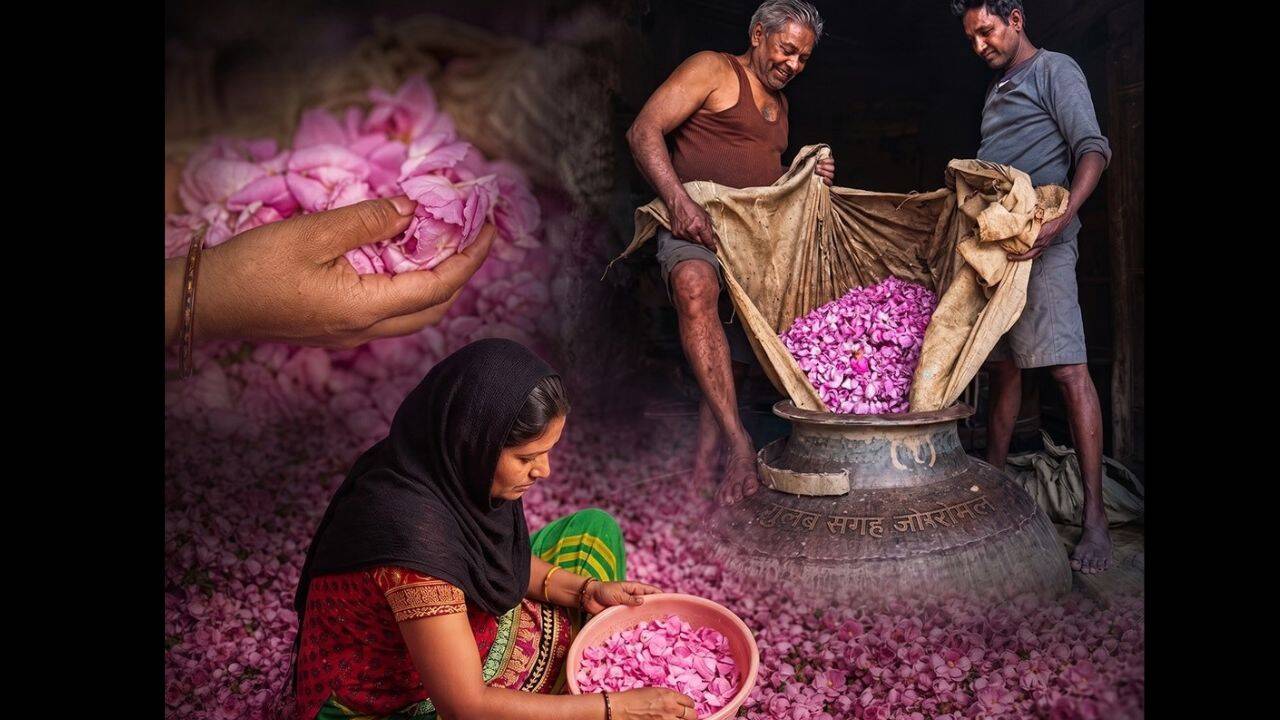
The sheer scale of raw material required for this process is difficult to comprehend. Producing just one kilogram of pure rose attar reportedly requires several thousand kilograms of handpicked rose petals, gathered fresh at dawn when their fragrance is at its strongest, since roses lose their scent intensity as the day goes on. This labour-intensive ratio is part of why authentic attar remains a premium, painstakingly produced product rather than a mass-manufactured one. Beyond rose and jasmine, Kannauj perfumers are also known for something far more unusual: mitti attar, or the scent of the very first rain hitting dry earth. Long before Western scientists coined the term ‘petrichor’ to describe this smell, Kannauj artisans had already worked out how to capture it by distilling baked earthen clay, turning a fleeting seasonal moment into a bottled fragrance that has become one of the town’s most distinctive specialities.
A trade facing real challenges, and a slow revival
Kannaujs story is not simply one of unbroken success. Industry accounts note that the town once had close to 700 working distilleries before economic liberalisation in the late 1980s introduced cheaper, alcohol based Western perfumes into the Indian market. By the mid 2000s, that number had fallen to somewhere between 150 and 200 units, as demand shifted and raw materials, particularly sandalwood, became increasingly scarce and expensive.In recent years, however, there has been a renewed push to protect and promote the craft. Kannauj Perfume received official Geographical Indication protection under India’s GI Act from 2013 to 2014, legally safeguarding its identity. The Uttar Pradesh government has also included Kannauj under its One District One Product scheme, offering support through modern packaging facilities, e-commerce training, and participation in international trade expos, an effort to help traditional perfumers reach global markets more directly rather than relying entirely on middlemen. Today, Kannaujs attars, and its base ingredients used in blending, reportedly travel well beyond India, particularly to the Middle East, where countries like the UAE remain among the largest importers of Indian attar, alongside a smaller but growing interest from perfumers in Europe and North America looking to source natural, traditionally made ingredients.
A fragrance that has outlasted every era
Whatever the exact figures behind its economy today, Kannauj’s deeper story is one of extraordinary continuity. In a world where perfume production has largely moved to industrial, chemical-heavy processes, a small town in Uttar Pradesh continues to rely on copper vessels, bamboo pipes, and techniques passed down across dozens of generations. That a place this small has held onto a craft this demanding for well over a thousand years, while still finding new markets abroad, says as much about the resilience of its artisans as it does about the timeless appeal of a well-made fragrance.