








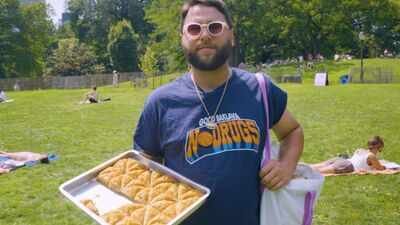
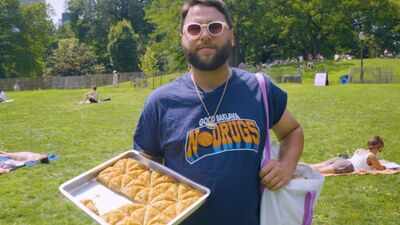
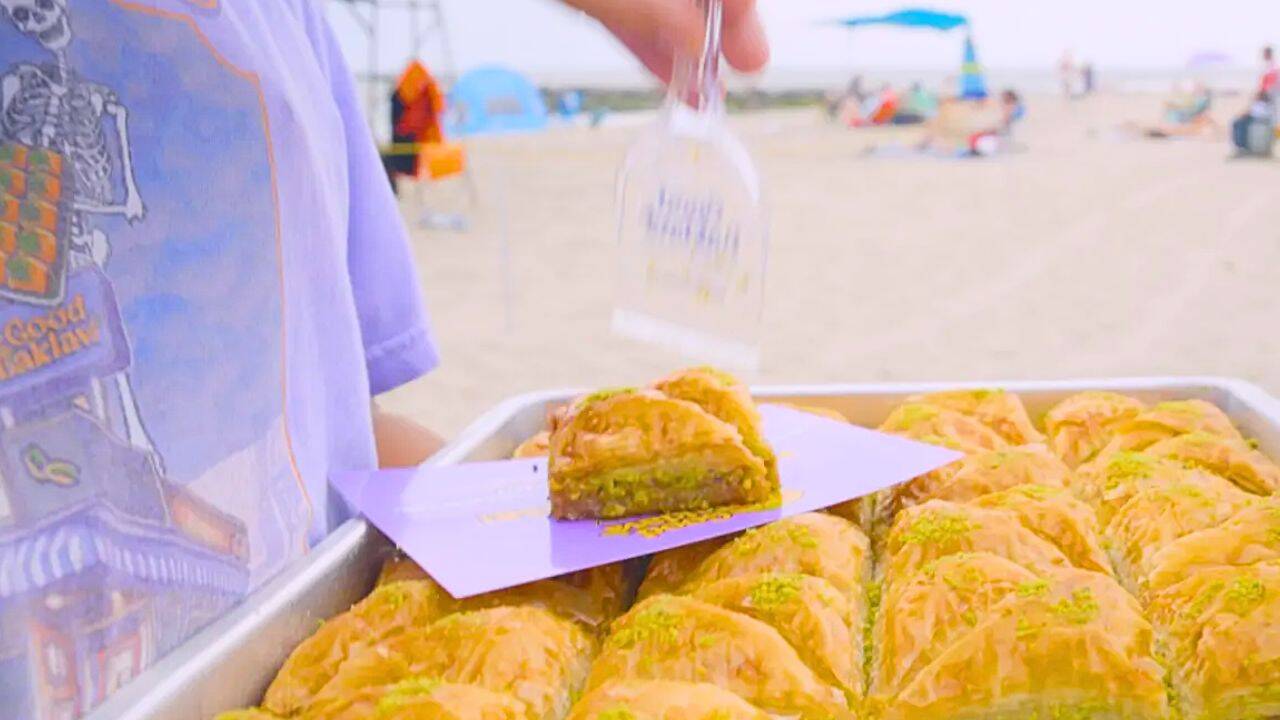
A New York City baklava seller has turned a small side hustle into a business that now brings in more than $20,000 in monthly sales. Jacob Komarow, known around the city as the ‘Baklava Guy’, started Good Baklava in 2021 after buying three trays of prepared baklava to sell at a Phish concert. A simple bet with a friend soon turned into a growing business. Today, Komarow sells baklava at parks, beaches, festivals, and pop-up events, as well as online. He gets the pastries from a commercial bakery in Turkey. His business gained wider attention after he began selling baklava near Madison Square Garden during the New York Knicks’ championship run.
How the Baklava Guy turned a concert bet into a $20,000-a-month business
Komarow’s business started with a simple experiment in September 2021. While travelling to a Phish concert in California, he bought three trays of pre-made baklava from a Middle Eastern grocery store and challenged a friend to see if he could sell them. He managed to sell all three trays and tripled his money. At the time, Komarow was six months sober and had recently lost his first full-time marketing job, so he relied on freelance work and baklava sales to cover his expenses.For nearly three years, he continued selling baklava at Phish concerts before taking the business to other outdoor events. A major shift came in spring 2022, when he tried a pistachio-heavy Turkish baklava from a vendor in Paterson, New Jersey. The experience eventually led him to the supplier in Turkey that now provides his baklava.
PC: CNBC
How Good Baklava’s Madison Square Garden sales became a turning point
Good Baklava’s recent growth accelerated after Komarow began selling outside Madison Square Garden during the Knicks’ championship run. He handed out free slices, filmed the appearances and shared the videos online, helping the business attract a much larger audience. A New York Times profile brought another wave of attention, which Komarow described as a ‘baklava wildfire’. He said the company’s Instagram audience grew by 20% overnight after the story was published, while brands began reaching out about partnerships.Good Baklava has since worked with companies and restaurants, creating new business opportunities. As per CNBC, the business recorded slightly more than $20,000 in monthly sales over a recent nine-month period. The figure covers street sales, pop-ups, wholesale orders and online purchases.
Why the business still faces unpredictable months despite strong sales
The recent attention has brought strong sales for Good Baklava, but the business has also experienced sharp swings from one month to the next. Its strongest month came in December 2025, when sales approached $70,000, helped by holiday orders and customer traffic at New York’s Union Square Holiday Market. Sales fell below $10,000 the following month, highlighting how much the business can depend on seasons, events, and temporary locations.Alongside these fluctuations, Komarow has ongoing costs for shipping, packaging, marketing, and Shopify fees. The company also has about 11 part-time workers who handle marketing, administration, packing and pop-up operations. Temporary markets can bring additional permit and insurance expenses. When selling from parks or his van, Komarow says he sometimes faces police intervention over permits, although he has not been arrested or fined.
How Komarow’s street sales strategy keeps changing with every customer
For Komarow, selling baklava is as much about conversation as it is about the pastry itself. Whether he is in Prospect Park, Rockaway Beach, or at a concert, he approaches people with a tray and asks if they would like to buy some baklava. He compares the approach to stand-up comedy, saying each interaction helps him understand what works. His pitch can move from small talk and jokes to explaining his Turkish baklava and the ‘Good Baklava; No Drugs’ shirts he wears.Once customers show interest, he explains the pastry, where it comes from, and how much it costs. Three pieces usually sell for $10, while seven cost $20. At some music festivals, three pieces can cost $15. Years of testing different introductions, phrases, and approaches have helped Komarow refine his sales pitch in real time.