









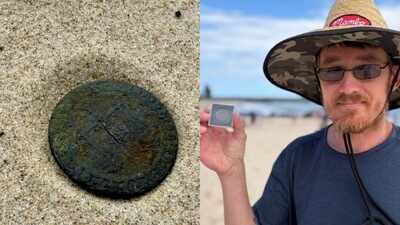
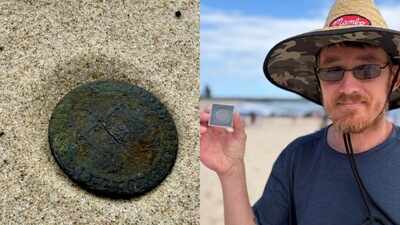
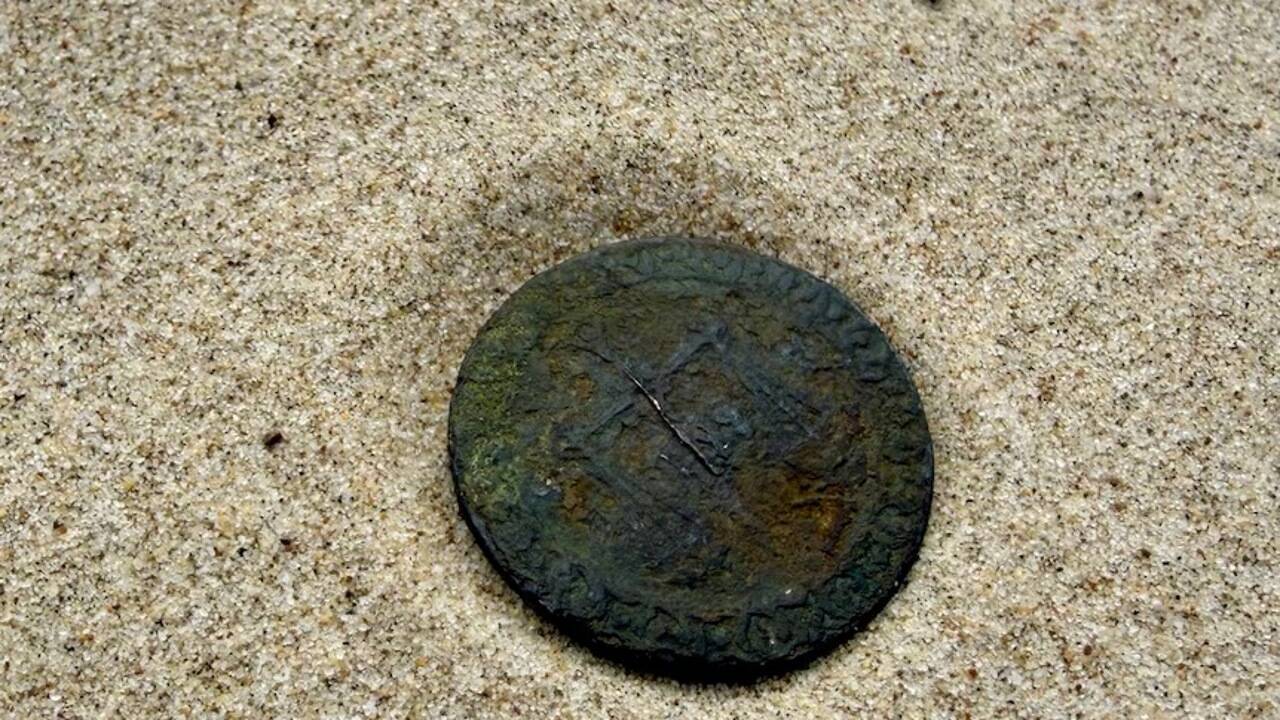
Most people who take up metal detecting as a weekend hobby expect to dig up the usual haul: bottle caps, rusted ring pulls, and the occasional lost coin from someone’s pocket that same summer. So when Dale Oldham, a hobbyist detectorist from Australia’s Mid North Coast, pulled a small, worn disc out of the sand at Port Macquarie’s Town Beach, he genuinely thought nothing of it. It wasn’t until the next day, after a closer look and a quick online search, that he realised he was holding something that had travelled an astonishing distance to end up buried on an Australian beach, a coin minted in Zanzibar, off the coast of East Africa, back in the 1880s.
He almost dismissed it as just another rusted coin
According to ABC News, Oldham found the coin on December 27, buried roughly 20 centimetres deep in the sand, and simply tucked it away alongside the rest of that day’s finds without giving it much thought. His first instinct, understandably, was that it was nothing out of the ordinary. He later admitted, “I had no idea, I thought it was just a rusted Australian $1 coin,” a reaction that makes sense given how easily a small, corroded piece of metal blends in with everything else a detector regularly turns up on a busy public beach.
An online search revealed something far more unusual
It was only the following day, when Oldham sat down to properly examine his haul, that things took an interesting turn. Struggling to make out the worn details on the coin’s surface, he turned to an AI-assisted search to help narrow down what he might be looking at, gradually piecing together enough of the faint markings to identify it. What emerged was an 1881 copper 1 Pysa coin from Zanzibar, a denomination and origin he admitted he had never come across before in all his time detecting, despite years of digging up all manner of everyday debris along the same stretch of coastline.
Why foreign coins like this aren’t as strange as they sound
As per ABC News, Melbourne-based coin expert Matthew Thompson explained that while the coin is unlikely to carry much monetary value today, its presence on an Australian beach makes far more sense once you consider the country’s colonial-era history. Long before Australia had its own mints, which only arrived in the mid-1800s, early colonial communities genuinely relied on a patchwork of international currencies simply to get by. Coins arrived steadily on merchant ships from all over the world during that period, and it was common for foreign currency to circulate freely alongside whatever local money existed at the time.
A small object with a surprisingly big story
What makes finds like this genuinely fascinating, according to Thompson, isn’t necessarily their resale value but the sheer improbability of the journey behind them. A single coin, minted in East Africa in 1881, somehow made its way across oceans and continents before ending up lost in the sand of a New South Wales beach more than a century later, waiting patiently until a hobbyist with a metal detector happened to walk over exactly the right spot. Thompson noted that objects like this offer a rare, tangible glimpse into the past, hinting at trade routes, travellers, and lives connected across the world in ways that rarely get recorded in any formal history book.
Just one of many treasures found along the coast
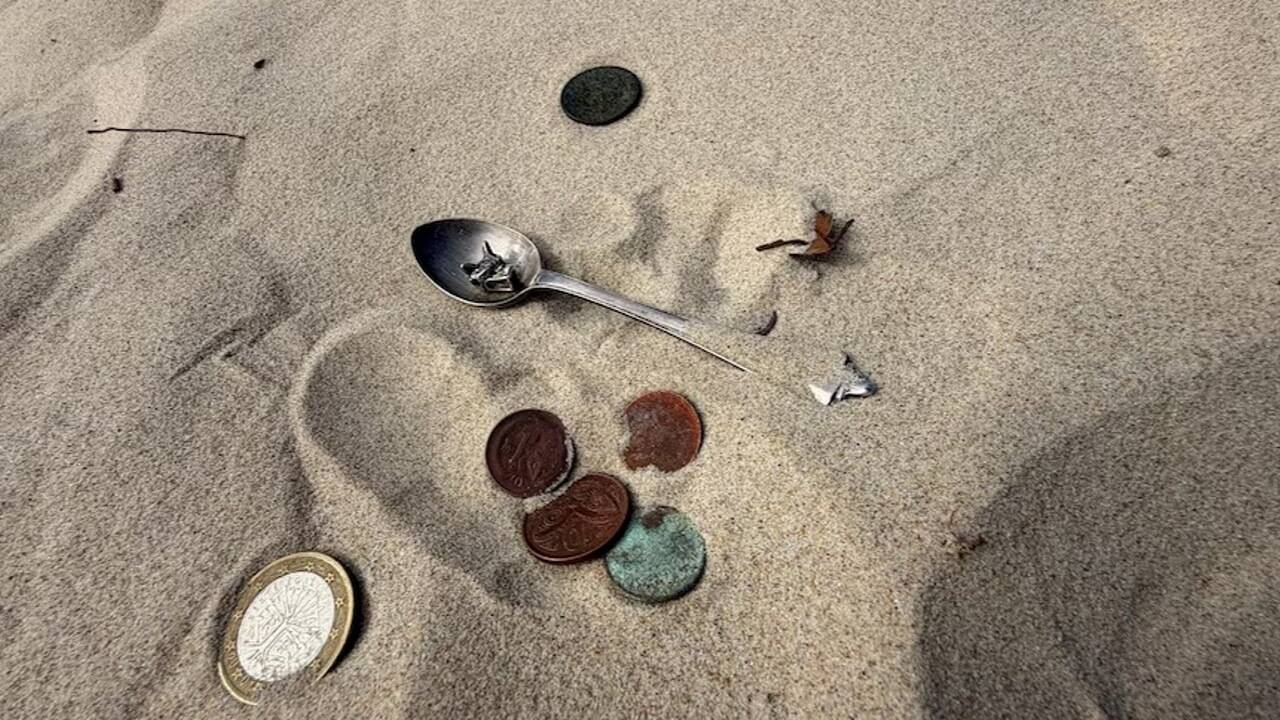
This isn’t Oldham’s first noteworthy discovery either. Beyond the occasional handful of old Australian coins, he has previously found jewellery, gold rings, diamond rings, and necklaces buried in the sand, and says he makes a genuine effort to track down and return items to their original owners whenever possible. For him, every trip out with the detector carries the same unpredictable thrill, since there’s simply no way of knowing what the sand might be hiding until the machine starts beeping.
Why this hobby keeps pulling people back to the beach
Metal detecting has a quiet, patient appeal that’s easy to underestimate from the outside, since most outings genuinely do turn up little more than scrap metal and forgotten small change. But it’s exactly that unpredictability that keeps hobbyists like Oldham coming back, the knowledge that buried somewhere beneath an ordinary stretch of sand, there might be something extraordinary waiting, whether that’s a piece of someone’s lost jewellery or, as it turned out this time, a small copper coin that had quietly travelled from one side of the world to the other over a century ago.