









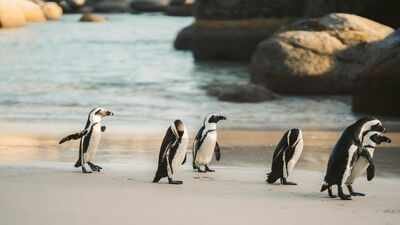
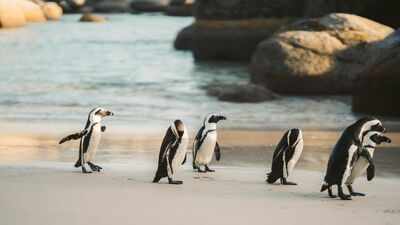
Phillip Island’s little penguins once faced a crisis that threatened to erase much of their presence from the island. By the 1980s, nine of its 10 penguin colonies had disappeared, while the final colony on the Summerland Peninsula was also under pressure from introduced predators, habitat loss and human activity. According to Phillip Island Nature Parks, a long-running conservation effort combining fox control, habitat restoration, scientific research and land rehabilitation helped reverse that decline. The surviving little-penguin population grew from about 12,000 in the mid-1980s to an estimated 40,000 today. The story, detailed in the organisation’s pest-control, research and history records, shows how protecting wildlife often requires more than removing a single threat—it demands sustained cooperation between scientists, governments, local communities and visitors. Read on to know more:
A predator that changed the island
Phillip Island, also known as Milawul, is famous for the nightly arrival of little penguins at the Penguin Parade. Yet the sight that attracts visitors today was once at risk of disappearing.Red foxes were introduced to Phillip Island in the early 1900s. Over time, they became one of the most serious threats to the island’s wildlife. Little penguins are especially vulnerable because they spend much of their lives at sea but return to land to breed, moult and raise their chicks. Their nests are often located in burrows or sheltered areas close to the coast, where they can be exposed to predators.Phillip Island Nature Parks describes foxes as the little penguins’ biggest threat on land. By the 1980s, nine of the island’s 10 penguin colonies had become extinct. The remaining colony on the Summerland Peninsula, which includes the Penguin Parade, was also under threat.The decline was not caused by foxes alone. Research identified several other pressures, including habitat destruction, housing development, traffic near penguin colonies, fire and domestic pets. Together, these threats made it increasingly difficult for penguins to survive and breed successfully.
Warning signs from research
The island’s conservation response was shaped by research. Population studies conducted during the 1980s showed that the last remaining penguin colony could disappear by the late 1990s if existing threats continued.That warning encouraged authorities and conservation groups to take action. The Penguin Protection Plan, announced in 1985, included scientific research, habitat management, a fox-control program and the gradual buyback of houses in the Summerland Estate.The housing estate had been built within the penguins’ habitat. As houses, roads and associated infrastructure were removed, the land could be returned to a more natural condition. This was a major undertaking and required years of planning, funding and rehabilitation.Phillip Island Nature Parks says the buyback and removal of the Summerland Estate continued for decades, as per reports. The final houses and infrastructure were removed in 2010, after which an ongoing rehabilitation program was established to help penguins and other wildlife thrive.This approach recognised an important conservation principle: removing a predator is not enough if the habitat remains unsafe. Wildlife needs places to shelter, feed, breed and raise young without constant disturbance.
The campaign against foxes
Fox control began as a coordinated effort involving farmers, rangers and conservation workers. According to Phillip Island Nature Parks, more than 1,000 foxes were removed over a period of 20 years.The organisation initiated a dedicated Fox Eradication Project in 2006. Rather than relying on one method, the project used an integrated approach involving different techniques to locate and remove foxes across the island.The goal was ambitious. Instead of simply reducing fox numbers, conservation teams aimed to remove foxes from Phillip Island altogether. This was important because even a small number of predators could threaten vulnerable colonies and prevent other species from recovering.The campaign required persistent monitoring. Rangers and other workers had to search for signs of foxes, respond to sightings and prevent the animals from re-establishing a population. The work also formed part of wider pest management on the island, including programs targeting feral and roaming cats and rabbits.In 2017, Phillip Island was declared fox-free after an intensive 20-year eradication program. The campaign was supported by the Victorian Government, Penguin Parade visitors, the Penguin Foundation and the Helen Macpherson Smith Trust.
Habitat restoration made a difference
The recovery of the little penguins was closely connected to the restoration of their habitat.The Summerland Peninsula had once been transformed by housing development and human activity. Removing the houses allowed conservation teams to rebuild a landscape better suited to wildlife. The rehabilitation work helped restore vegetation, reduce disturbance and create safer areas for nesting.The return of natural habitat also benefited species beyond little penguins. Short-tailed shearwaters and other coastal birds use the island’s protected areas, while the fox-free environment later supported the reintroduction of eastern barred bandicoots.In 2017, the same year Phillip Island was declared fox-free, researchers released eastern barred bandicoots onto the Summerland Peninsula. The area had been rehabilitated from a former housing estate into a natural environment that supported a thriving little-penguin colony and migratory short-tailed shearwaters.This illustrates how conservation gains can extend across an ecosystem. Protecting one habitat can create opportunities for several threatened species, especially when predators are controlled and human disturbance is reduced.
From 12,000 to 40,000 penguins
Phillip Island Nature Parks reports that extensive conservation work helped increase the number of little penguins from approximately 12,000 in the mid-1980s to an estimated 40,000 today.The figures represent more than a simple population increase. They reflect the combined effect of predator control, habitat restoration, reduced development pressure, scientific monitoring and community involvement.The Penguin Parade also provides a useful way to monitor changes. Guides count the number of penguins crossing the beach each night, and annual averages can offer insight into population trends. These counts do not represent every penguin on the island, but they help researchers track changes in the colony over time.Conservation teams also monitor breeding success by studying the number of chicks fledged per breeding pair at selected sites. This helps researchers understand not only how many penguins return to land, but also whether they are successfully reproducing.Such long-term monitoring is essential because wildlife populations can change in response to food availability, disease, weather, marine conditions, human activity and other factors. Regular data collection allows managers to identify problems early and adjust conservation strategies.
Research continues on land and sea
Although the fox eradication campaign was a major achievement, the work of protecting little penguins has not ended.Phillip Island Nature Parks says its researchers study penguins in both terrestrial and marine environments. This is necessary because little penguins spend around 80 per cent of their time at sea, even though they depend on land for breeding.Researchers use GPS trackers and other devices to study where penguins travel for food. Tracking has shown that many penguins feed within 50 kilometres of the island’s colony, while some individuals travel farther during winter, including towards Portland in Victoria and Port Phillip Bay near Melbourne.Understanding these movements helps scientists identify potential threats in the marine environment. Changes in ocean temperature, prey availability, pollution and human activity can all affect the penguins’ ability to find food.Research projects also examine feeding hotspots by combining information about where penguins go, how much they eat and what prey they consume. This evidence can help guide future conservation decisions as marine ecosystems respond to environmental change.
A model for community-led conservation
Phillip Island’s recovery story shows that successful conservation rarely happens through one dramatic action. It is usually built through many years of practical work.The fox eradication program required rangers, farmers, scientists, government agencies, conservation organisations and local residents to work towards the same goal. Visitors also contributed through tourism, with Phillip Island Nature Parks stating that visits help fund research and wildlife conservation.The island’s history also highlights the importance of acknowledging the Bunurong people, the Traditional Owners of Milawul. Phillip Island Nature Parks recognises the continuing connection of the Bunurong to the landscape and describes its role in healing Country and supporting Traditional Owner involvement in decisions about Country.The little penguins’ recovery is therefore not only a story about numbers. It is a story about restoring a damaged landscape, learning from scientific evidence and changing the way people share space with wildlife.
What the future depends on
The increase from 12,000 to 40,000 little penguins is encouraging, but it does not mean the species is permanently secure on Phillip Island. Conservation gains must be maintained.Foxes must remain absent. Other introduced predators, including feral and roaming cats, require continued management. Roads, pets, fires, rubbish, human disturbance and habitat damage can still affect wildlife.The penguins’ time at sea also creates challenges that cannot be solved entirely on land. Their food supply may be influenced by changing ocean conditions, climate change and human activity. That is why Phillip Island’s conservation program combines population counts, breeding studies, tracking and marine research.The lesson from Phillip Island is clear: wildlife recovery becomes possible when threats are identified early and addressed consistently. A colony that once appeared destined to vanish has grown substantially because people chose to protect its habitat, remove its predators and continue monitoring its future.For the little penguins returning to shore each evening, that long-term commitment has made the difference between disappearance and survival.