



![Hanuman Ansh Full Movie Collection: 'Hanuman Ansh' box office collection Day 48 [LIVE]: Vishal Chaturvedi and Shobhinaw Satyaa's spiritual biopic on Neem Kaorli Baba maintains momentum, eyes Rs 285 crore domestic net milestone | Hindi Movie News](https://usnewsflash.online/wp-content/uploads/2026/09/hanuman-ansh-day-48-live-box-office-collection-image-credits-imdb-150x150.jpg "Hanuman Ansh Full Movie Collection: ‘Hanuman Ansh’ box office collection Day 48 [LIVE]: Vishal Chaturvedi and Shobhinaw Satyaa’s spiritual biopic on Neem Kaorli Baba maintains momentum, eyes Rs 285 crore domestic net milestone | Hindi Movie News")






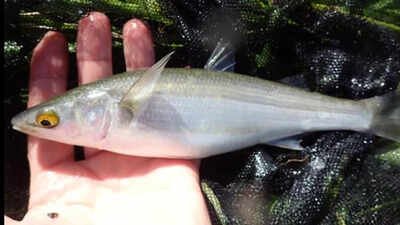
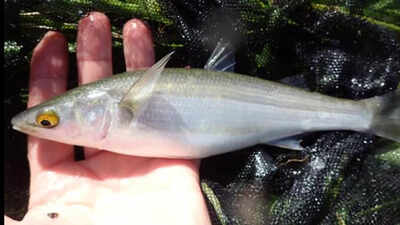
A major effort to remove invasive rice grass from Tasmania’s Duck Bay is showing major signs of recovery, with native vegetation returning and the number of fish species rising from five to 11. The changes came within just two to three years of the weed being removed from parts of the wetland.The restoration work is being carried out by Circular Head Landcare, which has spent almost 15 years trying to eradicate rice grass from Tasmania’s largest coastal wetlands, according to ABC news. The group, with support from farmers, has reduced the weed from about 50 hectares to just five hectares.Scientists from Univrersity of Tasmania studying the wetland also found that fish were not only returning but were using the restored saltmarsh areas for feeding. Among the species benefiting are yellow-eye mullet, which are caught both commercially and recreationally, and hardyheads, a small bait fish eaten by larger species.The restoration has required a large effort on land and in the water. Rice grass has been treated with the herbicide Fusilade Forte using quadbikes, vehicles with long hoses and, more recently, drones. Volunteers also search the coastline for seedlings that may have been missed or have grown again.
How rice grass spread across wetland
Rice grass was first planted in the 1940s to beautify Smithton’s Duck River. Over the years, it spread across mudflats and saltmarsh along a 120-kilometre stretch from Woolnorth to Stanley.The weed can form dense growth that takes over areas used by native plants and animals. Sue Jennings, a volunteer with Circular Head Landcare, says the grass became increasingly dense when left untreated.“All of these little sheltered bays were full of rice grass, which is a bright green, wavy grass up to your knee. It just gets thicker and thicker,” Jennings said.Duck Bay is part of Tasmania’s largest coastal wetland system, which includes sheltered bays, estuaries and tidal islands. The area is also important for shorebirds, with thousands visiting Tasmania’s far north-west during summer.Some of these birds travel long distances to reach the wetland. They include the far eastern curlew, ruddy turnstone and red-necked stint. The small red-necked stint weighs only about 30 to 35 grams.Shorebird ecologist Eric Woehler says red-necked stints can travel enormous distances during their lives. “Over 20 years, red-necked stints would fly half a million kilometres, which is farther than the distance between the earth and the moon,” Woehler said.The wetland also supports fish including gobies, sardines, flounder, galaxiids, garfish, leatherjackets and Australian salmon.
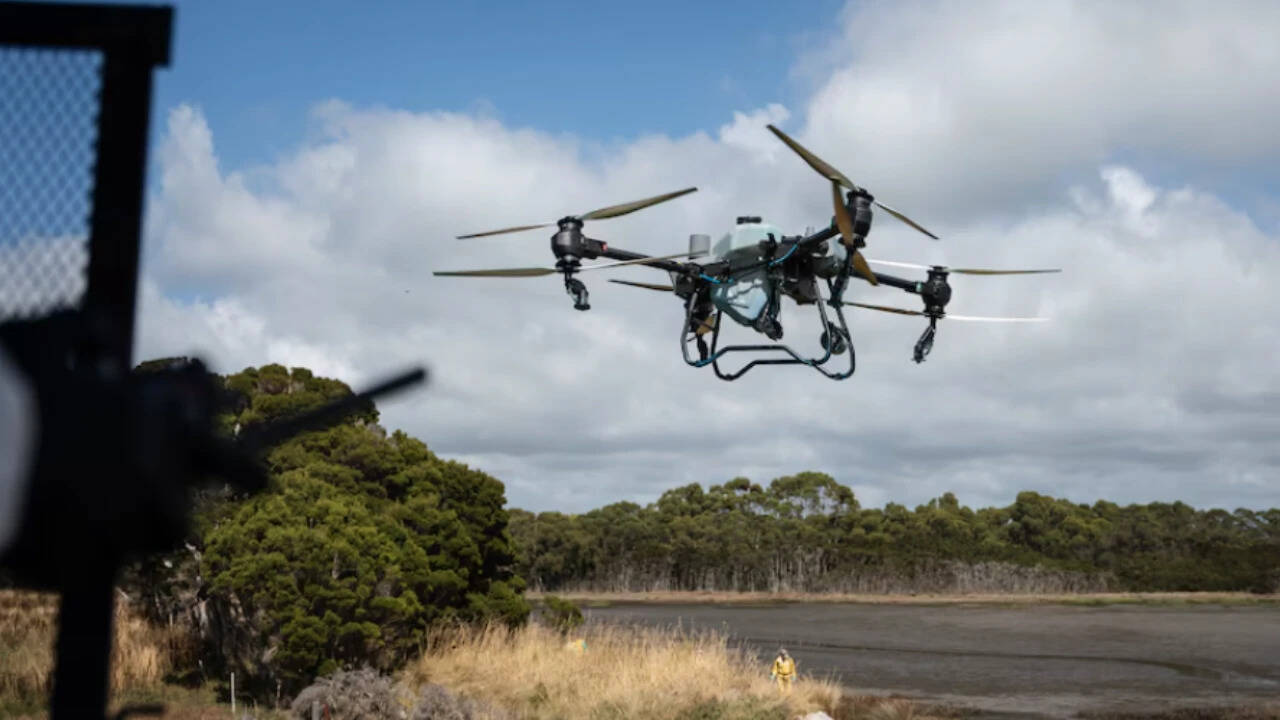
Rice grass was treated with herbicide using quadbikes, vehicles with long hoses and drones. (Photo: ABC)
Native saltmarsh plants return
Removing rice grass has allowed native saltmarsh vegetation to recover. Jennings says the herbicide being used kills pasture grass and rice grass but does not kill the saltmarsh plants.“It kills pasture grass and it kills rice grass, but it doesn’t kill the salt marsh plants. So as we get rid of the rice grass, the salt marsh plants start to recover on their own,” she says.The restoration is also important for nearby oyster farms. During mass herbicide spraying, harvesting is stopped for an additional seven days as a safety measure.According to Tasmanian Oyster Company chair Jon Poke, the pause can mean a significant financial loss for the business. The company can harvest up to 18,000 to 20,000 dozen oysters a week, meaning the two-week suspension could represent a lost opportunity of nearly half a million dollars in sales.However, Poke says protecting the wetland was important for the long-term survival of the farms. “We looked at what had happened in other estuaries, and for my own business to survive, we needed to make sure that the environment was looked after. Eventually rice grass would have closed our farms down,” he says.
Fish return after rice grass removal
University of Tasmania scientists have been tracking changes in native saltmarsh vegetation and fish communities as the restoration continues. Wetland ecologist Vishnu Prahalad says the recovery had happened faster than expected in some areas. “After two years, three years, you wouldn’t even be able to say there was rice grass there, so all the native vegetation has come back,” Prahalad said.The number of fish species recorded in the restored areas increased from five to 11. Scientists also saw a major change in the number of fish caught during their surveys. In the first year, researchers struggled to find fish, catching only two across four nets. “The first year, I think we caught two fish; we struggled to look for them, and there they were, two fish across four nets, which is very unusual,” Prahalad says.The difference became much clearer after the rice grass was removed. Researchers found about 200 mullets in one net. “After the rice grass was removed, in one net we had about 200 mullets,” Prahalad says.Scientists then examined whether the fish were simply able to enter the area more easily or were actually using the restored habitat. They found that the fish were feeding there and eating the typical food found in a saltmarsh. “Nature bouncing back is a wonderful thing to see,” says Prahlad.Circular Head Landcare hopes to finish treating the remaining rice grass meadows within the next two years, depending on weather and funding. Once the eradication work is complete, the area will be monitored for another decade. The amount of herbicide used is also expected to reduce as the weed becomes less common and the focus shifts to finding any remaining plants.