










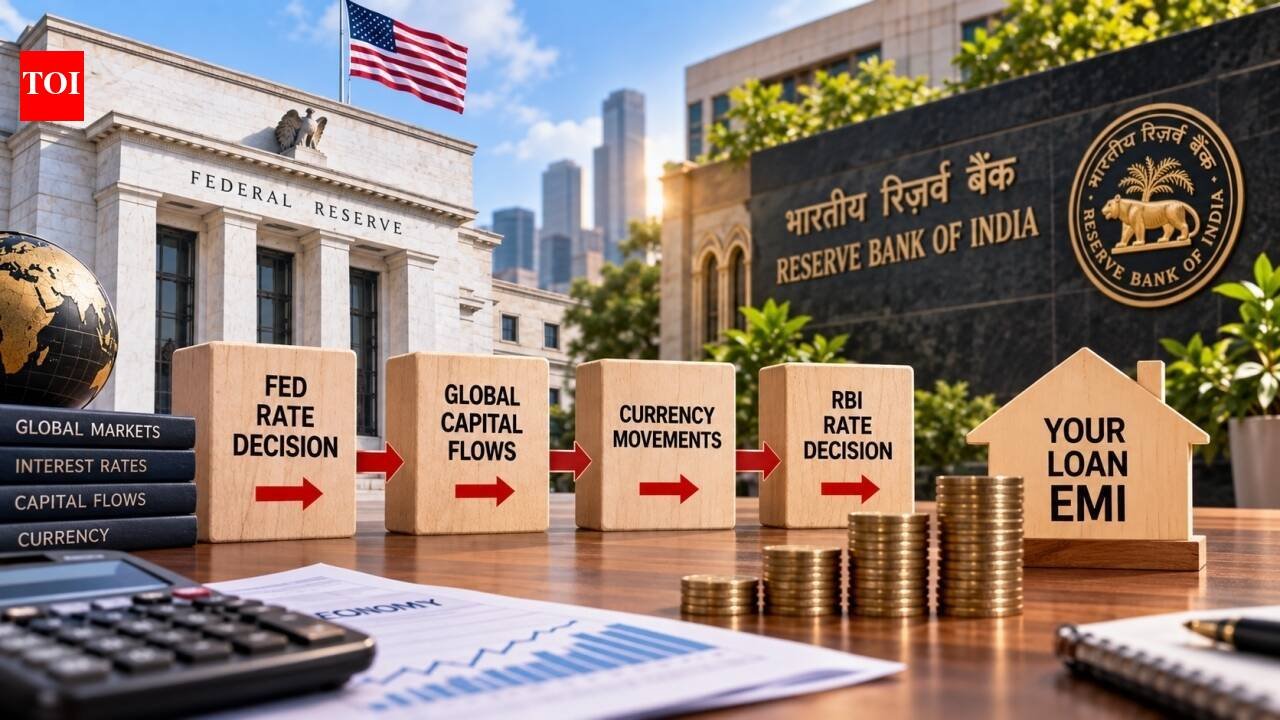
Last Wednesday, the US Federal Reserve raised interest rates for the first time since July 2023. Thousands of miles away, sitting in your home which you have bought on loan, your EMI may take a hit.The US Federal Reserve’s quarter-percentage-point rate hike has added to the challenges facing the RBI ahead of its monetary policy review in October.“Global growth is projected to soften while inflation forecast is higher for 2026 vis a vis the previous year. Some central banks have tightened policy, while others remain vigilant. Crude oil prices, currencies and financial markets remain volatile, fluctuating in line with the changing intensity and uncertainties of the West Asia conflict,” RBI governor Sanjay Malhotra had said in the August review statement by the Monetary Policy Committee.Almost two months later, inflationary pressures on the economy have increased. And the US Fed’s rate hike signals tighter monetary conditions. RBI has the balancing act of reducing inflation without compromising on growth channels. With inflation rising and GDP growth beating estimates, experts see a rate hike by the central bank as a prudent move.What does this mean for your EMI? How does the US Federal Reserve’s decision tighten the situation for RBI? Let’s decode:
What US Fed has done and what it means for India
Last week, the US Federal Reserve hiked interest rates by 25 basis points and another rate hike has been forecast by the end of this year. This sent US bond yields up. The reason was simple: inflation in the US is persistently high and tariffs and oil prices are adding to a cloudier outlook.But, why should the US Fed rate math make any difference to your loan EMI?The cycle works like this: When the US Fed hikes rates, dollar assets such as US Treasuries become more attractive. This can lead to capital outflows from India which in turn puts pressure on the rupee.A weaker and depreciating rupee makes imports expensive. And in India’s case there is double whammy: it imports around 90% of its crude needs and oil prices are currently rising globally due to the US-Iran conflict. Add to that a weaker rupee and the import bill suddenly goes up, adding to input cost pressures and potentially triggering higher inflation. Higher import costs can feed into transport, manufacturing and eventually household prices.RBI does not have to follow the Fed. It sets policy according to Indian inflation and growth. But currency weakness and imported inflation can reduce its room to cut rates – or strengthen the argument for keeping rates elevated. Forex intervention can soften currency swings, without eliminating the underlying pressures.If inflation moves beyond RBI’s comfort zone, it then hikes repo rate to keep it under check. Repo rate is the rate at which the central bank lends to the RBI. If that goes up, banks in turn hike loan rates since the higher cost of borrowing for banks makes way to higher cost of lending.If RBI raises its repo rate, repo-linked floating home loans would typically become costlier when rates reset.
Rising inflation: Is a rate hike inevitable?
Most economists and experts expect the RBI to hike repo rate this year, if not in the October policy, then in the December one. But a wait-and-watch approach is likely.The RBI looks to maintain retail inflation in the 2-6% range, with 4% as the target. Some economists see the 6% number being breached in the coming months. Retail inflation is already inching to 5% levels while WPI is nearing double-digit numbers.In a recent report SBI Research said that CPI inflation may cross-6.5% mark before dropping to less than 6% in early 2027.“Time to build moats through a 25-bps hike in October and Dec MPC each, and then to pause and take stock with upcoming data!” SBI said in its report.Global crude oil prices are hovering near $100, and a weaker rupee and tighter global financial conditions due to the US Fed rate hike will all add to the pressure on inflation.DK Srivastava, Chief Policy Advisor, EY India explains why the case for a rate hike has strengthened.“Recent trends in WPI and CPI indices indicate persistent pressure on inflation. This inflation is primarily due to cost push and supply side factors. These include the impact of El Nino linked deficient monsoon and rising crude oil prices. These have resulted in higher food prices,” he tells TOI.Alongside, there is also a relatively high growth of money supply. Average growth in M3 was 15.0% during June to August 2026.According to Srivastava, the RBI is likely to take into account the following factors in determining its policy stance and rate: recent US Fed rate hike by 25 basis points, comfortable growth situation with first quarter real GDP growth in FY27 at 7.8%, persistent increase in WPI and CPI inflation in recent months, and sustained increase in M3 growth above trend.
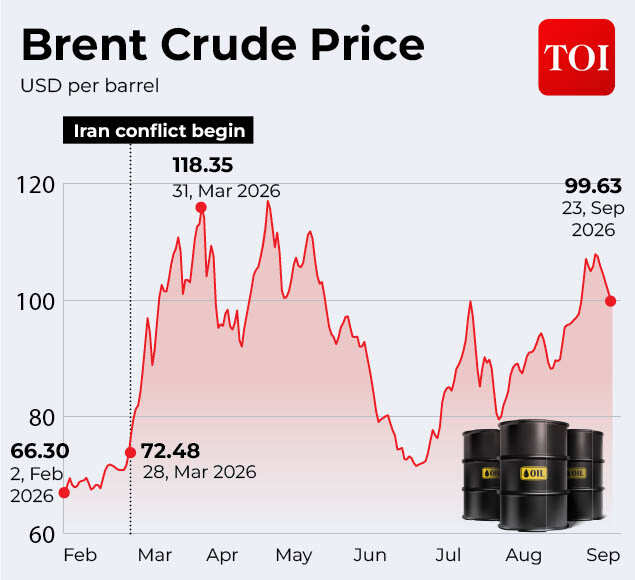
Brent crude prices since the US-Iran war began
“Chances for a change in the policy stance and a 25 basis points hike in the repo rate are high in the October 2026 MPC meeting,” he says.According to Ranen Banerjee, Partner and Leader, Economic Advisory, PwC, RBI will watch for the reaction to the US Federal Reserve hike in terms of outflows and pressure on the currency.“A repo rate hike is inevitable, but may not happen in the October review. The MPC may choose to wait and watch for inflation trajectory since the number is still within the target range and then opt for a hike in its December policy review if inflationary and fund outflow pressures do not abate and high frequency economic indicators continue to print strong,” Banerjee tells TOI.
What a rate hike would mean for your EMI
Depending on the loan terms, a repo rate hike would mean that your EMI could rise, your repayment period could lengthen, or both.Even without a hike, the rate relief borrowers hoped for could move further away, and that too ahead of the festive season if the MPC goes in for a repo rate increase on October 7.Adhil Shetty, CEO, Bankbazaar.com explains the scenarios: A 25 basis point repo rate hike does not mean every home-loan EMI will rise by the same amount. The impact depends on the loan benchmark, reset cycle and whether the full rate increase is passed on.“External benchmark-linked loans, including repo-linked loans, generally reflect changes in the benchmark more directly, while MCLR-linked loans follow the reset cycle in the loan agreement,” he tells TOI.
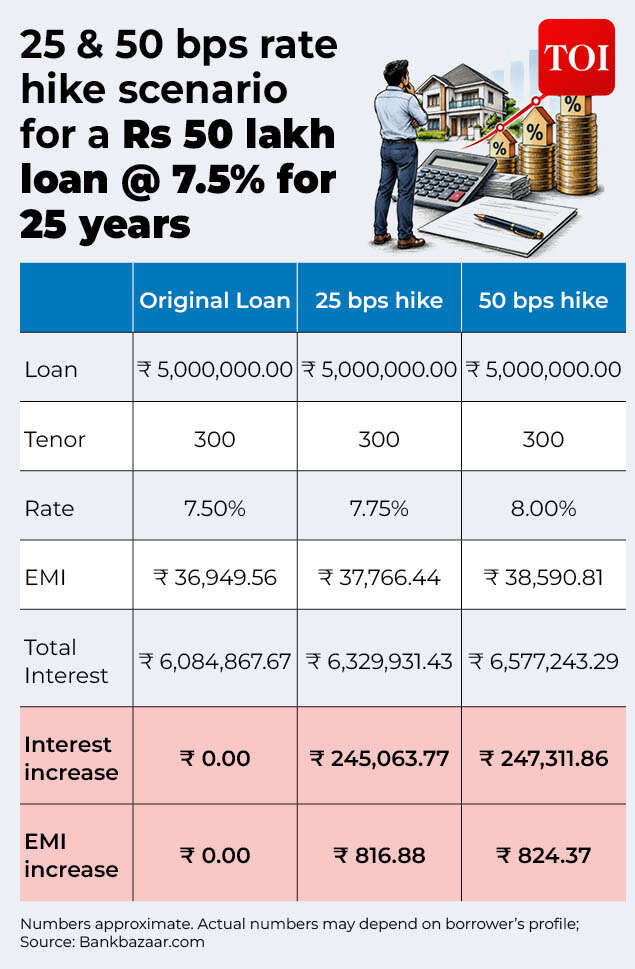
25 & 50 bps rate hike scenario for a Rs 50 lakh loan at 7.25% for 25 years
For example, at 7.5%, the EMI on a Rs 40 lakh loan with 25 years remaining is about Rs 29,560. If the rate rises by 25 basis points to 7.75%, the EMI would increase to about Rs 30,210, assuming the full increase is passed on and the tenure remains unchanged. A 50 basis point increase to 8% would take it to about Rs 30,870.“Borrowers should check their benchmark and reset terms to understand the actual impact on their EMI and tenure,” he advises.