



![Hanuman Ansh Full Movie Collection: 'Hanuman Ansh' box office collection Day 54 [LIVE]: Vishal Chaturvedi and Shobhinaw Satyaa's spiritual biopic on Neem Kaorli Baba biopic sustains eight week run, crosses Rs 310 crore India net mark | Hindi Movie News](https://usnewsflash.online/wp-content/uploads/2026/09/hanuman-ansh-day-54-box-office-collection-live-image-credits-imdb-150x150.jpg "Hanuman Ansh Full Movie Collection: ‘Hanuman Ansh’ box office collection Day 54 [LIVE]: Vishal Chaturvedi and Shobhinaw Satyaa’s spiritual biopic on Neem Kaorli Baba biopic sustains eight week run, crosses Rs 310 crore India net mark | Hindi Movie News")






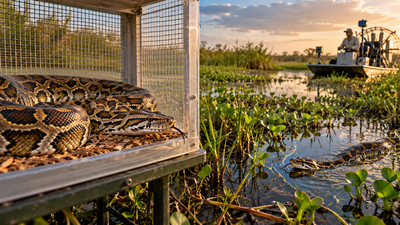
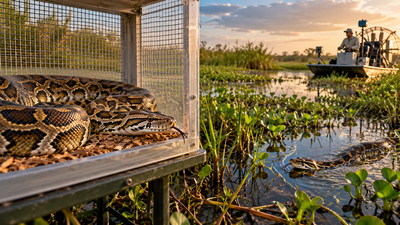
Researchers in Florida have tested whether Burmese python pheromones could work as a lure, because low detectability has hampered efforts to remove the snakes from the Everglades. The United States Geological Survey and the National Park Service have both described pheromone studies, though neither reports results. According to the study published in the BioOne Digital Library, titled ‘Not So Fatal Attraction: Captive Female Burmese Python Lures Do Not Improve Wild Python Detection’, in Southeastern Naturalist, the authors tested captive female pythons as lures at three Everglades sites. Cameras took 3,690,308 photographs and recorded four independent python detections: three at pens holding females and one at an empty control pen. The authors report that pythons were not significantly more likely to be detected at pens with females than at empty pens, which they say suggests the females were ineffective lures.
Why are Florida scientists testing Burmese python lures
According to the United States Geological Survey, Collier writes that trapping, hunting and scent-detecting dogs did not seem to be an easy fix for completely removing pythons from the Everglades. In the same feature, Collier explores the use of python reproductive pheromones as a lure, which, if effective, could improve removal methods like trapping. It makes a similar statement on its Everglades python management page, last updated on 10 January 2021. It says that “in the next year” its research partners will begin a study to determine whether pheromones can be manipulated to attract pythons, and it defines pheromones as “chemical secretions that affect social interactions”. It supports a multi-year research programme with the USGS. According to the park service, the programme includes studies of ecological impacts, potential control tools and potential monitoring tools.
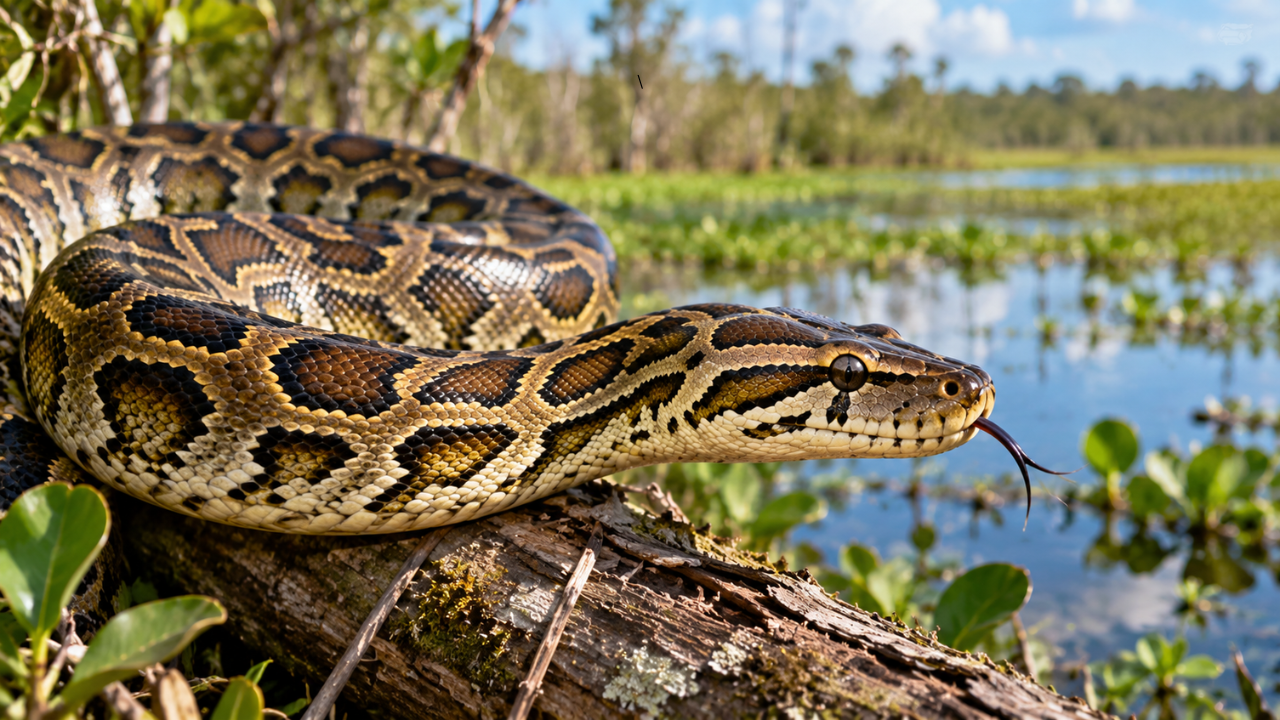
Image AI generated
What happened when scientists used female pythons as lures
The study tested whether reproductively active female pythons could attract wild males. The authors say that in a laboratory setting, males preferentially move towards female pheromones over other chemosensory cues. Between January and May 2024, they ran a paired experiment at three sites in the Greater Everglades Ecosystem. Each pair consisted of a pen holding one wild-caught female python and an empty control pen, with two pairs at each site.The six females were captured in the Greater Everglades in January 2024 by South Florida Water Management District python-removal agents. They were kept in the field pens for 90 days, and four game cameras monitored each pen. The cameras collected 3,690,308 photographs and recorded four independent detections of different pythons. Three were at pens holding females and one was at a control pen. The authors report that pythons were not significantly more likely to be detected at pens with females than at empty pens, and this suggests the females were ineffective lures.
Why did the Burmese python lures fail to attract snakes
The authors say a potential explanation is that the females did not emit pheromones because of stress associated with capture and captivity. They note that all the pythons refused food for the duration of the study and that one was removed after 55 days because of stress-related injuries. They also say the pens may have prevented pheromones from dispersing where males could sense them. Some snakes rely on trailing, meaning they deposit pheromones while moving through the environment, and the experimental design did not recreate this.Python pheromones have yet to be successfully isolated and synthesised in the laboratory. It says one solution could be the synthesis of pheromones as an inanimate lure, and notes that the chemical composition of python pheromones remains poorly understood. In its abstract, the paper states that “little is currently known about the chemical ecology of pythons” and that further research could aid the identification and production of effective, low-cost lures to increase detection and removal. It also says additional field testing of lures remains a potential avenue for improving python-control efforts.