










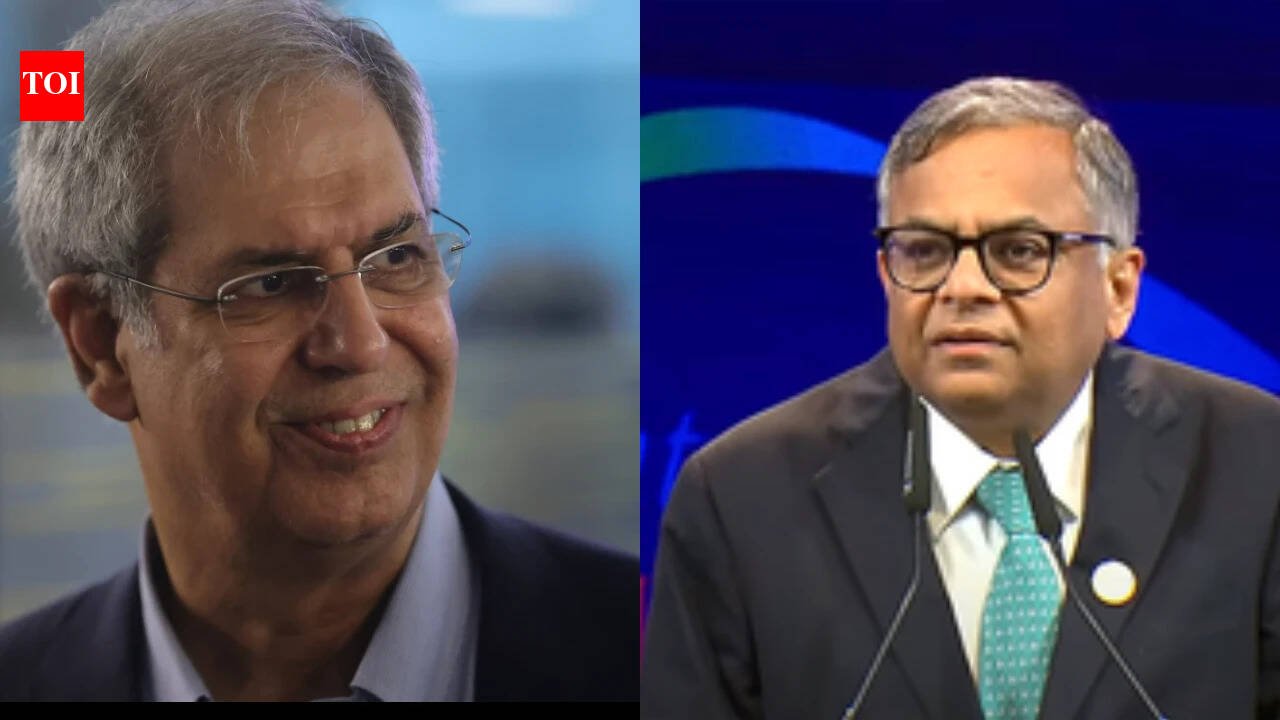
MUMBAI: Weeks after the RBI rejected Tata Sons’ bid to exit the upper-layer NBFC-CIC framework and directed it to comply with the norms, Tata Trusts chairman Noel Tata has proposed merging two subsidiaries, Tata Electronics Systems (TES) and Tata Consulting Engineers (TCE) into the 109-year-old holding company, seeking to take it outside the RBI’s regulatory ambit and avoid an IPO.It comes barely 11 days after the Tata Sons board expressed its preference for a listing to comply with RBI’s rules. Noel opposed a listing at that meeting and argued for alternatives.Noel’s present plan marks a departure from Tata Sons’ past restructuring moves, such as the 2004 demerger of TCS, which took businesses out of the holding company. This one brings them in. It would also shut the door on minority shareholder Shapoorji Pallonji Group’s hopes of monetising its Tata Sons stake through an IPO.Noel has submitted the proposal to both Tata Sons and the RBI. It was not immediately clear how either viewed the scheme.F N Subedar, advisor to Tata Trusts and former Tata Sons company secretary, described the plan as a return to Tata Sons’ historic structure, when it housed operating businesses such as TCS alongside being the group’s holding company. Tata Sons assumed NBFC-CIC status only after TCS was demerged.Binoy Parikh, partner at Katalyst Advisors, said the proposal may not permanently resolve Tata Sons’ regulatory status. If Tata Sons were to later list TES and TCE or induct external investors into either business, it could be forced to demerge them. That would reduce operating revenues and potentially push Tata Sons back into the NBFC-CIC category, reviving the listing obligation. “The structure is essentially a toggle that can be switched on and off depending on the regulatory outcome sought at a given point,” he said.The merger is the group’s second attempt to avoid a listing, after Tata Sons sought in 2024 to exit the NBFC-CIC framework by cutting its debt. Earlier this month, the regulator rejected its request for deregistration and directed the company to comply with the norms.RBI’s principal business criteria for an NBFC require both financial assets and financial income to account for more than 50% of a company’s total assets and income, respectively. The merger would tilt Tata Sons’ income mix towards operating revenue, causing it to fail one of the two tests and fall outside the NBFC framework, a restructuring expert said.According to Tata Trusts, the merged entity’s operating revenue of Rs 1.05 lakh crore would exceed its financial income of Rs 40,072 crore, so it would not meet the NBFC criteria.The transaction could also take Tata Sons outside the definition of a CIC, which requires at least 90% of net assets to comprise investments in group companies. Tata Sons’ net assets are Rs 2 lakh crore. With operating assets from the merged entities added to its balance sheet, investments in group companies, at Rs 1.77 lakh crore, would fall below the 90% threshold, the expert said.Subedar said the latest proposal differs sharply from Tata Sons’ earlier attempt to exit the RBI framework. “Earlier, we said we would remain a CIC. Now we are saying we would be neither an NBFC nor a CIC. That is the change,” he said.Noel did not need fresh approval from the Tata Trusts boards to pursue the proposal, Subedar said, since he was acting on a unanimous July 2025 resolution directing that all efforts be made to preserve Tata Sons’ status as an unlisted private company.People familiar with the matter disputed that reading. They said the resolution cannot be automatically carried forward because the trustees’ positions have since diverged, with Tata Trusts vice-chairmen Venu Srinivasan and Vijay Singh backing a public listing. They also said the RBI had not yet ruled on Tata Sons’ March 2024 deregistration application when the resolution was passed, which materially altered the circumstances under which the mandate was given.The scheme would need the RBI’s no-objection certificate before going to the National Company Law Tribunal (NCLT) for approval, and shareholder approval with at least 75% of votes cast.