












Plastic pollution presents a difficult problem: even when discarded plastic breaks into smaller pieces, it does not necessarily disappear. These tiny fragments, known as microplastics, can persist in the environment and find their way into soil, water and living organisms. While recycling and reducing plastic consumption remain important, what if the material used in everyday products could also help break down some of the plastic pollution already around us?That is the question 18-year-old Arya Satheesh has been exploring. A high school student from Letterkenny in County Donegal, Ireland, she has developed Eco Purge, a plant-based, biodegradable plastic designed to release specialised enzymes as it decomposes. These enzymes are intended to help break down existing microplastics in the surrounding environment.Her invention won the European regional category of The Earth Prize 2026, an international environmental competition for school students. The award came with $12,500 to support further development of her prototype.For Satheesh, however, the idea began with a concern about the limitations of how society approaches plastic waste. “I wanted to find a solution,” she told Smithsonian Magazine. “I thought there’s no point in saying, ‘Oh, recycle, recycle.’”
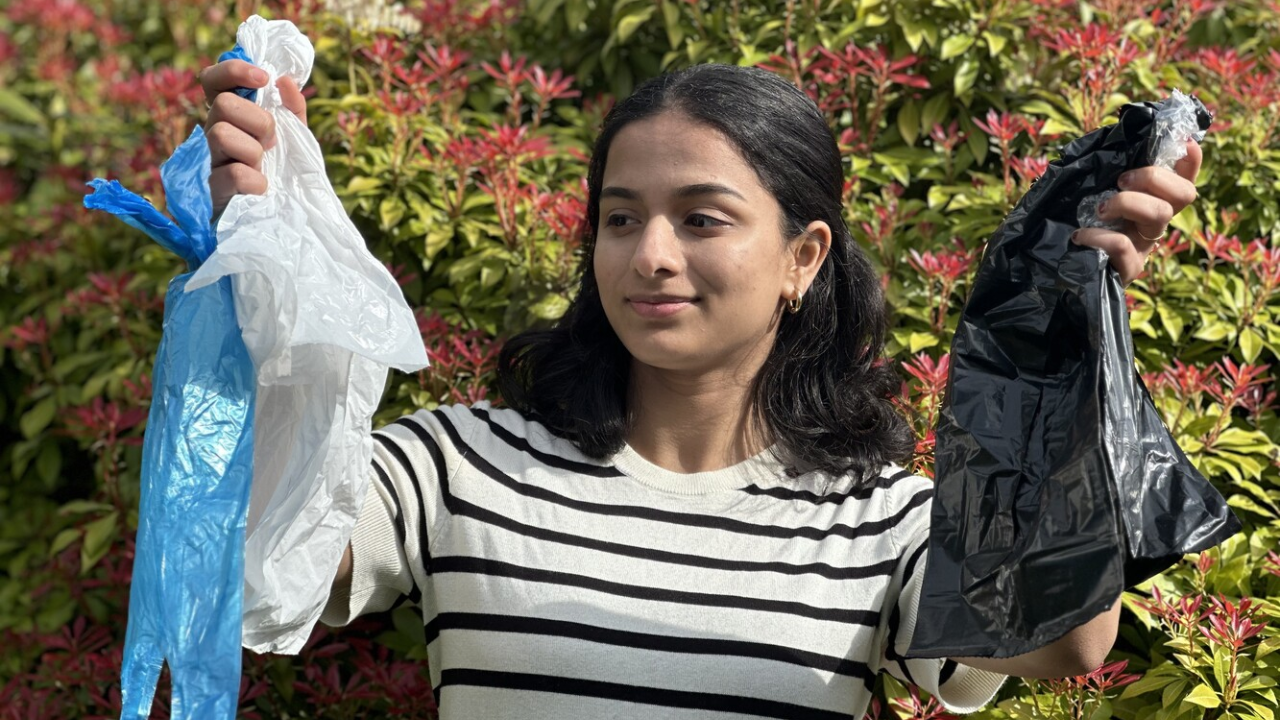
Arya Satheesh’s innovation won the European regional category of The Earth Prize 2026.
From detecting pollution to trying to solve it
Satheesh’s journey towards Eco Purge began with another scientific project. Nearly two years ago, she developed a smart water monitor for SciFest, Ireland’s largest second-level STEM fair programme. The project focused on detecting contaminants in drinking water, including microplastics.Researching the subject brought her face to face with the scale of the problem. Microplastics are generally defined as plastic particles smaller than five millimetres. They can originate when larger plastic objects break down, as well as from other sources of plastic pollution.Their small size makes them difficult to remove once they enter the environment. Detecting their presence in water can reveal the extent of contamination, but detection alone does not eliminate it.That distinction influenced Satheesh’s thinking. Her earlier project helped her understand the problem, but she wanted to explore whether a material could be designed to do something about it.The challenge was not simply to create another alternative to conventional plastic. Many biodegradable materials are intended to break down under suitable conditions, but Satheesh wanted her invention to have an additional function: helping degrade some of the microplastics already present in its surroundings.Her idea was to incorporate a specialised enzyme into a plant-based plastic. When the material is discarded and begins to biodegrade, it would release the enzyme into the surrounding environment, where it could act on targeted plastic particles.Explaining how she imagined the material being used, Satheesh told Smithsonian Magazine: “So people have their normal behavior to throw away things, or we can even go dump this in a dump fill, and it still degrades to release that enzyme in the dump fill to degrade the existing microplastic.” She added: “That was the initial starting point of Eco Purge.”The idea was to build an environmental function into the material itself rather than depend entirely on people changing their disposal habits. It was an ambitious proposition, and turning it into a working prototype would require her to overcome several scientific and practical challenges.
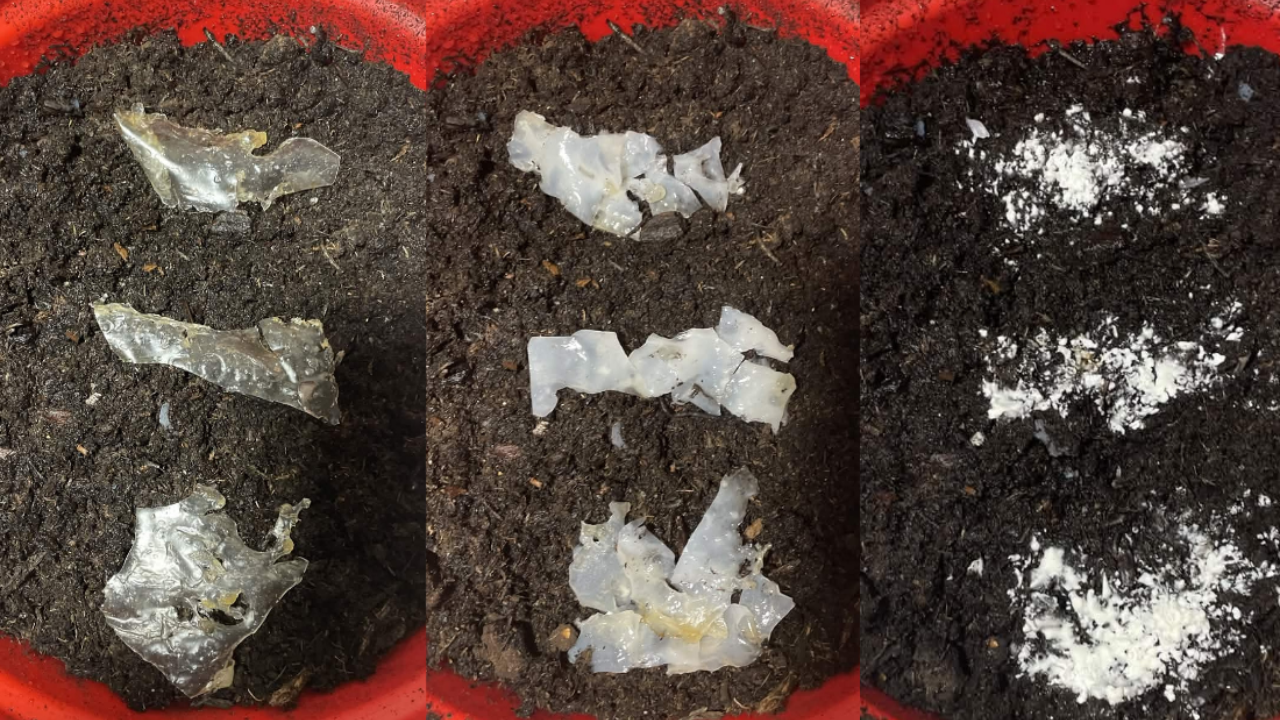
Eco Purge aims to release specialised enzymes as it biodegrades, targeting certain microplastics in the surrounding environment.
How Eco Purge is designed to work
Eco Purge is a plant-based, biodegradable plastic that incorporates specialised enzymes. According to the Smithsonian Magazine report, the material can take up to two weeks to degrade under suitable conditions, releasing enzymes as it breaks down. These enzymes are designed to target PET-derived plastics, a category that includes plastic commonly used in bottles and packaging.The concept differs from simply replacing a conventional plastic item with a biodegradable alternative. Eco Purge is intended to perform two functions: break down as a discarded material and help degrade targeted microplastics in its immediate surroundings.To test her prototype, Satheesh placed measured quantities of microplastics alongside Eco Purge in different environments, including soil, salt water and fresh water. She observed the samples over six weeks. At the end of that period, both the Eco Purge material and the microplastic contaminants had degraded, according to her account in Smithsonian Magazine.The early results offered a basis for further investigation, although they do not by themselves establish how effectively the material would work in varied natural environments or at an industrial scale.Satheesh described the early stage of her research as a starting point rather than a finished product. “The Young Scientist version was primarily a proof of concept,” she told the magazine. The Earth Prize version focused on developing the idea into a practical, market-ready product that was scalable.Looking back at the development process, she said: “So Eco Purge wasn’t just suddenly a huge thing,” says Satheesh, “but it evolved step by step.”That gradual process – moving from identifying a problem to testing a possible solution – is central to understanding the invention. Eco Purge remains a technology under development, but its approach has attracted attention because it seeks to address existing pollution as well as the creation of new plastic waste.