










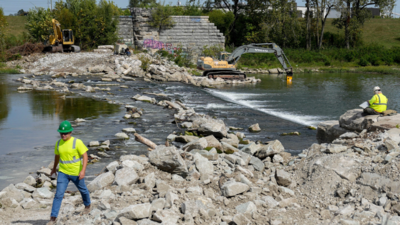
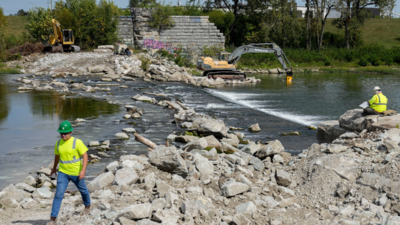
Indianapolis has begun removing the Emrichsville Dam from the White River, ending more than a century of disruption to the river’s natural flow and aquatic habitats. According to The Indianapolis Star, the project is intended to improve conditions for wildlife and make the waterway safer for people. The US Fish and Wildlife Service and the environmental organisation Discover White River have also outlined the ecological benefits of restoring fish passage and reconnecting river habitats. The Emrichsville Dam was constructed in 1899, just south of 16th Street in Indianapolis, as part of efforts to develop a boating area known as Lake Indy near Riverside Park. The project was intended to support recreational activities rather than provide flood control or serve as a primary source of public water.The structure stretches approximately 250 feet across the West Fork of the White River. Its construction changed the river’s natural conditions for around 4.3 miles upstream, affecting water movement and creating a barrier for aquatic species. The dam partially collapsed in October 2018, prompting emergency repairs that involved placing rocks in the river to manage the remaining structure. Although the repairs addressed immediate concerns, the barrier continued to affect wildlife movement and posed safety risks for people using the river.
Why removing the dam matters for wildlife
Dams can interrupt the movement of fish between feeding grounds, spawning areas and seasonal habitats. Removing the Emrichsville Dam will allow aquatic animals to travel more freely along the White River, helping restore connections between habitats. The benefits extend beyond fish. Freshwater mussels, several species of which are threatened or imperilled in Indiana, depend on fish to transport their larvae to new locations. When fish cannot move freely through a river system, the reproductive cycles and distribution of these mussels can also be affected. Restoring the river’s connectivity could therefore support a wider range of aquatic species and help improve the resilience of the ecosystem. The US Fish and Wildlife Service has identified unrestricted fish passage and ecological restoration as key objectives of the project.
Funding the restoration project
The Indianapolis Department of Public Works is leading the removal, supported by funding from the US Fish and Wildlife Service, the Indiana Department of Natural Resources and The Nature Conservancy. The federal contribution includes a $750,000 grant awarded through the National Fish Passage Program. The initiative supports projects that remove or bypass barriers to aquatic movement and restore access to upstream habitats. Since 1999, the programme has helped remove or bypass more than 3,400 barriers and reopen access to over 61,000 miles of upstream habitat across the United States, according to the federal agency.
Historic structures to remain
While the project will remove the dam’s in-stream components, not every part of the site will disappear. Indianapolis officials decided to preserve the two historic towers on either bank following discussions with historic preservation agencies. One of the towers is locally known as the Beer Tower. The decision allows the city to address the dam’s environmental and safety concerns while retaining elements of the site’s history.Removal work is expected to conclude on December 18, 2026, with additional administrative and related work scheduled to continue into February 2027. After construction, the city plans to monitor the river’s ecosystem, water movement and flow for a year to assess the effects of the restoration. The project marks a shift in how Indianapolis manages this stretch of the White River, moving away from a structure built for recreational purposes in the 19th century towards a river corridor designed to support wildlife movement, safer recreation and a healthier aquatic ecosystem.