










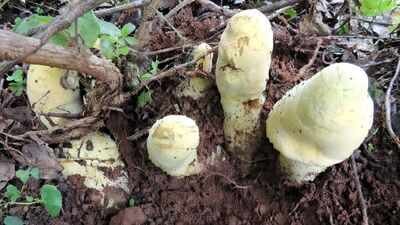
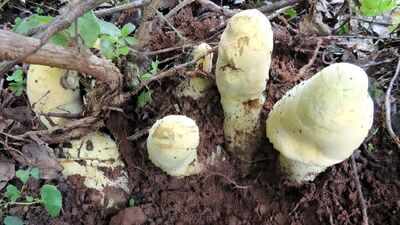
A fungus discovered in the forests of southwestern China has drawn attention for its extraordinary size and ancient evolutionary history. The newly identified fungus, Dianjunus rex, produces massive, fleshy structures that can reach 50 centimetres in total height, including a buried stalk, with the heaviest specimen weighing 2.2 kilograms.Its unusual appearance is matched by a lineage that researchers estimate diverged from its relatives around 65 million years ago. According to research published in Frontiers in Fungal Biology titled ‘Unearthing a fungal giant: Dianjunaceae fam. nov., a novel Paleocene lineage of Xylariales harboring Dianjunus rex gen. et sp. nov’, the fungus was formally described as Dianjunus rex, the species of the newly proposed family Dianjunaceae.
Scientists discover a giant fungus with structures weighing up to 2.2 kg
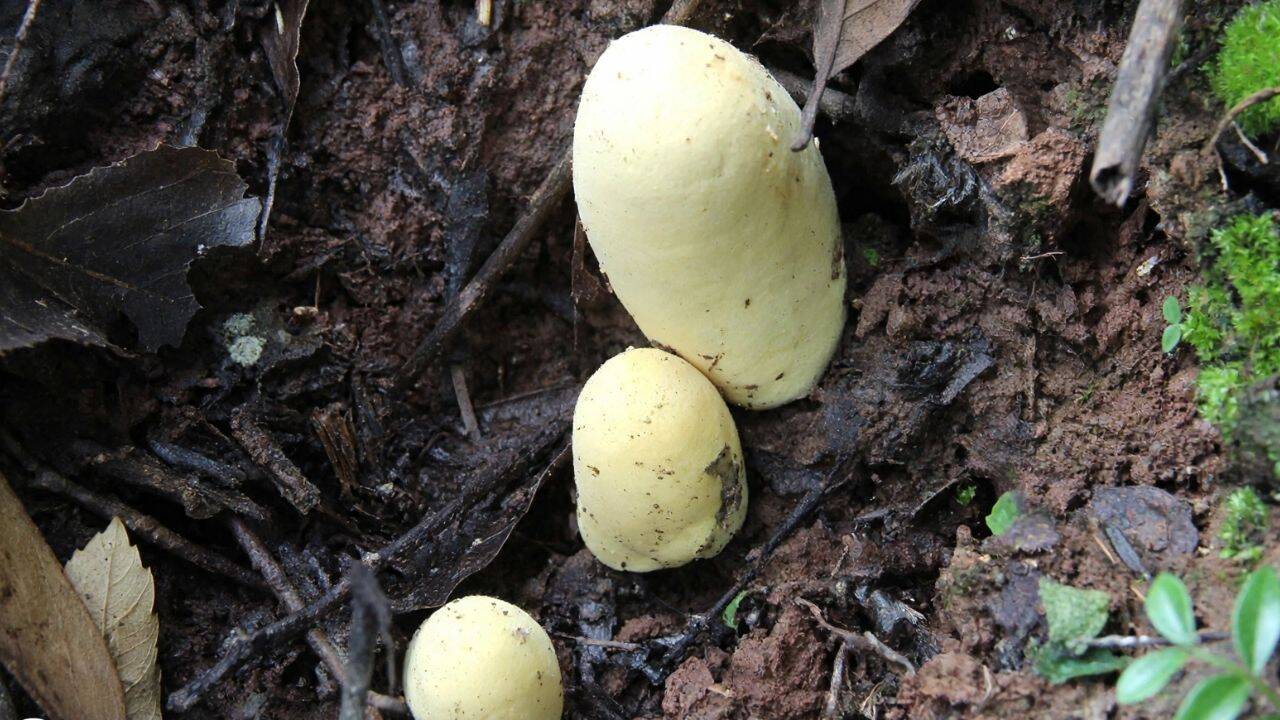
The researchers collected specimens of Dianjunus rex during fungal diversity surveys in Yunnan Province, China. The samples came from tropical rainforest in Xishuangbanna Dai Autonomous Prefecture and temperate coniferous forests in Kunming and Lufeng. The fungus produces upright, fleshy structures known as stromata, which vary in shape from cylindrical and spindle-shaped to palm-shaped.They can reach 20-50 cm in total height, with the fertile parts measuring 10-20 cm high and 7-10 cm in diameter, sometimes reaching 15 cm. The stromata typically weigh 250-600 g, while the largest bilobed specimen found in the study weighed 2.2 kg.
How did DNA analysis help identify the giant Chinese fungus
The researchers combined detailed examination of the fungus’s physical features with genetic sequencing and genome-scale analyses to establish its identity. They examined four genetic regions, known as ITS, LSU, RPB2, and TUB2, and compared the results with those of other fungi in the order Xylariales.The analyses consistently placed Dianjunus rex in a distinct evolutionary lineage closely related to Graphostromataceae. However, its physical characteristics differed significantly from those of the related family. The researchers therefore proposed Dianjunaceae as a new fungal family, with Dianjunus as its new genus. The species name rex comes from the Latin word for king, referring to the fungus’s large size and majestic appearance.
PC: Frontiers in Fungal Biology
What does DNA reveal about the giant fungus’s ancient origins
The researchers estimated that Dianjunaceae originated around 65 million years ago, during the early Paleocene. This period followed the Cretaceous–Paleogene extinction event, which wiped out an estimated 75% of plant and animal species and was followed by major ecological changes on Earth. The study places the family’s estimated divergence within a range of 50-80 million years ago.To investigate its evolutionary position, the team analysed genome-scale data from 66 fungal samples and used established divergence-time estimates to calibrate the analysis. The resulting phylogenomic analyses consistently supported the placement of Dianjunus rex as a distinct lineage related to Graphostromataceae.
Researchers examine the genes behind Dianjunus rex’s unusual growth
The researchers also compared the genetic information of three Dianjunus rex strains to examine the enzymes associated with processing carbohydrates. The fungus contained 219-224 carbohydrate-active enzyme genes across the three samples. This was substantially fewer than the numbers reported for several related fungi, including Xylaria, Daldinia and Hypoxylon.The study found that genes encoding pectin lyases, which help break down pectin in plant cell walls, were almost absent. D. rex had zero or one such gene (none in one strain), compared with 7-19 in closely related Xylariales. By contrast, glycosyltransferases, which are primarily involved in building fungal cell walls, accounted for about 25.9%–26.0% of its carbohydrate-active enzyme repertoire. The researchers propose that these genomic features may help explain its unusual growth.