










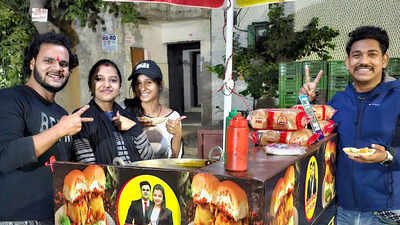
Jasveer Singh Jassi and his wife, Sudha Kumari Sahu, run a vada pav cart in Noida. There are no news bulletins to prepare, no television studios to walk into and no newsroom deadlines to meet. Instead, their days revolve around preparing food, serving customers and ensuring that the business keeps running.For a couple who spent years working in the media, this was not easy and definitely not the life they had imagined. Jassi had worked with several regional and national television networks over nearly 12 years, while Sudha had built a career spanning around seven years. Together, they had imagined a future in which their education, professional experience and earnings would provide stability.But life had other plans.When their media careers came to an abrupt halt in 2022, the couple found themselves struggling to pay rent and meet everyday expenses. Their savings dwindled, and the prospect of finding another job in the same industry offered little immediate relief. What followed was a journey through a tiffin service, a food cart, difficult family circumstances and the challenge of rebuilding their lives without financial support.“We have no regrets about what we are doing,” he says. “We work extremely hard, earn our daily bread ourselves and live on what we earn. That is what matters to us.” To understand how a journalist arrived at this point, one has to go back to 2018, when an ordinary afternoon at home changed the way Jassi looked at the world.

Jasvir during his reporting days
2018: The moment that changed how he saw charityJassi grew up in a financially modest family in Ghaziabad, Uttar Pradesh. His work in the media eventually brought him to Noida, where he settled because it was close to his workplace. In 2018, while he was getting ready for work, he witnessed a small incident. My mother was giving away old clothes in exchange for household items. A middle-aged man accompanied by a young child came and asked for clothes, my mother picked up a few and gave him. While the vendors were haggling for ‘good’ clothes, this man who actually needed it had no choice. I asked the vendors to go away and asked the man to choose from the lot. He could have taken as much as he wanted, but he chose only three pieces. That really shook me,” Jassi recalls.“What struck me was his self-respect. He needed the clothes, yet he was not willing to take everything simply because it was available.”Jassi began questioning the way people treated their surplus possessions. Clothes that had become old, ill-fitting or unwanted in one household could be valuable to someone else. Until then, he had seen the process of giving away old clothes as a routine household activity. That day, he began to see it differently. He asked his mother to set aside clothes for him instead of distributing them through the usual channels. He would decide where they went and who received them. The following day, he began a social initiative called Patrakar Ki Potli. The name was inspired by the traditional potli, a bundle used to carry clothes, food and other essentials while travelling. “I wanted to change the way we looked at things we no longer needed,” he says. “Something that is useless or extra for one person could be something another person has never had the opportunity to own.”He began taking clothes to underprivileged communities and slum settlements whenever his work schedule allowed. He also started sharing his efforts on social media. Gradually, friends, neighbours, colleagues and acquaintances began contributing. Some gave clothes, while others donated stationery, household items and other useful materials. The initiative continued to grow, bringing Jassi into contact with people whose lives were very different from his own.
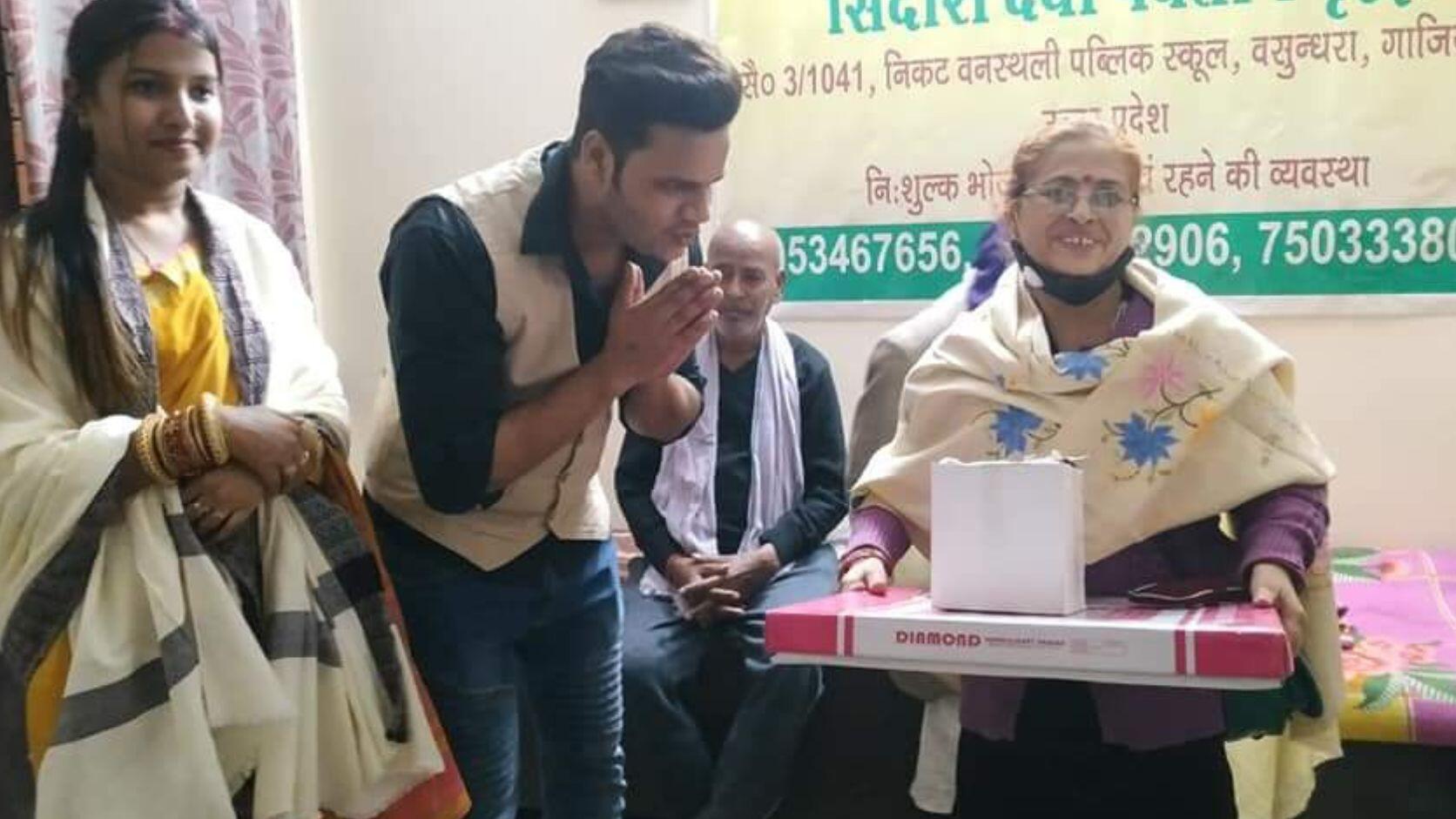
Jasvir and Sudha in an old age home
Beyond clothes: A social worker’s expanding missionPatrakar Ki Potli was only the beginning. As Jassi became more involved in social work, he began exploring other causes that needed attention. His work expanded to include support for organ donation awareness and the LGBTQ+ community. His interest in the latter stemmed from a simple question: what if his own child were born into a community that society routinely misunderstood or discriminated against? “I kept thinking that when I eventually had a child, I would have no control over who that child became. That is nature’s decision. Yet I saw how much hatred and fear people directed towards transgender people,” he says. “I wanted people to look at them differentlynot with pity, not with sympathy, but with an open mind. I wanted society to understand them as people who deserve the same respect as everyone else.”Another initiative emerged from his interactions with people living in orphanages, old-age homes and homes for widows. Jassi began wondering why these institutions, which often housed people experiencing different forms of loneliness and social exclusion, could not be brought together. He approached the organisers of the institutions and created an opportunity for their residents to meet and interact. Children from orphanages could spend time with elderly residents, while widows and other residents could find companionship and a sense of belonging. The idea was to help people who had lost or lacked family connections form new relationships.
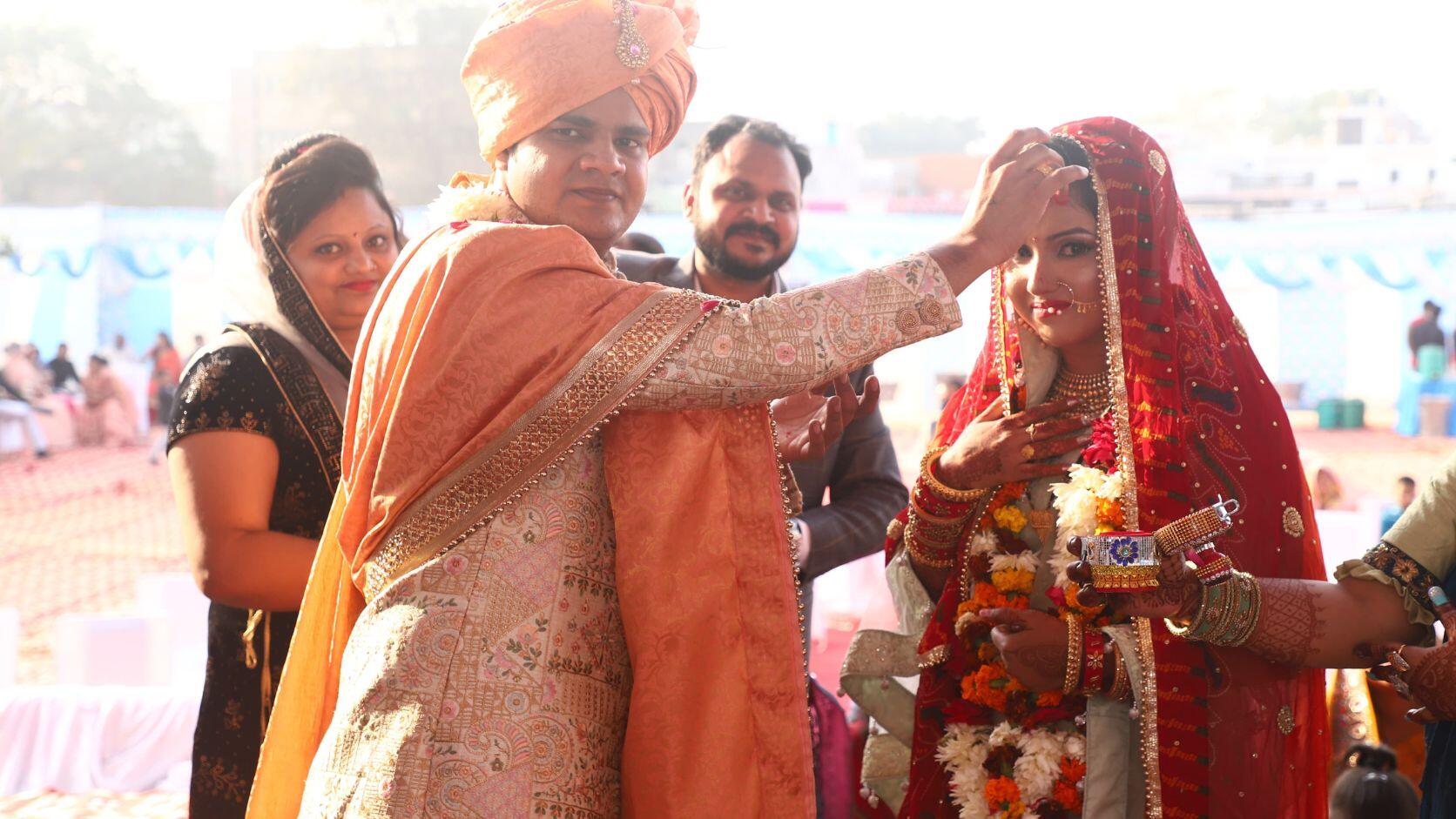
During their wedding
A wedding that challenged conventionJassi had also begun speaking out against dowry, albeit on a small scale. He believed that marriage should not be a financial transaction, but putting that belief into practice would require more than public statements. In 2020, he married Sudha Kumari Sahu, who originally hails from Kolkata and had worked in print and electronic media. The two had discussed their values before marriage, including their opposition to dowry and the social expectations surrounding weddings. Sudha understood what Jassi wanted to do.“We are young, we are earning and we have a voice,” Jassi recalls telling her. “If we want society to change, we cannot keep waiting for somebody else to do it. We have to begin with ourselves.” Together, they decided that their wedding would carry a message. They called it Ek Vivaah Aisa Bhi-a wedding with a difference.The couple decided to pay for the wedding from their own savings rather than depend on their parents. They would spend only what they could afford, without borrowing money or organising an elaborate ceremony to satisfy social expectations. Their wedding was deliberately simple. There was no elaborate mandap, no traditional rounds around the sacred fire, no grand procession and no expensive series of rituals. The ceremony lasted just four hours, from noon to 4 pm. Jassi bought his wedding outfit online, knowing he would probably never wear it again. Sudha purchased a lehenga for approximately ₹3,000 from her own savings. The food was equally simple- halwa, puri, subzi and water, served in the spirit of a community meal.But the most significant feature of the wedding was the guest list. Instead of filling the venue with relatives and acquaintances invited out of social obligation, the couple invited people from orphanages, old-age homes, homes for widows and communities they had supported through their social work.
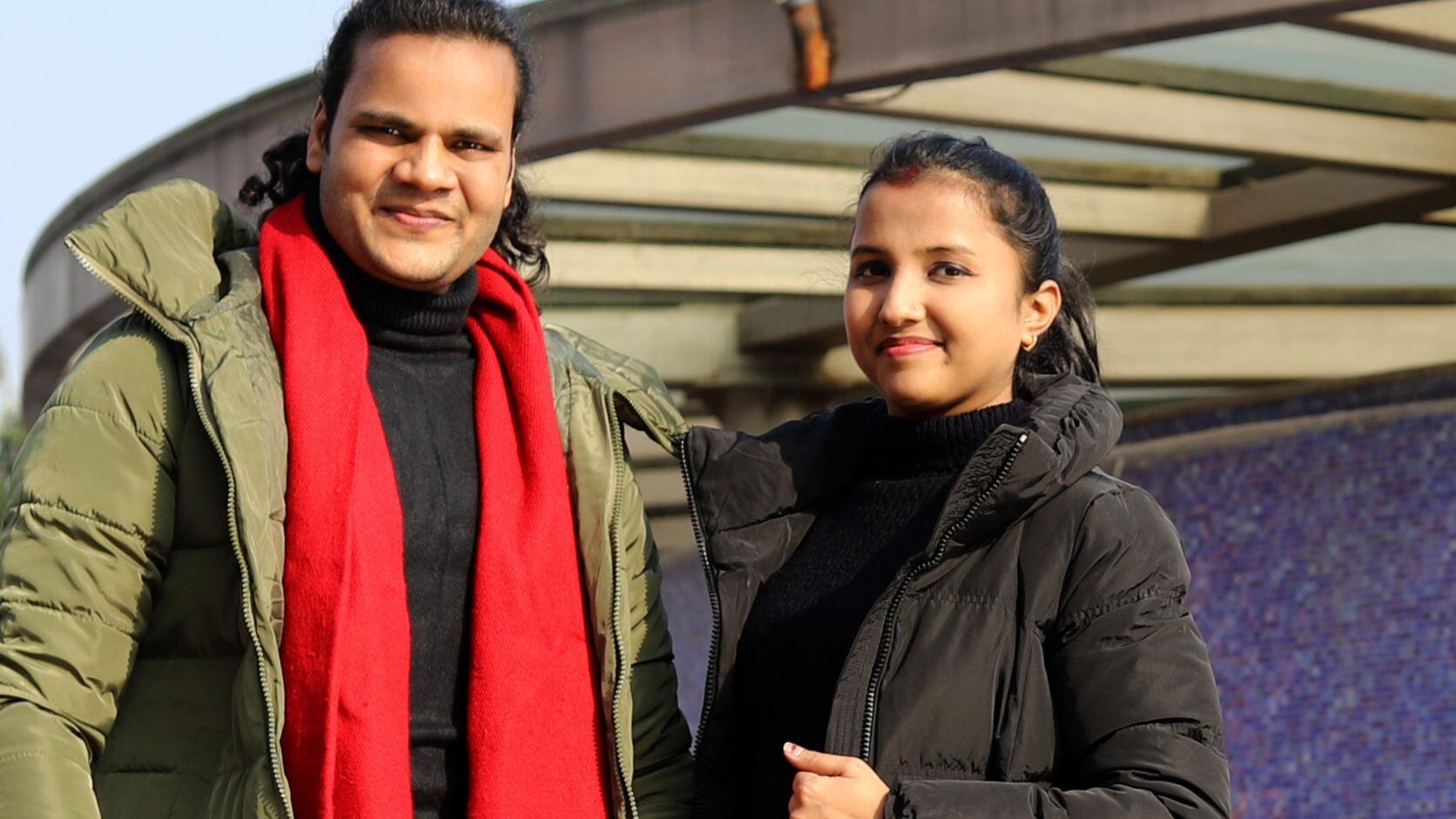
Jasvir and Sudha
People who had once been recipients of assistance became the chief guests at their wedding. For Jassi, this was a way of recognising the people who had shaped his outlook on life. He also says the wedding invitation attracted attention beyond his immediate circle. According to him, Union Minister Nitin Gadkari’s office contacted him after the invitation came to the minister’s attention. Jassi recalls receiving the minister’s wishes and later receiving a letter addressed to the couple.When the applause faded, life at home became difficultBut the admiration the couple received outside their home did not necessarily translate into acceptance within it. Jassi says that after the wedding, tensions began to surface over his social work, his priorities and the way he chose to live. He recalls being questioned about whether his activism could support a household financially.His family had concerns about his decision to devote time and energy to causes that did not generate an income. As disagreements grew, he felt that his wife was also being treated unfairly. For Jassi, the issue became one of dignity and equality. He recalls confronting his mother over the way women in the household were treated.“If one woman deserves respect, then every woman deserves respect,” he says, recalling his argument. “I told my mother that as you expect and deserve respect, so does my wife. Respect cannot be reserved for one person while the others are humiliated.”His remarks, he says, were not well received. He recalls his mother telling him, in effect, that he had yet to prove himself independently. “Let us see how far you get,” she told him, according to Jassi. “You are still living within these four walls. You do not pay the rent, electricity, water or grocery bills. You think earning a little money and getting married makes you independent?” The exchange exposed a larger conflict between Jassi’s ideals and the expectations of his family.He says he did not want to continue living in an environment where disagreements were turning into daily confrontations. He and Sudha understood that they can no longer live here with so much humiliation and left home without carrying a thing.

During their media days
June 2022: Two media careers come to a halt“We moved out of our house with practically nothing. We had no home for 3-4 days, and gradully found a rented apartment and built a home with all our savings and while we were barely surviving, our media careers came to an end.”Jassi had spent nearly 12 years in journalism, working with several regional and national news networks, including India Today Network, Zee News Haryana, Khabar India, Khabar Hindustan, Sadhna MP-CG, TV100, HBN 24×7 and ETV. Sudha had also spent years building her career in the media. But around April 2022, Sudha lost her job. Jassi’s salary was subsequently cut substantially, leaving the couple struggling to meet their expenses. By around June, they were confronting the reality that their combined income could no longer sustain their lifestyle.They had been living in Noida, in a rented home and had planned their expenses around their salaries. Their earnings went towards rent, food, utilities and everyday living costs. Jassi also had an EMI on a Bullet motorcycle he had purchased before marriage. When Sudha lost her job, the financial strain increased. Jassi tried to find other opportunities while continuing at his workplace, but his reduced salary was eventually insufficient to cover even the rent.
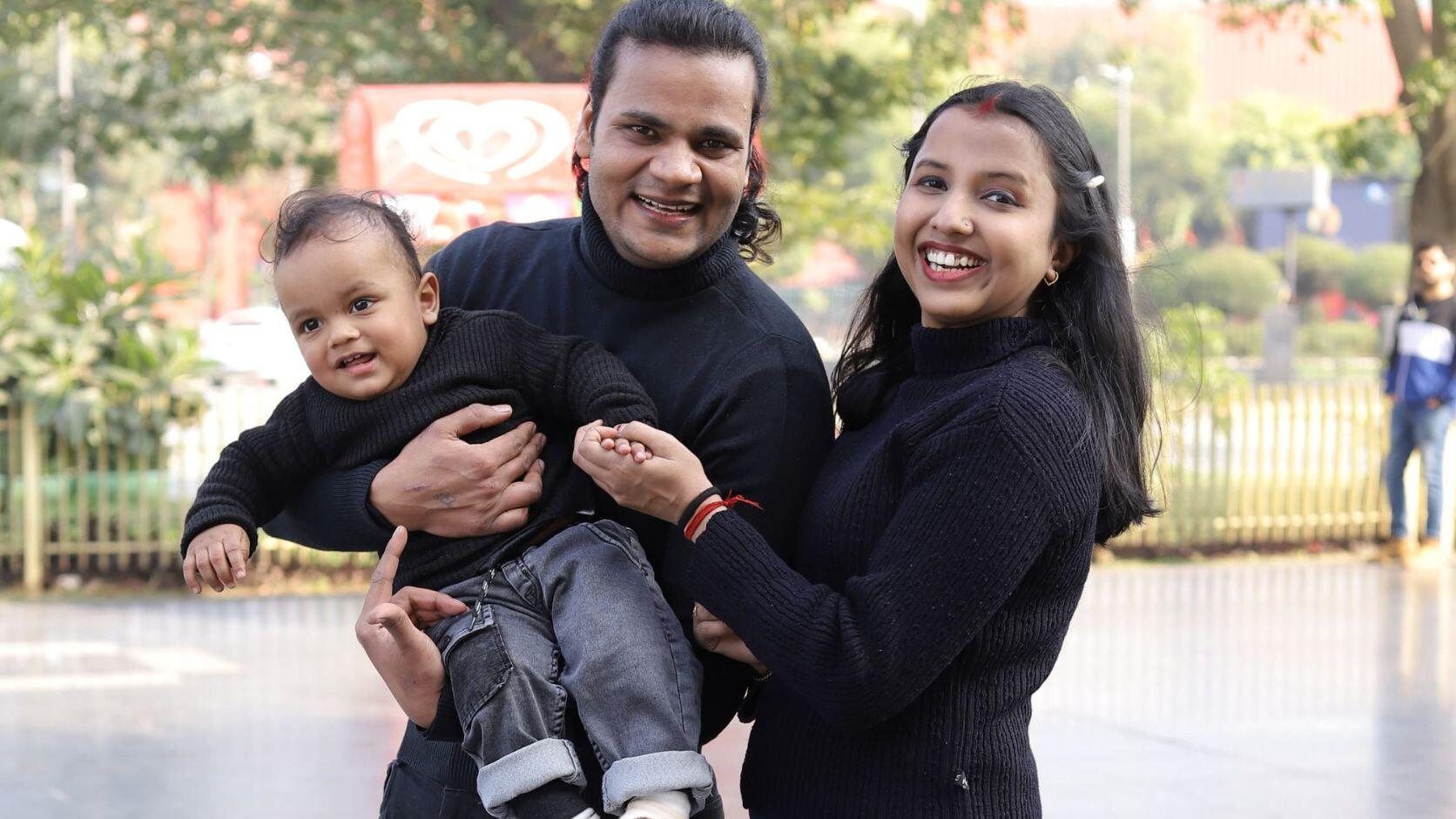
The happy family
Sudha later found work in a channel, but it also shut down, leaving her unemployed again. The couple had little financial cushion to fall back on. They were educated, experienced professionals, but their immediate priority was no longer a newsroom position or career progression. It was survival.“We were earning and spending according to what we made. We had no big financial backup,” Jassi says. “When the jobs went, everything became uncertain. We had to think about how we would pay the rent and feed ourselves.” They tried to find jobs, but the uncertainty continued. Eventually, they realised they could not keep waiting for the media industry to provide a solution. One night, they decided to start again. Their first thought was to turn to something they could do themselves, without expensive training, a major investment or a long period without income.The answer, they hoped, lay in food.
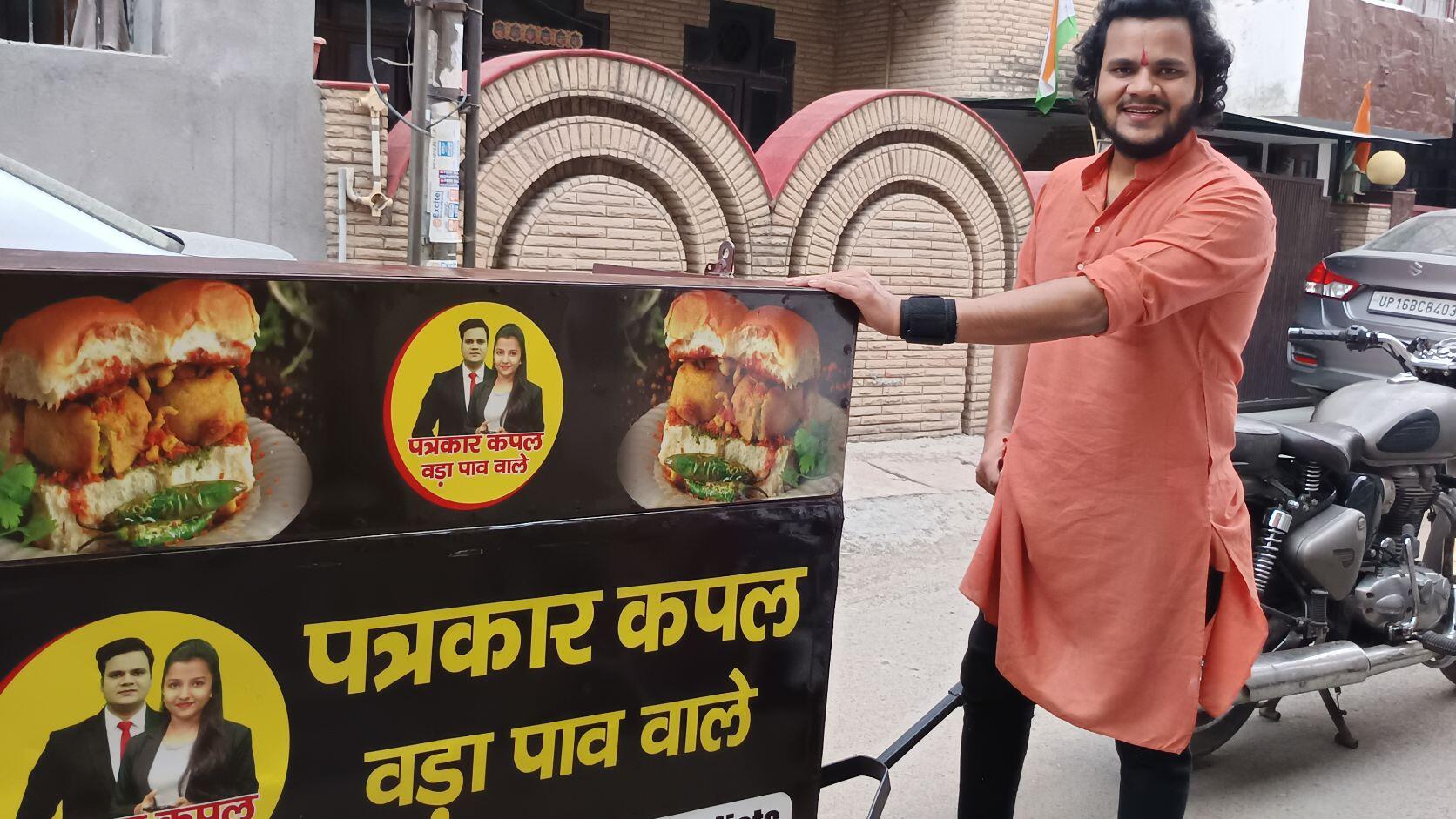
Jasvir with his cart
The tiffin service: 70 meals on the first dayJassi and Sudha knew how to prepare basic meals for themselves, but running a food business was a different challenge. They had no formal training in the restaurant industry, no established business infrastructure and little money to experiment with.They decided to start a tiffin service called Patrakar Couple Tiffin Service.During the monsoon of 2022, they began preparing for the venture. They bought tiffin containers, organised the necessary supplies and put up a flex sign outside their home to attract customers. They announced the launch in advance, hoping to build enough interest to make the effort worthwhile. On the first day, they delivered 70 tiffins, priced at ₹70 each. For the couple, it was an overwhelming moment.“We cried with happiness,” Jassi recalls. “We had been running around looking for jobs, wondering what would happen to us. Then, on the first day, we served 70 tiffins. We felt that perhaps we had finally found a way forward.”The couple continued the service for roughly a year, until 2023.But the business demanded consistency. Customers depended on them for daily meals, and every order came with a commitment that had to be honoured. Finding reliable domestic help proved difficult. Jassi says they changed helpers repeatedly, around 36 times over the course of a year, by his estimate. The work fell heavily on Sudha, and the couple found themselves struggling to balance the physical demands of the business with the responsibilities of running a household. They had wanted to build a sustainable livelihood, but the daily pressure was becoming difficult to manage.The tiffin service had shown them that customers were willing to pay for their work. What they needed now was a business model they could run with fewer logistical complications. That was when they turned to vada pav.73 vada pavs and a new beginningThe couple visited Shridih and Siddhivinayak and it was from there that they got the inspirtaion of selling Vada Pav. They came home, experimented and perfected the recipe and began their work. On their first day, they prepared 73 vada pavs. All 73 sold within roughly an hour to an hour and 15 minutes.For Jassi, it was another moment of relief.“Every single one sold. We were so happy. I remember thinking that this was something we could do. My wife would not have to carry the entire burden of the tiffin service. I could handle the cart and the sales, and we could work together without putting her through the same struggle.” But the initial success was followed by another challenge.When they returned to set up the cart, other vendors objected. According to Jassi, complaints were made to the local market committee, and he had to spend around three hours negotiating and trying to secure permission to operate.The couple arrived at around 4 pm, but the cart was not ready to begin serving until approximately 7.30 pm.Jassi says his experience as a journalist proved useful. Years of speaking to people, handling difficult conversations and navigating tense situations had taught him how to communicate without escalating a disagreement.“I used what journalism had taught me, how to talk to people, how to handle a difficult situation and how to keep my composure,” he says. “I knew that if I gave up that day, it would become even harder to return the next day.” While he tried to resolve the dispute, Sudha remained at the cart. Jassi recalls that she was pregnant at the time, making the physical demands and uncertainty of the situation particularly difficult.Eventually, they managed to begin selling. The experience reinforced their determination to continue. They had already lost their jobs and abandoned one business model. They could not afford to let another obstacle push them back to square one. Their food cart became more than a source of income. It was a way to retain control over their lives at a time when so much else had slipped beyond their control.No regrets, but a painful question of dignityAsk Jassi whether he regrets leaving behind a career in journalism, and his answer is immediate: neither he nor Sudha regrets the decision to pursue their own livelihood. But he acknowledges the emotional cost.He believes their families, who had once been proud of their professional identities and their unconventional wedding, now feel embarrassed by the sight of them selling food from a cart. He says that when people ask about their work, relatives sometimes downplay what they do or describe it as a temporary arrangement.For Jassi, that hurts—not because he considers the work beneath him, but because he feels his family struggles to see the dignity in it.“We may have brought embarrassment to our families in their eyes,” he says. “We were educated, we worked in television, we were part of what people call VIP culture. Now we sell vada pav, run a tiffin service and do whatever work is necessary to earn our living.” He pauses before adding that the couple’s choice is not about proving anything to anyone. “We earn our own money, feed ourselves and work extremely hard. Why should we be ashamed of that? We are not asking anyone to support us. We are trying to stand on our own feet.”For Jassi, the contrast is especially painful because his social work and their wedding had once attracted admiration. The same people who appreciated their values may now find it difficult to accept the form their lives have taken.Yet he remains unwilling to measure success only through a job title, a salary or the approval of relatives.Their story is still unfolding. The couple have had to learn a new trade, navigate uncertain earnings and confront the realities of running a small food business. They have also had to redefine what independence means when professional credentials do not guarantee financial security.What remains constant is their determination to keep working.A different definition of successJassi’s journey began with three pieces of clothing selected by a man who needed them but refused to take more than he considered necessary. That encounter led him to question how society treats people who have less. Years later, he and Sudha found themselves on the other side of that question, confronting a society that often measures people by their occupations and earnings.They had once used their professional platforms to draw attention to the lives of others. Now, they are trying to build a life of their own through work that many people might consider a step down from their former careers. For Jassi, however, there is no shame in the work itself.He and Sudha have already demonstrated that they are willing to question convention: through their social initiatives, a wedding that rejected dowry and extravagance, and the decision to leave a difficult household situation rather than continue fighting.Losing their jobs forced them to question another conventionthat education and professional experience should lead to a particular kind of life, and that anything outside it represents failure.Their vada pav cart may not offer the security or status of a television newsroom. But it gives them a way to earn, to work together and to keep moving forward. Perhaps the most telling part of Jassi’s story is that he does not ask for sympathy. He asks, instead, that people recognise the effort behind what he and his wife do.For a couple who have had to rebuild their lives more than once, that recognition may matter as much as the money they earn. And as they continue serving customers in Noida, one vada pav at a time, they are making their own argument about dignity: a person’s worth is not determined by where they work, but by the honesty with which they do their work and the courage it takes to begin again.