










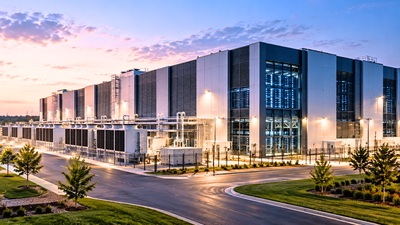
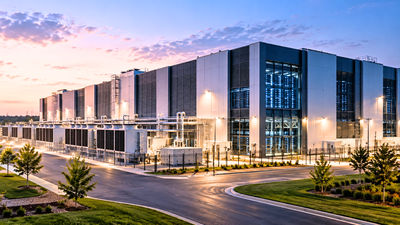
A New Jersey property developer has filed a lawsuit seeking more than $300 million in damages after a township reversed its zoning rules to block artificial intelligence (AI) data centres, escalating a dispute that began with plans for two warehouses on vacant farmland. Hexa Builders, a Princeton-based development company, sued Monroe Township in Gloucester County in June 2026, accusing local officials of changing land-use rules and obstructing its revised application. The controversy intensified after residents opposed the prospect of a data centre near established residential areas. The township subsequently adopted ordinances removing data centres from the developer’s redevelopment site and prohibiting them across the municipality. The lawsuit challenges the legality of those decisions and raises broader questions about local planning powers as demand for AI computing infrastructure grows.
How the dispute began with two warehouses
Hexa Builders had been pursuing development of a property at 3043 Black Horse Pike in Williamstown, part of a roughly 159-acre redevelopment area in Monroe Township. In September 2022, the township adopted a redevelopment plan for the site, which was subsequently amended. An amendment in 2025 permitted data centres and related operations alongside warehouse, storage and distribution facilities.In September 2025, Hexa applied for preliminary approval to construct two warehouses with a combined floor area of approximately 1.6 million square feet. The township’s planning board granted preliminary site-plan approval in January 2026, following a contentious public meeting.Some residents questioned whether the warehouse proposal could eventually lead to a data centre. Their concerns grew as the township’s redevelopment plan allowed that type of facility, prompting objections at public meetings.
The developer proposed a data centre
In April 2026, Hexa submitted an amended application proposing a data centre of approximately one million square feet in place of the larger warehouse, while retaining a warehouse as part of the development. The company’s lawyer said the change followed market interest that had emerged before the township adopted the 2025 amendment allowing data centres.The revised proposal became a focal point of the debate as residents raised concerns about the potential effects of large computing facilities on their community. Data centres can require substantial electricity and cooling infrastructure, while their environmental footprint depends on factors including cooling technology, energy supply and facility design.On April 22, the township council adopted two ordinances restricting data centres. One removed them as a permitted use within Hexa’s redevelopment plan, while the other prohibited data centres across Monroe Township. The official redevelopment ordinance cited the site’s proximity to established residential areas and the need to ensure that permitted uses remained compatible with their surroundings.
Why the planning board rejected the revised application
On May 12, 2026, the planning board deemed Hexa’s amended application incomplete. The decision became central to the subsequent lawsuit.Hexa alleges that local officials applied submission requirements differently from those used for its warehouse proposal and deliberately prevented the revised application from being deemed complete before the new restrictions took effect. The company also argues that officials responded to public opposition rather than following a consistent land-use approval process. These claims form part of the developer’s complaint and have not been established as judicial findings.
What Hexa Builders is seeking in court
Hexa filed its lawsuit on June 5, 2026, initially in New Jersey Superior Court. The case was transferred to federal court in Camden on July 6. The complaint contains 20 counts and alleges violations of New Jersey’s Municipal Land Use Law, the township’s application procedures and constitutional protections, including equal protection and freedom of speech.The developer is asking the court to overturn the ordinances, declare its data-centre application complete and award more than $300 million in damages. Hexa’s lawyer has described the amount as reflecting the lost value of the proposed project.The damages figure represents the amount sought by the company, not an award made by a court. The legal proceedings will determine whether the developer’s claims have merit and whether the township acted unlawfully.
The township’s position
Monroe Township has defended its authority to amend its zoning rules and has challenged the developer’s constitutional arguments. In filings reported in August, the township argued that the fact that data centres support electronic communications does not automatically make a zoning restriction a violation of free-speech protections. Its lawyers also questioned whether Hexa had a contract guaranteeing permission to build a data centre.The township’s official ordinance framed the restrictions around the compatibility of development with nearby residential uses and the municipality’s redevelopment objectives. The dispute therefore centres on whether officials lawfully exercised their planning powers, rather than simply on whether residents supported or opposed the project.
A wider conflict over AI infrastructure
The Monroe Township case is part of a broader backlash against data-centre development in the United States. As technology companies and developers seek more capacity for AI computing, communities have raised concerns about electricity demand, water use, noise and the effects of industrial-scale facilities on residential areas.New Jersey has seen similar legal challenges. Developers also challenged data-centre restrictions in Montgomery and Andover townships, arguing that local officials had blocked proposed projects after initially allowing or considering the relevant uses.