









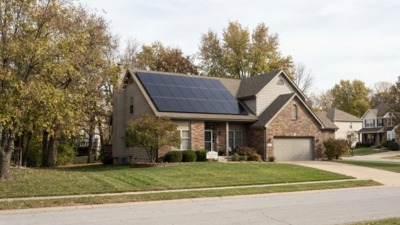
A Missouri couple who wanted to put 12 solar panels on their roof faced pushback from their homeowners association (HOA). The group demanded signed approval from five neighbours before turning down their request. The fight went to an appeals court, which has now cancelled an order forcing the homeowners to pay the association’s legal bills.The Missouri Court of Appeals for the Western District sided with Laurie McGuire and her co-owner in a ruling issued on 24 November 2026. The court said the Thousand Oaks Homes Association had no legal right to get its legal costs paid because the couple had not broken any neighbourhood property rules. The judges also rejected the HOA’s claim that going to court to challenge solar panel limits counted as breaking the homeowners’ agreement, explaining that residents have a right to ask judges to clarify their rights without automatically being treated like rule-breakers.The case focused on Missouri’s solar energy law, which stops homeowners associations from blocking rooftop solar panels with strict rules. It also asked whether an HOA can make residents pay its legal fees just for questioning how community rules are applied.
The solar panel application that started the dispute
According to the court’s decision, the homeowners are a married couple living in the Thousand Oaks subdivision in Parkville, Missouri. As HOA members, they must follow its Declaration of Covenants and Restrictions, a document listing the property rules for the neighbourhood. In January 2023, the couple applied to put 12 solar panels on their roof. Three months later, the association sent a letter rejecting the plan for two reasons. First, the couple did not include five neighbour consent forms required by the Architectural Control Committee Policy. Second, the 12 panels would be visible from the street. The homeowners did not send in a new design. Instead, they took the association to court, arguing that parts of its property rules and architectural policy went against Missouri’s solar energy law, Section 442.404.3. They asked the court to declare those rules unlawful and stop the association from using them against their home.
Missouri law protects rooftop solar installations
Missouri’s solar energy law was at the heart of the couple’s case. According to the Revisor of Statutes, Section 442.404.3 of the Revised Statutes of Missouri states that property rules and similar agreements cannot ban or effectively stop homeowners from putting solar panels or solar collectors on their roofs. The law lets homeowners associations set reasonable rules about where panels go, though those rules cannot block the setup, get in the way of how the panels work, limit their use, raise the cost or make them less efficient.The law covers roofs owned, controlled and maintained by individual homeowners. It does not give associations total power to reject solar panels just because they do not match the look the group wants for a neighbourhood. The homeowners argued that the Thousand Oaks association’s demands violated these legal protections and asked for a permanent order stopping the HOA from enforcing those parts of its rules and architectural policy. The association replied in June 2023, asking the circuit court to turn down the couple’s claims. It also asked to be paid back for its legal costs and reasonable lawyers’ fees under the neighbourhood’s property rules. According to the appeals court’s account, the HOA filed its own counter-petition asking the court to read the rules in its favour, raising a big question about how far an HOA can go when setting rules for rooftop solar panels when state law already limits them.
A separate Supreme Court ruling changes the legal position
While this case was in court, another solar panel fight reached the Supreme Court of Missouri. On 23 January 2026, the state’s highest court gave its ruling in Eikmeier v. Granite Springs Home Owners Association, Inc., as reported by Justia Law. That case involved homeowners Colleen Eikmeier and William Love, whose HOA had rules against solar panels. The Supreme Court ruled that Missouri’s solar energy law covers both older property agreements and new ones. It also decided that a rule banning panels on street-facing roofs cannot be enforced if it hurts the system’s cost or efficiency. This ruling mattered to the McGuire case because the Thousand Oaks association had also objected to panels being seen from the street, and the Court of Appeals later noted that the HOA would have lost if that January decision had been used to decide the main issue.
HOA’s legal-fee claim becomes the main dispute
The McGuire case was first set for a summary judgment hearing in July 2025, though the Platte County Circuit Court decided the case was not ready for a decision yet. By November 2025, both sides told the court they had settled their disagreements, except for who would pay the legal fees. In December 2025, the circuit court looked at the association’s request to have its legal bills paid, where the homeowners stated they had not broken any neighbourhood rules and had never received a violation notice, and the HOA’s president also spoke during the hearing. In January 2026, the circuit court approved the association’s request, ruling that the property rules let the HOA recover legal costs spent defending itself against the couple’s lawsuit and filing its own counterclaim. The court also found that filing the lawsuit itself broke community rules because the legal case required enforcing the property agreement. The couple and the association later agreed to drop their remaining claims, but the order to pay legal fees stayed in place, leading the homeowners to appeal.
Appeals court rejects the association’s argument
The Missouri Court of Appeals looked at whether the couple’s choice to go to court could legally count as breaking the homeowners’ agreement. The association pointed to Article VIII, Section 2, of its property declaration, which let the group recover legal costs when taking action against residents who broke or tried to break community rules. However, the appeals court found that the couple had not put up any solar panels and had not broken or tried to break any property rules, and an HOA representative also admitted during a sworn statement that the homeowners had no violations and were in good standing. The representative said: “There is no infraction of a covenant until an infraction occurs. To my knowledge, there are no solar panels on said property; therefore, there are no violations that have occurred.”The court also noted that the neighbourhood rules did not say filing a lawsuit to clarify legal rights counted as a violation. It said homeowners cannot fairly be treated as breaking their agreements simply because they used their legal right to ask a court what those agreements mean. The association also claimed the couple’s lawsuit was an anticipatory breach of their agreement, a legal term that usually applies when someone clearly shows they plan not to follow a contract. The appeals court turned down that claim, finding no proof the homeowners refused to follow their agreement. Instead, they applied to install solar panels and stopped moving forward after the HOA said no. The judges also pointed to an earlier Missouri appeals case, Hague v. Trustees of Highlands of Chesterfield, which decided an HOA cannot collect legal fees without proving residents broke its property rules.
Court overturns legal-fee award
In its 24 November 2026 ruling, the Missouri Court of Appeals agreed with the homeowners’ appeal and overturned the circuit court’s decision. The judges decided the HOA’s legal-fee rule only applied when homeowners broke or tried to break community rules, meaning the association had no right to collect its legal costs since no rule was broken. The appeals court also pointed out that neither side won the main fight because both agreed to drop their claims, and the final order had just confirmed the earlier legal-fee award rather than deciding the original solar panel disagreement. All three judges, Alok Ahuja, Thomas N. Chapman and Janet Sutton, agreed on the ruling. The decision overturned the win for Thousand Oaks Homes Association and wiped out the legal-fee order against the homeowners, though it did not act as a separate order approving the couple’s original 12-panel plan. The ruling was issued by the Missouri Court of Appeals’ Western District in Laurie McGuire, et al. v. Thousand Oaks Association, Inc., case number WD88802.