









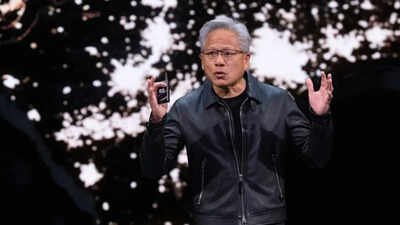
Senior Pentagon officials considered invoking a Cold War-era law to pressure Nvidia’s board into restoring Jensen Huang as CEO, arguing that his return was crucial to US national security. The discussions took place over the weekend, before Huang’s return was announced on Monday, The Washington Post reported citing three people familiar with the talks.Defence secretary Pete Hegseth and his deputy, Steve Feinberg, discussed using the Defense Production Act (DPA) as leverage against the chipmaker, the people said. The law gives the US president broad powers to intervene in the economy during national emergencies and prioritise government orders.The proposal was discussed as part of a wider effort by senior Trump administration officials to bring Huang back to the company. However, the Pentagon has denied that its senior leaders held such conversations or made any proposal to use the law.
How could the law have been used
The 1950 law has historically been used to mobilise private companies to supply the military during wars or national emergencies. During the Covid-19 pandemic, the first Trump administration invoked it to push General Motors to manufacture ventilators.While the law offers no clear route to installing a chief executive at a private company, officials reportedly considered using it as a warning to Nvidia’s board. One administration official said it could have been used to push the chipmaker to divert more production towards military projects.“Essentially they could use the DPA to force Nvidia to shift more of its production to military projects,” The Post quoted the official as saying.Such a move could have affected Nvidia’s production plans and profits. It is unclear what was ultimately conveyed to the company or whether the proposal reached US President Donald Trump and Vice-President JD Vance.A person familiar with the Nvidia board’s thinking said government officials stressed the importance of Huang’s return to national security, but the board did not perceive the discussions as a threat, the report said.Trump and Vance eventually became convinced that Huang needed to return to his position, as the company’s troubles weighed on the stock market. Trump said that he intervened himself to get Huang reinstated as the CEO.
Why Nvidia matters to the Pentagon
The reported discussions point to the importance the US military attaches to the global artificial intelligence race, particularly its competition with China. Countries are investing in AI capabilities, with data-processing power and advanced models increasingly seen as critical to future military strength.Under Hegseth, the Pentagon has made AI development a key part of its military strategy. In a memo issued earlier this year, he called for the military to become an “AI-first warfighting force” and said that “AI-enabled warfare and AI-enabled capability development will redefine the character of military affairs over the next decade.”Hegseth has entrusted military modernisation to senior officials with links to the technology industry. They include undersecretary of defence for research and engineering Emi Michael, a former Uber executive, and Feinberg, co-founder of private equity firm Cerberus Capital Management.The department has strengthened ties with Silicon Valley companies, including Anduril and Palantir, as well as startups working in AI, quantum computing and critical minerals. It has also provided loans and, in some cases, invested directly in companies.