








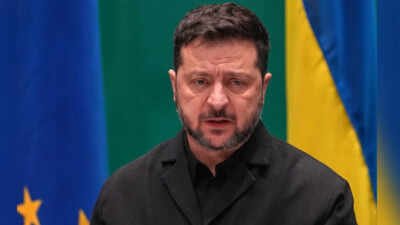
Ukraine has tightened wartime reporting rules, barring media outlets from publishing details about damage to critical infrastructure caused by Russian strikes and the timelines for its restoration, as the country prepares for another winter amid intensified attacks on its energy network.President Volodymyr Zelenskyy signed a decree on Saturday implementing measures approved by Ukraine’s National Security and Defence Council (NSDC). It directs the government to “take urgent measures to prohibit the media from covering information about the consequences of destruction and the timing of the restoration of critical infrastructure facilities”.The restrictions also cover reports on the progress of construction and the status of protective structures at critical infrastructure facilities in the fuel, energy and public utilities sectors. These include facilities covered by regional and city-level resilience plans.The decree came into force immediately after it was signed, The Kyiv Independent reported.
New curbs as Russian attacks intensify
The NSDC justified the measures by citing the continuing damage to energy and other essential infrastructure from Russian military operations, as well as the “high probability of the aggressor’s further use of the tactics of massive air strikes on these facilities”.Since September, Russia has carried out more than 1,000 attacks on Ukraine’s energy infrastructure, targeting power plants, high-voltage substations and transmission lines, according to the Centre for Economic Strategy.The attacks have caused widespread disruption, with residents in several regions facing electricity, water and heating shortages. Recent Russian strikes have triggered outages in areas including Kyiv, Odesa and Mykolaiv.The intensity of the attacks has forced Ukraine to halt electricity exports even as energy imports rose to record levels.Meanwhile, Russia has expanded its arsenal of ballistic missiles and high-speed jet-powered drones, while Ukraine’s air defences faced limitations and ammunition shortages.
Government directed to strengthen energy protection
Alongside the restrictions on media coverage, Zelenskyy’s decree lays out measures to strengthen the protection of critical infrastructure ahead of the 2026-27 heating season.The Cabinet of Ministers has been directed to deploy electronic warfare and active defence systems at priority energy facilities within a month. Regional administrations have also been instructed to expand backup power supplies and prepare residential buildings for possible winter blackouts.The broader measures include strengthening engineering and air defence capabilities, building protective structures around critical facilities and developing backup power systems.Since Russia launched its full-scale invasion in February 2022, Ukraine has enforced strict wartime reporting restrictions.Officials have repeatedly argued that publishing details of damage caused by strikes and repair schedules could help Moscow assess the impact of its attacks and plan further operations.However, the latest decree does not specify how the media restrictions will be enforced or what penalties news outlets could face for violations.
Diplomatic efforts to end war continue
The restrictions come as diplomatic efforts to end the Russia-Ukraine war continue. US President Donald Trump said on Thursday that he wanted Russian President Vladimir Putin to “pull back military aggression” across Europe and expressed hope that a peace agreement between Moscow and Kyiv could be reached soon.Trump made the remarks a day after meeting Nato secretary General Mark Rutte at his Mar-a-Lago residence in Florida,.In November, the Trump administration initiated a fresh round of US-mediated engagement between Russia and Ukraine, with delegations from the two countries holding talks in Abu Dhabi on November 10 and 11.Discussions focused on security guarantees and possible steps towards ending the conflict.Trump’s special envoys Steve Witkoff and Jared Kushner subsequently held talks with Putin in Moscow and met Zelenskyy in Dublin.The US has also sought to involve European representatives in discussions on Ukraine’s security guarantees and wider European security arrangements.Separately, India and the European Union called for a comprehensive, just and lasting peace in Ukraine during their 12th Foreign Policy and Security Consultations in New Delhi on Friday.The two sides stressed that any settlement should be in accordance with international law and the principles of the UN Charter, according to a joint press release.