








Headlines
In 2010, Thailand sank 25 retired battle tanks into the Gulf to rebuild fishing grounds; 9 years later, researchers found 53 fish species

In 2010, Thailand sank 25 retired battle tanks into the Gulf to rebuild fishing grounds; 9 years later, researchers found 53 fish species

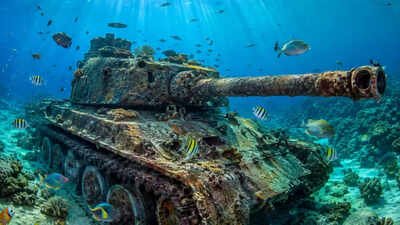
Almost 10 years after the tanks went under, researchers from Ramkhamhaeng University in Bangkok did some diving to see what had grown up around the man-made reef sites. Battle tank is made for war. It is built to cross tough terrain, take a beating and dominate a battlefield. But what if the battlefield disappears and…

Read More
Scientists mixed waste coffee grounds with oyster shells to create a stronger construction material from two food wastes |

Scientists mixed waste coffee grounds with oyster shells to create a stronger construction material from two food wastes |

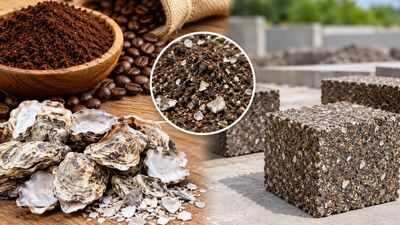
Waste coffee grounds and discarded oyster shells could be turned into a useful construction material. The mixture used spent coffee grounds (SCG) as its main filler, with oyster shells added to strengthen the granular structure and GGBS-based alkali-activated materials used as the binder. Because SCG particles are highly compressible, the researchers added oyster shells in…

Read More
Scientists reconstructed a Wyoming forest from 56-million-year-old fossil leaves; it lost about 60% of its canopy during ancient warming and took more than 100,000 years to recover

Scientists reconstructed a Wyoming forest from 56-million-year-old fossil leaves; it lost about 60% of its canopy during ancient warming and took more than 100,000 years to recover

Wyoming tetons Representative image from Canva Deep in the rock record of Wyoming, a layer of fossil leaves tells a quiet but powerful story about what happens to forests when the planet warms rapidly. About 56 million years ago, during a spike in global temperatures known as the Paleocene Eocene Thermal Maximum (PETM), a lush…

Read More
Scientists are using worms that eat human waste to turn toilet waste into compost, but parasitic eggs can survive the process |

Scientists are using worms that eat human waste to turn toilet waste into compost, but parasitic eggs can survive the process |

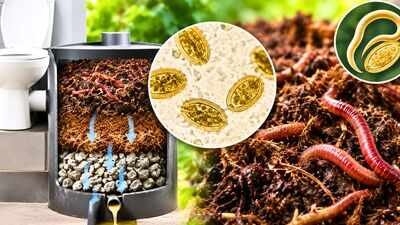
Tiger worm toilets are designed to turn human waste into vermicompost using worms that feed on and break down organic material. The approach can reduce the amount of waste that builds up in a toilet and has been studied as a form of non-sewered sanitation. Researchers tested whether tiger worms could destroy Ascaris eggs under…

Read More
Meet Luke Carpenter-Bundhoo, the Australian ecologist who found an ancient ‘vegan Dracula’ fish 900 miles beyond its known range |

Meet Luke Carpenter-Bundhoo, the Australian ecologist who found an ancient ‘vegan Dracula’ fish 900 miles beyond its known range |

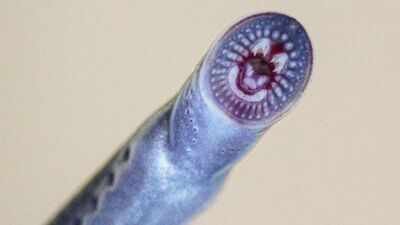
Australian brook lamprey. Image Credit: David Moffatt In 2022, Australian ecologist Dr Luke Carpenter-Bundhoo set out to study how the Black Summer bushfires had affected ecosystems in K’gari, Queensland. Instead, while surveying a creek, he encountered an unexpected creature: an eel-like fish with seven gills and a mouth lined with circular rows of teeth. The…

Read More
Scientists recreated an ancient Chinese bronze-casting technique with 3D printing; a process that took weeks now takes under 40 hours |

Scientists recreated an ancient Chinese bronze-casting technique with 3D printing; a process that took weeks now takes under 40 hours |

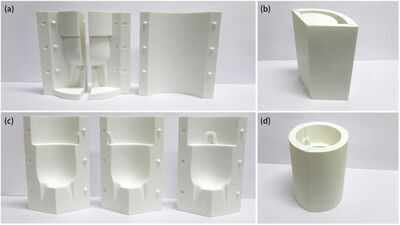
a 3D-printed outer mold negatives; b Assembled configuration of the outer mold negatives; c 3D-printed core negatives; d Assembled configuration of the core negatives. Image Credit: Nature Researchers have recreated the logic of an ancient Chinese bronze-casting technique with digital modelling, 3D printing and substitute materials, cutting a process that traditionally takes weeks to less…

Read More
In 1967, Nasa flew flour beetle pupae into space on Biosatellite II, and wing abnormalities rose from 29.9% to 44.8% |

In 1967, Nasa flew flour beetle pupae into space on Biosatellite II, and wing abnormalities rose from 29.9% to 44.8% |

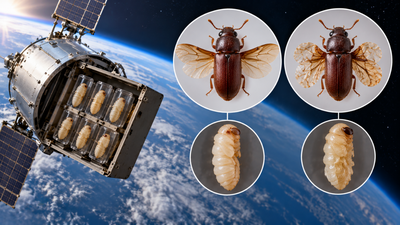
In 1967, NASA sent flour beetle pupae into space aboard the Biosatellite II experiment to examine how spaceflight and radiation could affect insect development. The mission exposed the insects to conditions that could not easily be reproduced on the ground, allowing researchers to compare their development with that of ground controls. One of the clearest…

Read More
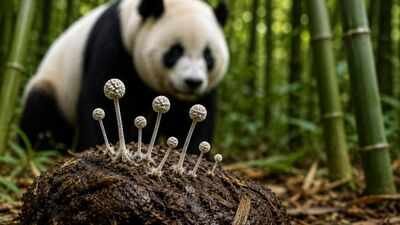
Scientists found a fungus never seen before growing in giant panda poop; DNA analysis confirmed it was a new species |

Scientists found a fungus never seen before growing in giant panda poop; DNA analysis confirmed it was a new species |

Image Credit: AI Generated Scientists have identified a previously unknown species of fungus after isolating it from the faeces of a giant panda. Named ‘Mucor melanoleucus,’ it belongs to a group of fungi commonly found in soil and decaying organic material. To work out exactly where it belonged, researchers examined its physical features, observed how…

Read More
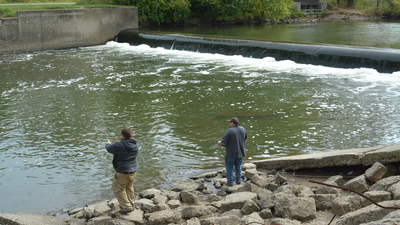
After Ohio removed Brecksville Dam in 2020, free-flowing habitat linked to Lake Erie more than doubled to 71 km; scientists later found 15 newly detected fish taxa downstream

After Ohio removed Brecksville Dam in 2020, free-flowing habitat linked to Lake Erie more than doubled to 71 km; scientists later found 15 newly detected fish taxa downstream

A restored 25-acre coastal wetland on the southern shore of western Lake Erie was used continuously by millions of aquatic animals after it was reconnected to nearby waterways, according to a four-year acoustic monitoring study led by researchers at the United States Geological Survey (USGS). The scientific assessment, published in the journal Aquatic Ecosystem Health…

Read More
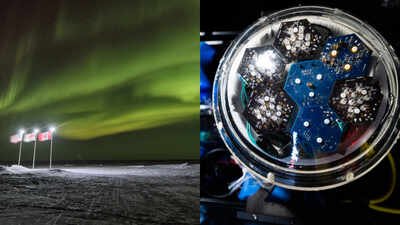
MIT researchers drilled a 2-by-3-foot hole through 3.6 feet of Arctic sea ice and sent a robot below; the prototype transmitted data through the ice at 1.2 kilobytes per second

MIT researchers drilled a 2-by-3-foot hole through 3.6 feet of Arctic sea ice and sent a robot below; the prototype transmitted data through the ice at 1.2 kilobytes per second

Arctic ice with flags of countries participating in Operation Ice Camp 2026 and Havguard’s communications device, enclosed in a polycarbonate pressure vessel The Arctic sea is becoming noisier and harder to reach. Beneath its frozen surface, cracking ice, marine mammals and passing ships create a constantly changing underwater soundscape. For scientists trying to understand this…

Read More
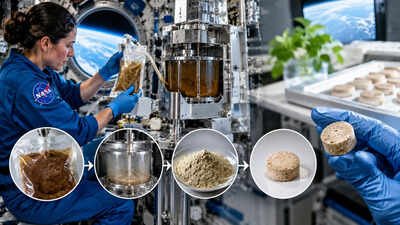
Nasa is testing a way to turn astronaut poop into a sterile, odour-free material that could be recycled |

Nasa is testing a way to turn astronaut poop into a sterile, odour-free material that could be recycled |

Image: AI representation of a way to turn astronaut poop into a sterile, odour-free material that could be recycled For astronauts travelling far beyond Earth, even the most ordinary human waste becomes a serious engineering problem. On a long-duration mission, there is no convenient rubbish collection, unlimited storage space or easy way to send unwanted…

Read More
Scientists turned dog poop into fuel and found it could produce both hydrogen and methane |

Scientists turned dog poop into fuel and found it could produce both hydrogen and methane |

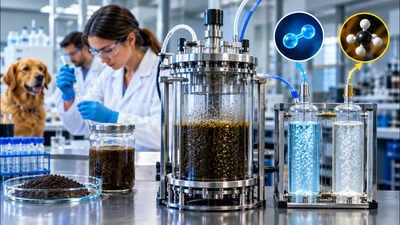
Dog waste is usually treated as an unpleasant urban problem, something to be collected, bagged and thrown away. But researchers are investigating whether it could instead become a source of renewable energy. A new study has examined dog faeces as a feedstock for producing biohydrogen and methane through anaerobic biological processes. The research, published in…

Read More