










Headlines
Michael Bloomberg committed $260 million to protect the world's oceans; his initiative has already strengthened protections across 11 million sq miles |

Michael Bloomberg committed $260 million to protect the world’s oceans; his initiative has already strengthened protections across 11 million sq miles |

Image: Left/Wikipedia/Right/Gaby Barathiue, Ocean Image Bank The world’s oceans cover most of the planet, yet vast areas remain difficult to protect, monitor and manage. In June 2026, Michael Bloomberg’s philanthropic organisation announced a fresh $260 million commitment to expand the Bloomberg Ocean Initiative, bringing its total support for ocean conservation to $635 million. The investment…

Read More
In 1896, William Hadaway patented an electric stove, helping transform cooking from wood, coal and gas to modern electric appliances |

In 1896, William Hadaway patented an electric stove, helping transform cooking from wood, coal and gas to modern electric appliances |

In 1896, American electrical engineer William Hadaway received the first patent for an electric stove, marking an important step in the development of electric cooking. His patent came just four years after Canadian executive Thomas Ahearn put together the first electric range in 1892, as cooking technology was moving beyond wood, coal and gas. According…

Read More
Meet Ho-Yeung Chan, the student who accidentally discovered a new sea slug smaller than a grain of rice |

Meet Ho-Yeung Chan, the student who accidentally discovered a new sea slug smaller than a grain of rice |

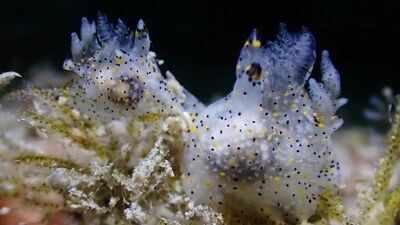
Thecacera sesama. Image Credit: Ho-Yeung Chan An accidental encounter by a student during a recreational dive has led to the formal description of a ‘tiny new sea slug’ from the waters of north-eastern Taiwan. ‘Ho-Yeung Chan’ first noticed the animal while diving and later helped establish that it belonged to a species previously unknown to…

Read More
2,800+ wolves killed, nearly $10 million spent and 15 caribou herds still at risk: Why scientists say British Columbia is targeting the wrong problem

2,800+ wolves killed, nearly $10 million spent and 15 caribou herds still at risk: Why scientists say British Columbia is targeting the wrong problem

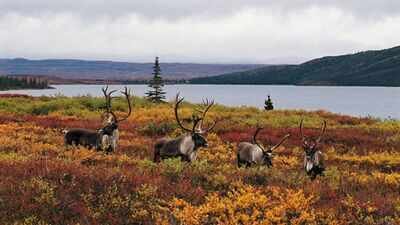
Since 2015, British Columbia has killed 200-300 wolves annually to help endangered caribou populations recover. Recently, the provincial government has proposed extending its decade-long wolf cull program by five more years in areas that are home to 15 declining woodland caribou herds. But according to scientists, the deforestation, not the wolves, is the main driver…

Read More
Quote of the day by Marie Curie: "I have no dress except the one I wear every day. If you are going to be kind enough to…" - a timeless lesson on choosing purpose over appearance |

Quote of the day by Marie Curie: “I have no dress except the one I wear every day. If you are going to be kind enough to…” – a timeless lesson on choosing purpose over appearance |

Quote of the Day by Marie Curie Marie Curie is remembered as one of the most important scientists in modern history, yet a single letter from 1895 offers a genuinely striking glimpse into her real priorities. Ahead of her marriage to Pierre Curie in July that year, someone had offered to give her a wedding…

Read More
Older than dinosaurs and Himalayas: Why Bengaluru’s 3-billion-year-old Lalbagh Rock is in the news; history of city’s ancient landmark and why citizens are fighting to protect it

Older than dinosaurs and Himalayas: Why Bengaluru’s 3-billion-year-old Lalbagh Rock is in the news; history of city’s ancient landmark and why citizens are fighting to protect it

On August 30, thousands of Bengalureans gathered at Lalbagh and marched towards the iconic rock. It has been standing in what is now Bengaluru for billions of years, long before humans, cities or even the Himalayas existed. Now, one of Bengaluru’s most significant geological landmarks has found itself at the centre of a modern infrastructure…

Read More
A fungus turns beetles into zombies and makes them die on flowers; scientists say the timing helps infect the next generation |

A fungus turns beetles into zombies and makes them die on flowers; scientists say the timing helps infect the next generation |

A fungus infecting goldenrod soldier beetles can alter their behaviour before death and cause changes to their bodies afterwards. Researchers investigating Eryniopsis lampyridarum found infected Chauliognathus pensylvanicus beetles clamped their mandibles tightly onto flower heads shortly before dying. Between 15 and 22 hours after death, the fungus caused the beetles to raise their hardened forewings…

Read More
Scientists turned discarded crab shells into a biodegradable zinc battery that stayed 99.7% efficient after 1,000 charging cycles |

Scientists turned discarded crab shells into a biodegradable zinc battery that stayed 99.7% efficient after 1,000 charging cycles |

A crab shell left behind after a meal might seem destined for the bin, but scientists have found a very different use for it. Engineers at the University of Maryland have turned material derived from discarded crustacean shells into part of a zinc battery, using chitosan to make its electrolyte. The unusual ingredient is tied…

Read More
In 2025, scientists discovered a new “zombie” fungus in British caves; it appears to manipulate spiders before killing them |

In 2025, scientists discovered a new “zombie” fungus in British caves; it appears to manipulate spiders before killing them |

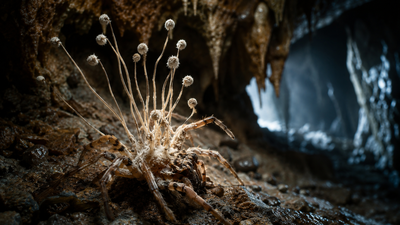
A new species of fungus capable of manipulating spiders before killing them has been formally identified in caves and disused buildings across Northern Ireland, the Republic of Ireland and Wales, marking one of the first confirmed cases of such behavioural control found in a temperate climate. Named Gibellula attenboroughii in honour of the broadcaster Sir…

Read More
A California reservoir forecasting system could add enough usable water to save $100 million to $200 million a year without building a new reservoir, a study estimates

A California reservoir forecasting system could add enough usable water to save $100 million to $200 million a year without building a new reservoir, a study estimates

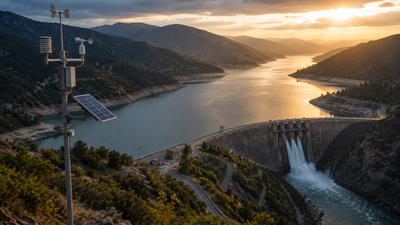
Representative Image (AI-generated) California’s water problem is often framed around the need for more storage, new infrastructure and expensive construction. But a new study suggests that part of the answer may already be sitting behind the state’s existing dams. By using better weather and water forecasts to decide when reservoirs should release or retain water,…

Read More