









Two Kochi postgraduates turned a mud-crab farming problem into a national-winning startup, earning a Rs 10 lakh grant for a bucket system that can help farmers raise premium crabs inland

Two Kochi postgraduates turned a mud-crab farming problem into a national-winning startup, earning a Rs 10 lakh grant for a bucket system that can help farmers raise premium crabs inland

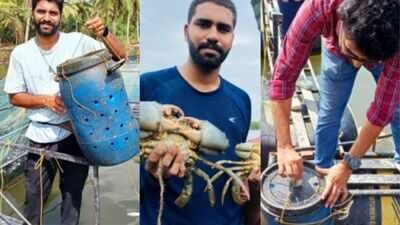
Arundas N H and Aswathy T (PC: ccari) Two postgraduates from Kochi have made headlines after turning a stubborn challenge in mud-crab farming into a technology-driven startup. The two brilliant minds have now won national recognition along with a ₹10 lakh innovation grant. Meet Arundas N H and Aswathy T, the two graduates of the…
Read More
Tasmania spent 28 years removing invasive carp from two lakes; after 49,301 fish were taken out, the state declared carp functionally eradicated and trout began bouncing back

Tasmania spent 28 years removing invasive carp from two lakes; after 49,301 fish were taken out, the state declared carp functionally eradicated and trout began bouncing back

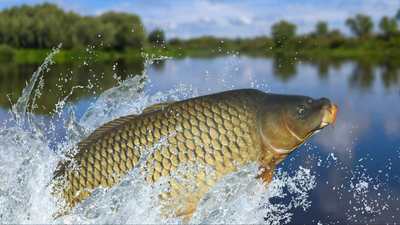
Invasive Species: Why Are Asian Carp a Problem? An intensive 28-year eradication campaign has eliminated common carp from two major Tasmanian lakes, achieving what fisheries experts around the world once considered almost impossible in a large, open freshwater system. The Tasmanian Inland Fisheries Service (IFS) has officially declared European carp (Cyprinus carpio) functionally eradicated from…

Read More
In 1978, just 10 to 15 cane toads were moved to Ishigaki Island. Decades later, their population increased to 20,000 with surprising evolutionary change |

In 1978, just 10 to 15 cane toads were moved to Ishigaki Island. Decades later, their population increased to 20,000 with surprising evolutionary change |

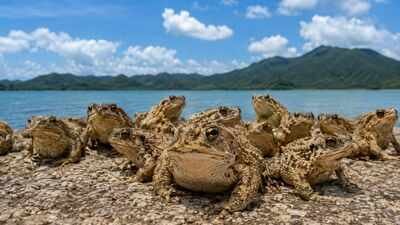
On Ishigaki Island, cane toads have been living in conditions quite different from those faced by the populations from which they came. The island is warm, wet and separated from mainland habitats, and the animals introduced there in the late 1970s have now had several decades to establish themselves. When scientists compared these Japanese toads…

Read More
In 2002, New Mexico began one of America’s largest native-fish restoration projects; more than two decades later Rio Grande cutthroat trout had returned to 120 miles of streams

In 2002, New Mexico began one of America’s largest native-fish restoration projects; more than two decades later Rio Grande cutthroat trout had returned to 120 miles of streams

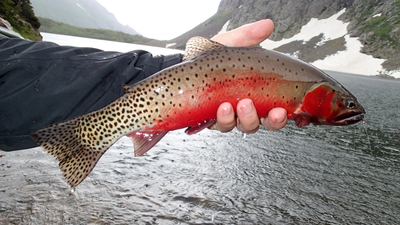
A major conservation effort launched in 2002 has restored New Mexico’s official state fish to more than 120 miles of connected mountain streams, marking one of the largest native fish restoration projects in the United States. For more than two decades, state and federal conservation agencies have worked to remove non-native predators and restore high-altitude…

Read More
Bengaluru cancer centre begins using Karnataka’s first Elekta Unity MR-Linac, combining real-time MRI with radiation delivery so doctors can adapt treatment while a tumour is being targeted

Bengaluru cancer centre begins using Karnataka’s first Elekta Unity MR-Linac, combining real-time MRI with radiation delivery so doctors can adapt treatment while a tumour is being targeted

In a significant development, a Bengaluru cancer centre has begun using Karnataka’s first Elekta Unity MR-Linac bringing MR-guided adaptive radiation therapy to the state. The HealthCare Global Enterprises (HCG) in the city has started treating patients with the new technology. As per HCG’s August 18, 2026 announcement and Elekta’s technical information, the system combines a…

Read More
Archeologists discovered 2.5 kilometres of ancient hidden roads near Machu Picchu using lasers |

Archeologists discovered 2.5 kilometres of ancient hidden roads near Machu Picchu using lasers |

Machu Picchu. Image Credit: Draceane/Wikipedia Archaeologists have discovered at least 2.5 kilometres of previously hidden pre-Hispanic roads near Machu Picchu by using lasers to look beneath the dense vegetation covering the landscape. The discovery was made around the Mandor Wall, east of the famous Inca citadel, during a preliminary archaeological survey in July 2026. Instead…

Read More
NASA is offering up to $500,000 for new technology to measure Earth's extremely thin upper atmosphere and improve predictions of how space weather changes satellite orbits

NASA is offering up to $500,000 for new technology to measure Earth’s extremely thin upper atmosphere and improve predictions of how space weather changes satellite orbits

Representative Image (AI-generated) Earth’s atmosphere does not simply end where airplanes stop flying. Far above the planet, in a region known as the thermosphere, an extremely thin layer of gas continues to interact with satellites orbiting Earth. Changes in this region may seem insignificant, but they can alter atmospheric drag and gradually affect the paths…

Read More
Meet Jonathan Yan, the 18-year-old California student who studied 479 human cancer cell lines; when he blocked one highly active pathway, the cancer cells stopped spreading

Meet Jonathan Yan, the 18-year-old California student who studied 479 human cancer cell lines; when he blocked one highly active pathway, the cancer cells stopped spreading

Yan carried out the research as part of his computational biology and bioinformatics project. 18-year-old Jonathan Yan, a student from Irvine, California sucessfully stopped spread of cancer cells by blocking the transsulfuration pathway in cancer cell lines. Yan studied 479 human cancer cell lines as part of his computational biology and bioinformatics project for the…

Read More
Scientists create a ‘laundry gun’ that kills microbes on astronauts’ clothes without water, paving the way for Mars missions |

Scientists create a ‘laundry gun’ that kills microbes on astronauts’ clothes without water, paving the way for Mars missions |

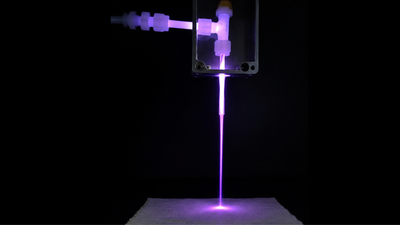
The prototype ‘laundry gun’ in action during a fabric treatment test. Astronauts heading on long missions to Mars could face a surprisingly ordinary problem: how to keep their clothes clean without wasting precious water. Scientists at the University of Alabama in Huntsville, working with NASA‘s Marshall Space Flight Center, have developed a small device that…

Read More
Scientists found the world’s fastest star moving at 15,500 miles per second, over 8% the speed of light, and it could test Einstein’s theory |

Scientists found the world’s fastest star moving at 15,500 miles per second, over 8% the speed of light, and it could test Einstein’s theory |

Astronomers have found what is currently the fastest known star in the Milky Way, a faint star racing through the extreme environment around Sagittarius A*, the supermassive black hole at the centre of our galaxy. Called S301, the star reaches a staggering speed of about 15,500 miles per second, or 25,000 kilometres per second, which…

Read More