









Scientists witness first-ever seafloor spreading event as 160 million cubic metres of lava create new ocean floor |

Scientists witness first-ever seafloor spreading event as 160 million cubic metres of lava create new ocean floor |

For most of human history, the creation of new ocean floor has been something inferred rather than witnessed. Geologists could map ancient scars on the seabed, measure the slow movement of tectonic plates and study volcanic rock brought to the surface, but the actual process of seafloor spreading remained largely hidden beneath kilometres of water.That…
Read More
Antarctic: Scientists find nanoplastics in Antarctic soil for the first time, including tyre-wear particles, raising concerns that tiny plastic pollution can travel through the atmosphere to Earth's most remote places

Antarctic: Scientists find nanoplastics in Antarctic soil for the first time, including tyre-wear particles, raising concerns that tiny plastic pollution can travel through the atmosphere to Earth’s most remote places

Nanoplastics found in Antarctic soils for first time, suggesting long-range atmospheric transport Scientists have detected nanoplastics in Antarctic soil for the first time. This provides fresh evidence that tiny plastic particles can travel through the atmosphere and reach some of the most remote places on Earth. But how is it even possible?The study was published…

Read More
Scientists have filmed a rare 125-million-year-old goblin shark alive in its natural deep-sea habitat for the first time, revealing a new depth record and a wider Pacific range

Scientists have filmed a rare 125-million-year-old goblin shark alive in its natural deep-sea habitat for the first time, revealing a new depth record and a wider Pacific range

Goblin shark near Tonga Trench (2024). Credit: Minderoo-University of Western Australia Deep-Sea Research Center and Inkfish For the first time, scientists have filmed live goblin sharks swimming freely in their natural deep-sea habitat, giving researchers a glimpse of one of the world’s rarest and most mysterious sharks without removing it from the ocean. The discovery…

Read More
Quote of the day by Isaac Newton: "I can calculate the motion of heavenly bodies but not the madness of people" - why human behaviour is harder to predict than the stars |

Quote of the day by Isaac Newton: “I can calculate the motion of heavenly bodies but not the madness of people” – why human behaviour is harder to predict than the stars |

Isaac Newton (Image: Wikipedia) Isaac Newton spent his entire career proving that the universe follows precise, predictable laws. Then he lost a fortune betting on people, and admitted the difference out loud. “I can calculate the motion of heavenly bodies but not the madness of people,” he is reported to have said, after watching his…

Read More
Bumblebees carry up to seven times more toxic metals than honeybees, even when feeding in the same fields; study finds |

Bumblebees carry up to seven times more toxic metals than honeybees, even when feeding in the same fields; study finds |

Bumblebees may be carrying a far heavier burden of toxic metals than honeybees, even when both species forage in the same countryside. The research found that pollen collected by bumblebees contained between two and seven times higher concentrations of several harmful metals, including arsenic, chromium, lead and tin, compared with pollen gathered by nearby honeybees….

Read More
Gagnayaan: Isro clears another parachute milestone; IMAT-5 Done, but details on 4th test elusive | India News

Gagnayaan: Isro clears another parachute milestone; IMAT-5 Done, but details on 4th test elusive | India News

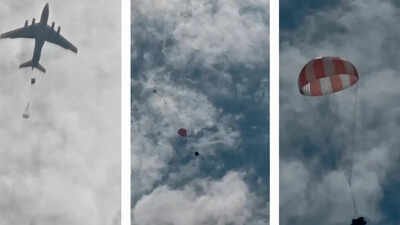
BENGALURU: Isro has completed the fifth Integrated Main Parachute Airdrop Test (IMAT-05), clearing another milestone towards the first uncrewed Gaganyaan mission by qualifying the crew module’s main parachute system to withstand the maximum expected loads during descent.“The test, conducted on July 7 at the Aerial Delivery Research and Development Establishment (ADRDE) drop zone in Sheopur…

Read More
Space images have found a 5,000-mile seaweed belt across the Atlantic: Scientists say it can clog beaches and create public health problems |

Space images have found a 5,000-mile seaweed belt across the Atlantic: Scientists say it can clog beaches and create public health problems |

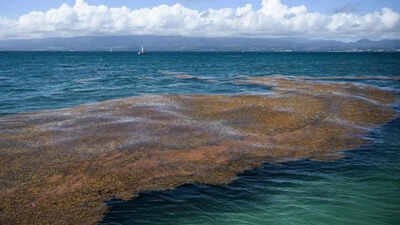
Seaweed is no longer just an aquatic flora, it has now transformed into a nuisance, especially for scientists. Sargassum, a genus of brown macroalgae that was once largely confined to the Sargasso Sea has evolved into the Great Atlantic Sargassum Belt that stretches across 5,000 miles. In May alone, scientists detected 37.5 million tons of…

Read More
Satellite images reveal global mangrove recovery: Nasa study shows forests springing back, but rising seas could still drown them |

Satellite images reveal global mangrove recovery: Nasa study shows forests springing back, but rising seas could still drown them |

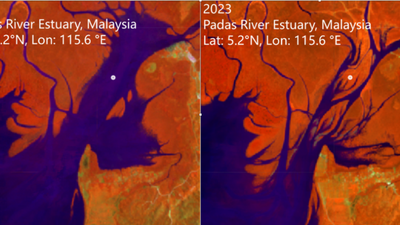
Mangrove forests rank among the world’s most valuable coastal ecosystems, shielding communities from storms, storing vast amounts of carbon and providing nurseries for countless marine species. For decades, scientists warned that these unique forests were disappearing faster than many tropical rainforests because of coastal development, aquaculture and pollution. Now, new satellite observations from Nasa present…

Read More
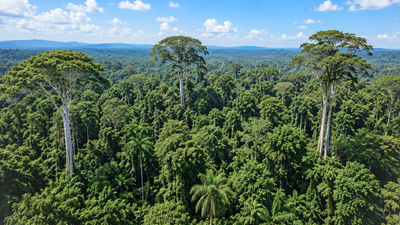
The world's tallest trees are tricking gravity to survive drought by widening their internal water pipes and rewiring their water transport system |

The world’s tallest trees are tricking gravity to survive drought by widening their internal water pipes and rewiring their water transport system |

For decades, scientists believed the world’s tallest trees faced a fundamental disadvantage during drought. The higher a tree grows, the harder gravity makes it for water to travel from the roots to the leaves, leading researchers to assume that towering rainforest giants would be especially vulnerable as the climate becomes hotter and drier. A new…

Read More
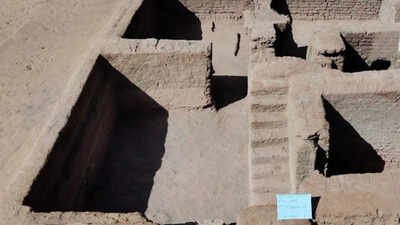
Egypt has uncovered a well-preserved 1,600-year-old Byzantine-era city in Dakhla Oasis: Homes, basilica church, ovens, coins and writing fragments show how people lived in the western desert |

Egypt has uncovered a well-preserved 1,600-year-old Byzantine-era city in Dakhla Oasis: Homes, basilica church, ovens, coins and writing fragments show how people lived in the western desert |

As humans dream of venturing to other planets and creating a virtual world with the help of AI, the hand that was holding tight with the past seems to be losing its grip. In the race to develop the future, the rich depths of the past are getting lost. Those that define our origins, reveal…

Read More