










The ground beneath 394-foot wind turbines in Poland became unexpected nesting and feeding grounds for wild bees in farmland

The ground beneath 394-foot wind turbines in Poland became unexpected nesting and feeding grounds for wild bees in farmland

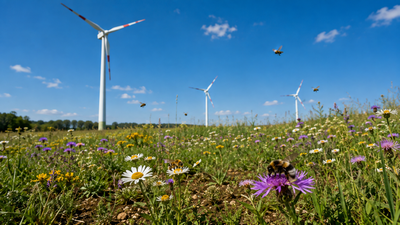
At a wind farm in western Poland, the ground beneath the turbines has quietly turned into unexpected pollinator territory. A wind turbine standing 394 feet tall rises above sprayed grain fields near Gołańcz, and the unmown gravel patch encircling its base has been found to hold as many wild bees as the seminatural grasslands set…

Read More
A small Texas reactor reached criticality in under a year, aiming to produce medical isotopes that US hospitals now import

A small Texas reactor reached criticality in under a year, aiming to produce medical isotopes that US hospitals now import

Representative Image of a modern Texas nuclear reactor supporting advanced isotope production for healthcare (AI-generated image) Every day, more than 40,000 Americans undergo a diagnostic scan that depends on technetium-99m, a radioactive isotope used to image the heart, spot cancer and check kidney function. Every milligram of the molybdenum-99 that produces it currently arrives in…

Read More
A Connecticut cemetery leased unused land for 7,000 solar panels, but the ground beneath them could become habitat for bees and pollinators

A Connecticut cemetery leased unused land for 7,000 solar panels, but the ground beneath them could become habitat for bees and pollinators

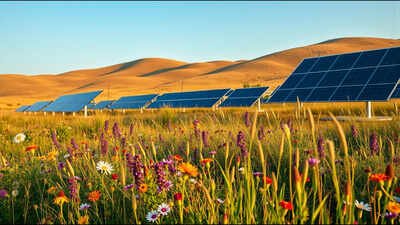
Representative Image of a cemetery with solar panels surrounded by wildflowers and native grasses (AI-generated image) At the back of a Catholic cemetery in Torrington, Connecticut, a wide field once sat empty for years, too far from the graves to ever be needed. Then came rows of dark solar panels, built on land owned by…

Read More
Meet Vera Wang, the Hawaii high school senior who built a coconut-based ocean filter as a sophomore; two years later, she found fungi in coconut husks that can biodegrade plastic and sunscreen

Meet Vera Wang, the Hawaii high school senior who built a coconut-based ocean filter as a sophomore; two years later, she found fungi in coconut husks that can biodegrade plastic and sunscreen

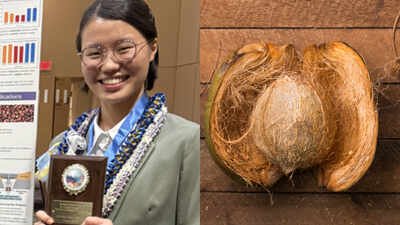
Wang’s work, done in the lab of Anthony Amend at the University of Hawaiʻi at Mānoa, was recognized at the 2026 Hawaiʻi State Science & Engineering Fair What started as a high school project to clean polluted ocean water has turned into a promising scientific discovery. Hawaii’s Kaiser High School senior Vera Wang was the…

Read More