










Along with Russia, the United States possesses nearly 90% of all nuclear weapons on Earth. The country has over 5,044 total warheads and is known to have the most balanced and heavily maintained strategic triad delivery systems. While it has no need to amp up on developing more nuclear weapons, it needs to urgently clear out the nuclear waste that has been silently accumulating for more than three decades.
The Hanford Site
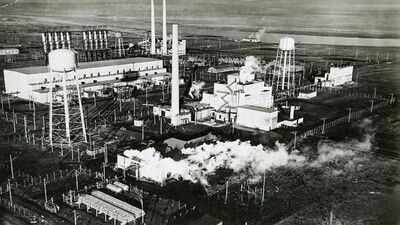
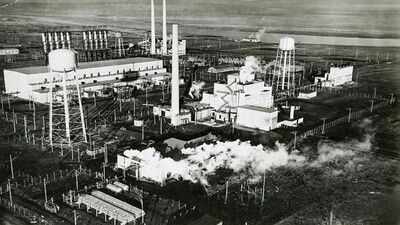
In 1943, 5 years after chemists and physicists discovered nuclear fission, Hanford, Washington, was chosen as the top-secret site for producing the Manhattan Project’s plutonium supply. The element is not found in nature, is more radioactive than uranium, and provided the US with an additional route to building atomic bombs. The nearby Columbia River could provide power and water to cool the reactors, and the area was sparsely populated. But it wasn’t empty; Nearly 2,000 people were excluded from the land, including those from four tribal nations. During its infamous Cold War with the erstwhile Soviet Union, the country developed an exquisite nuclear arsenal. At the Hanford Site, a sprawling nuclear complex along the Columbia River, the US produced most of the plutonium that powered its Cold War weapons program.The B Reactor was the first of three reactors to come online for the war effort. It provided plutonium for two bombs detonated in the summer of 1945. One was dropped in the Trinity test. The other was detonated over Nagasaki, Japan, killing many tens of thousands of people and ending the war. After the war, the US government transferred control of the Hanford Site from the Manhattan Project to the Atomic Energy Commission, and workers ramped up plutonium production. From 1946 to 1954, the site went from three reactors to eight. Workers also built two additional separation facilities, and in the 1960s, a ninth reactor was built using a different design.While the site did not close all at once, its plutonium production operations ended when its last nuclear reactor shut down in 1987, followed by the closure of its last nuclear fuel reprocessing plant in 1990.It helped amp up the country’s nuclear stockpile but also created an enormous cleanup problem that scientists and engineers are still trying to solve. About 56 million gallons of highly radioactive and chemically hazardous waste remains stored inside 177 underground tanks, making Hanford home to one of the most complex environmental cleanup projects in the world, as per a report by Diario AS.
Why the wait?
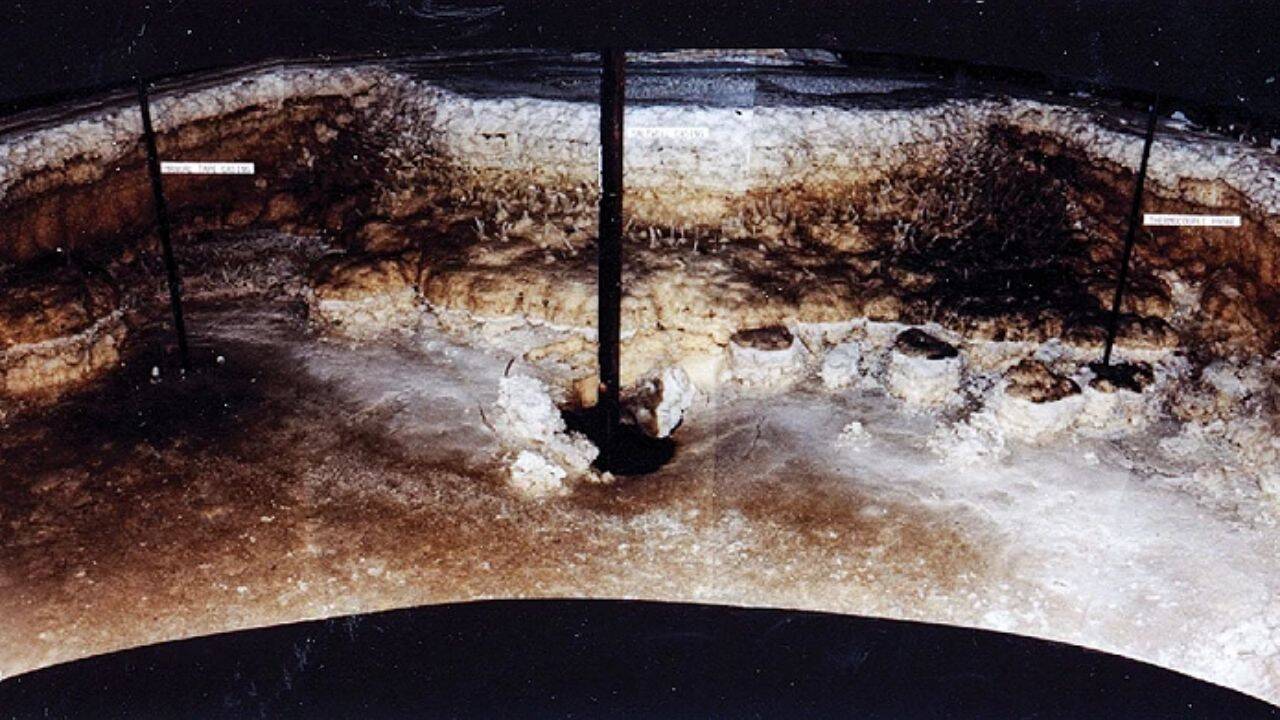
The fuel rods were dissolved in powerful chemical solutions, leaving behind millions of gallons of liquid waste containing both dangerous chemicals and radioactive material.
Between the 1940s and the late 1980s, Hanford processed more than 100,000 tons of uranium, ultimately producing around 75 tons of plutonium, roughly two-thirds of the United States’ total stockpile. Extracting this amount of plutonium wasn’t an easy process. The fuel rods were dissolved in powerful chemical solutions, leaving behind millions of gallons of liquid waste containing both dangerous chemicals and radioactive material.Rather than disposing of it immediately, the waste was pumped into giant underground storage tanks, 177 single and double-shelled waste tanks to be exact. Some of those tanks have leaked over the years, adding to concerns about contamination reaching groundwater and eventually the Columbia River.
The heavy dilemma
The question has a complex answer. Much of the waste is far too radioactive to bury in a conventional landfill. Instead, it has to be treated first. The long-term plan involves separating the most radioactive material before turning both high-level and lower-level waste into solid glass through a process called vitrification.The glass locks the radioactive material into a stable form that can remain intact for thousands of years. Lower-activity waste can eventually stay at Hanford in specially engineered disposal facilities, while the most hazardous material is intended for permanent storage in a deep geological repository.In 1989, the Hanford Site formally transitioned from plutonium production to nuclear-waste cleanup. The US Department of Energy, the US Environmental Protection Agency, and the Washington State Department of Ecology signed the Tri‐Party Agreement, which set a timeline for cleanup. And in the 1990s, the parties agreed that vitrification was the best option. But nothing happened.In October 2025, site managers announced that the Hanford Tank Waste Treatment and Immobilisation Plant—nicknamed the Vit Plant had, for the first time, trapped real nuclear waste in glass through vitrification. In practice, getting the Hanford Vit Plant up and running has taken far more effort. The waste produced during wartime operations is chemically complex, and now most tanks contain a heterogeneous mixture of liquid, solid, and sludge. “It has taken some time to learn about that waste and understand what’s required to successfully dispose of it through vitrification,” said Dan McDonald, the tank waste disposal project manager for the Washington State Department of Ecology, according to a report by Chemical & Engineering News.Now that the Vit Plant is running, the goal is to produce low-activity waste glass, the glass that contains the less radioactive, pretreated waste, at an average rate of at least 21 metric tons daily. The plant is not yet vitrifying the extracted caesium, strontium, or the most radioactive waste, but the US Department of Energy is required to start turning those substances into high-level glass by 2033. Once fully operational, the high-level waste facility will aim to produce 4.2 metric tons of glass daily.