








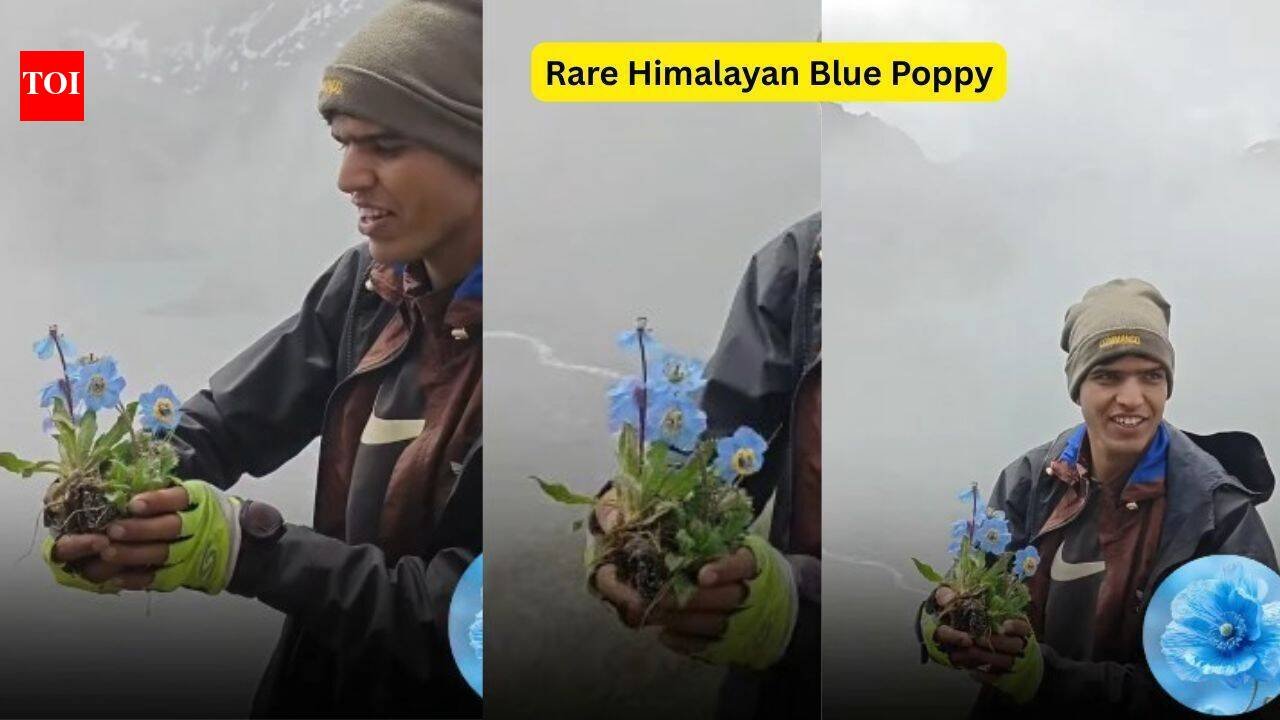
Once presumed to be a myth of the mountains, Bhutan’s national flower is a once-in-a-lifetime rare find. A video going viral on social media has left nature lovers beautifully shocked and stunned at the same time. The video shows a local boy in Nepal’s remote Dolpa region gently holding a rare Himalayan Blue Poppy. The flower, with its stunning sapphire-blue petals and bright golden-yellow centre, almost looks unreal against the Himalayas. It is an elusive alpine bloom which is very real and incredibly rare. In the video, the boy keeps calling himself lucky in Nepali language and looks genuinely happy.Why is the Himalayan Blue Poppy so rare?Himalayan Blue Poppy (genus Meconopsis) is extremely rare. Spotting it is an unusual event as it is among the world’s most sought-after mountain flowers. While several species of blue poppies occur across the Himalayas, spotting one in the wild remains a dream.
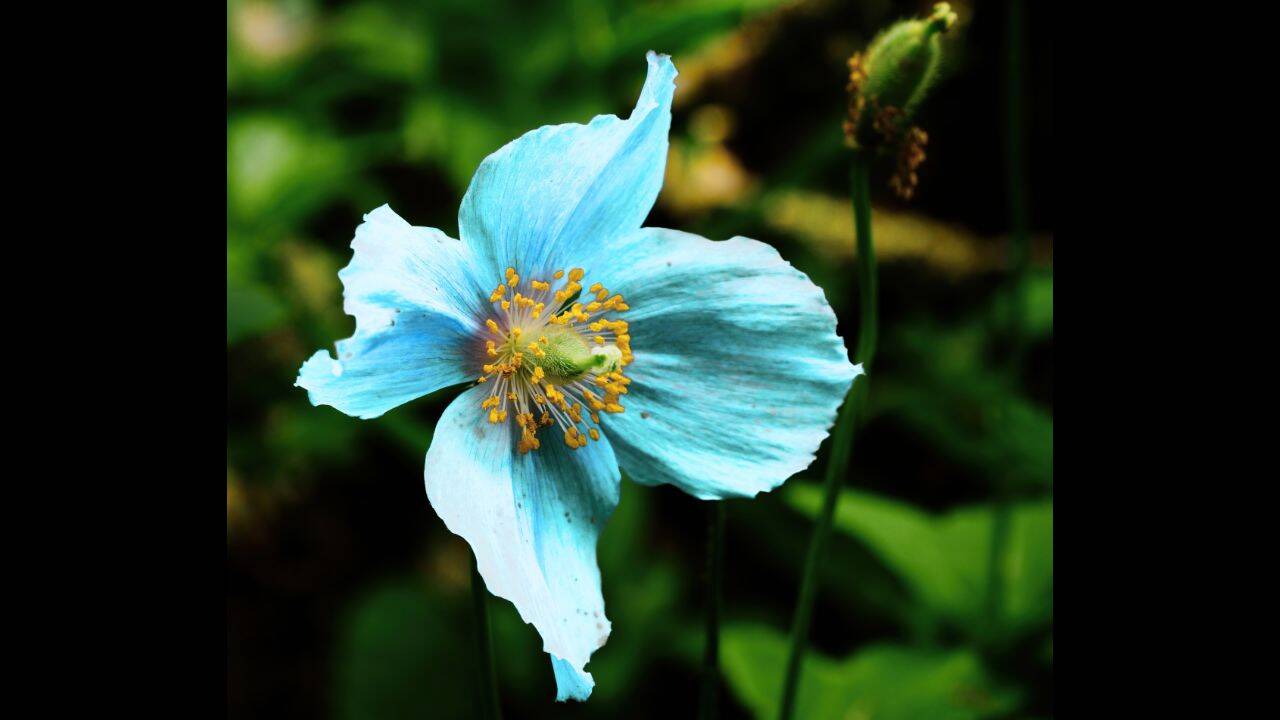
Rare Himalaya Poppy (Canva)
Also, these flowers defy nature and survive in one of the harshest environments on Earth. Unlike most wildflowers, it thrives in cold alpine meadows and rocky slopes at elevations of around 3,500 to over 5,000 metres. In Bhutan, the national flower (Meconopsis gakyidiana) is commonly found between 3,700 and 4,300 metres, while Nepal’s blue poppies are often seen at even higher elevations.Several factors make the flower special:It has an extremely short flowering season, usually between late June and August.It depends highly on altitude and snowfall.The temperatures have to be perfect, generally between 5°C and 15°C during the dayMany species are difficult to cultivate outside their natural habitat.Climate change, habitat disturbance and illegal collection have reduced wild populations in several parts of the Himalayas.Bhutan has even reported declines in famous viewing areas after visitors dug up plants for gardens.Where are the chances of spotting the Himalayan Blue PoppyThe latest viral sighting comes from Dolpa. It is among Nepal’s most isolated Himalayan districts. Dolpa is noted for its stunning alpine meadows, high mountain passes and ancient Tibetan Buddhist culture. Much of the district falls within the protected Shey Phoksundo National Park, which is also Nepal’s largest national park.Besides Dolpa, lucky travellers may also encounter Himalayan Blue Poppies in:High-altitude trekking routes in western and central NepalAnnapurna and Manaslu regionsSelect locations in eastern NepalBhutan’s high mountain passes such as Chele La, the Druk Path Trek and the Jomolhari Trek,Though sightings are not guaranteed. Even experienced trekking guides may go several seasons without seeing one.Interestingly, the flower was once thought to be a mythLong before botanists formally documented it, the Himalayan Blue Poppy existed in local folklore across the Himalayas. People doubted that such a brilliantly blue flower could actually exist.Its existence was confirmed only in the early 20th century. In 2017, Bhutan’s National Biodiversity Centre announced that the country’s national flower had been reclassified as a distinct species.Why is it so differently blue?
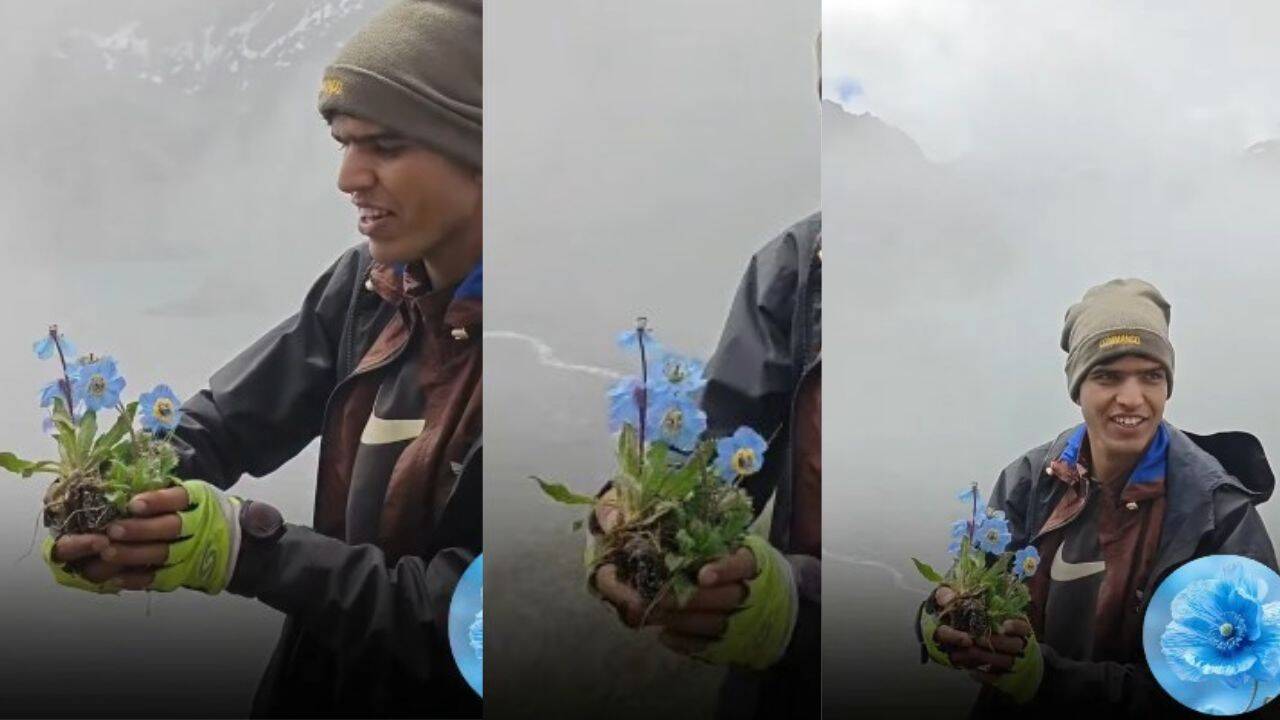
Nepali boy holding the flower (Instagram)
Blue is considered one of the rarest colours in flowering plants. The Himalayan Blue Poppy owes its extraordinary colour to specialised pigments combined with unique cell chemistry that produces its stunningly sky-blue shade on the petals. This makes it an unusual find. The natural colouring is one of the reasons photographers and botanists.Should you pick it when you find one?Never ever do that. Blue poppies are extremely fragile, and removing them from the wild can seriously damage local populations. Conservationists urge visitors to admire and photograph but avoid touching or picking them at any cost.For travellers willing to trek into the world’s highest meadows, spotting this legendary flower is more about witnessing one of nature’s rarest miracles.