










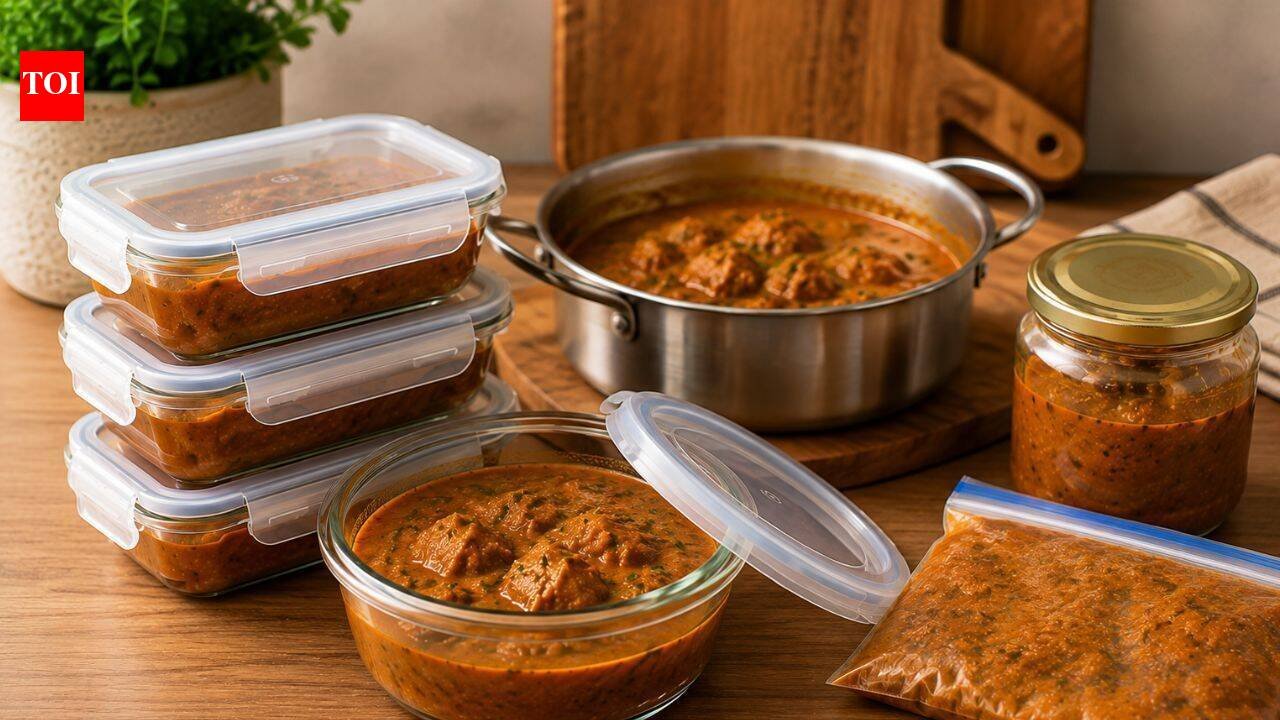
A freshly cooked curry rarely goes to waste, and the leftovers often become the next day’s lunch. Yet many gravies spoil sooner than expected because they are stored incorrectly. A sour smell, separated texture, or mould usually appears long before the container is empty. In most cases, the recipe is not the problem. The way the curry is cooled, stored and handled after cooking makes the biggest difference. Food safety experts recommend refrigerating leftovers promptly and limiting their exposure to air and repeated temperature changes. A few simple storage habits can help preserve flavour, maintain texture and reduce the risk of spoilage. Here are four practical ways to help leftover curry stay fresh for longer.
4 simple ways to keep leftover curry fresh for longer
1. Cool the curry before refrigerating
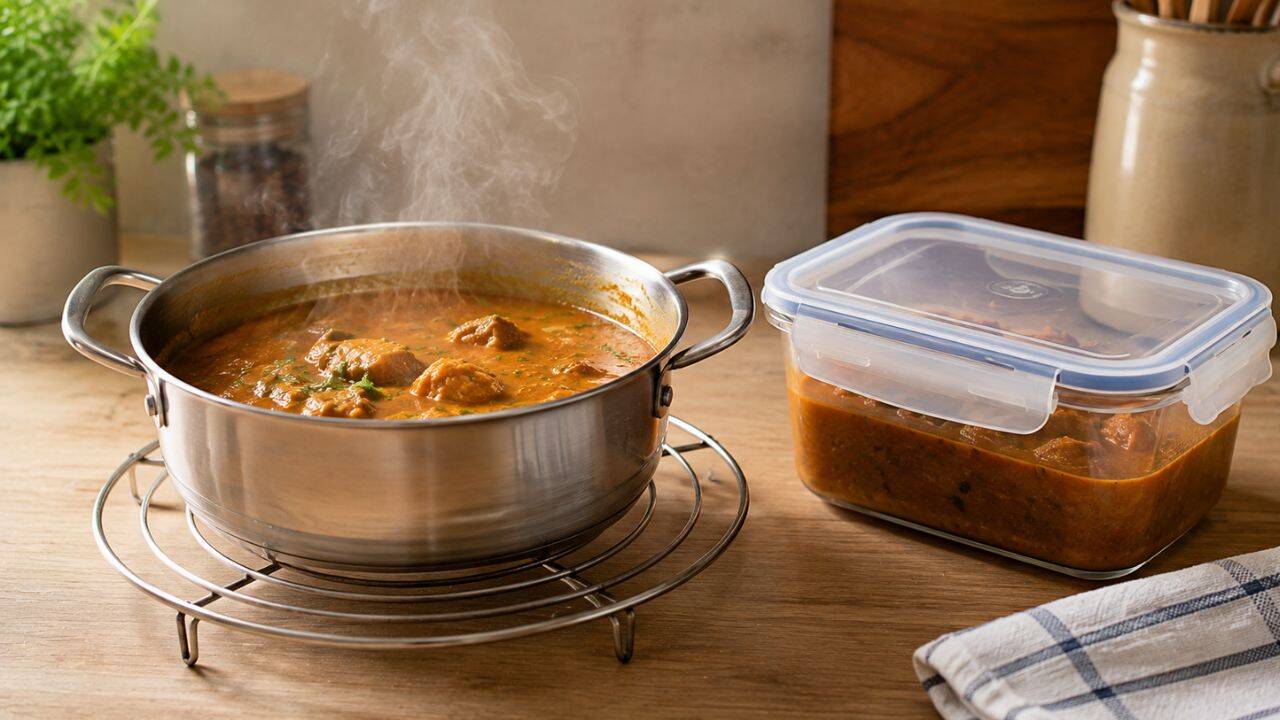
Warm curry creates the conditions for bacteria to grow if it is not cooled well. Instead of leaving the pot on the counter for several hours, divide the curry into smaller portions so it cools more quickly. Once it stops steaming, refrigerate it within about two hours of cooking. Faster cooling helps preserve both quality and food safety.
PC: AI Generated
2. Store it in airtight glass
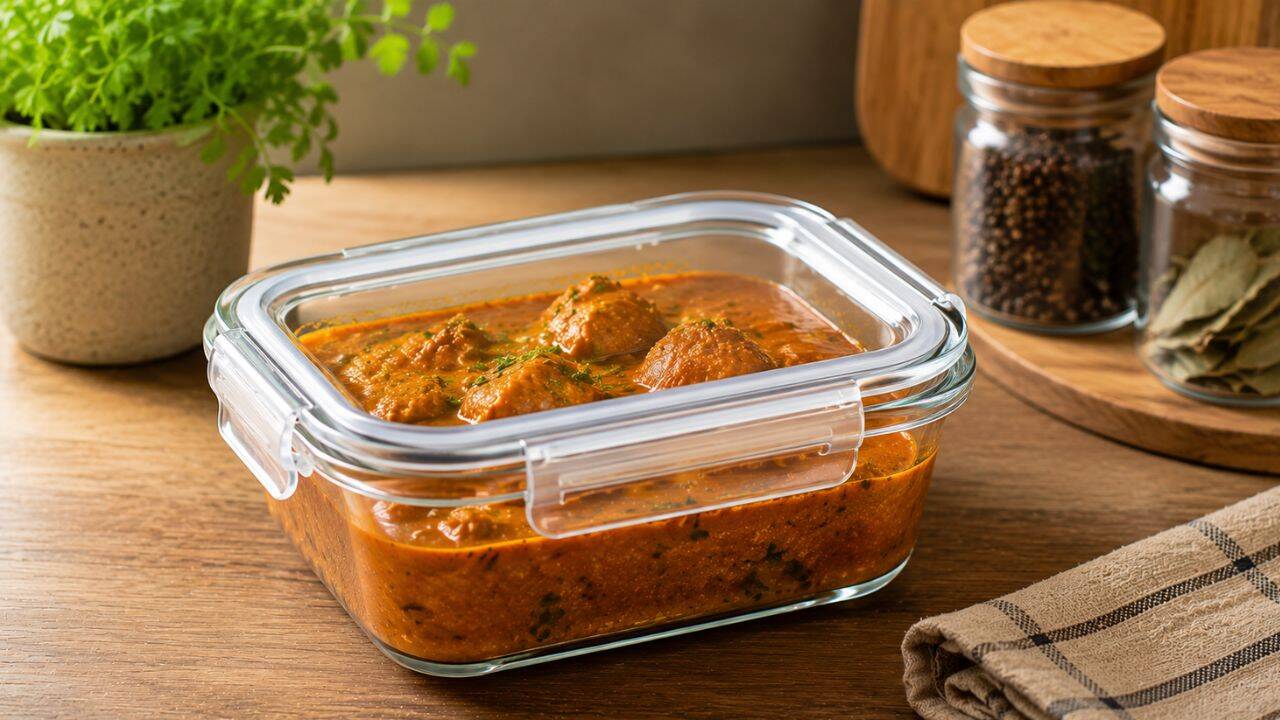
Smaller airtight containers reduce repeated contact with air and make it easier to remove only one serving at a time. Glass containers are particularly useful because they do not retain stains or odours from strongly spiced gravies and are easier to clean thoroughly after use.
PC: AI Generated
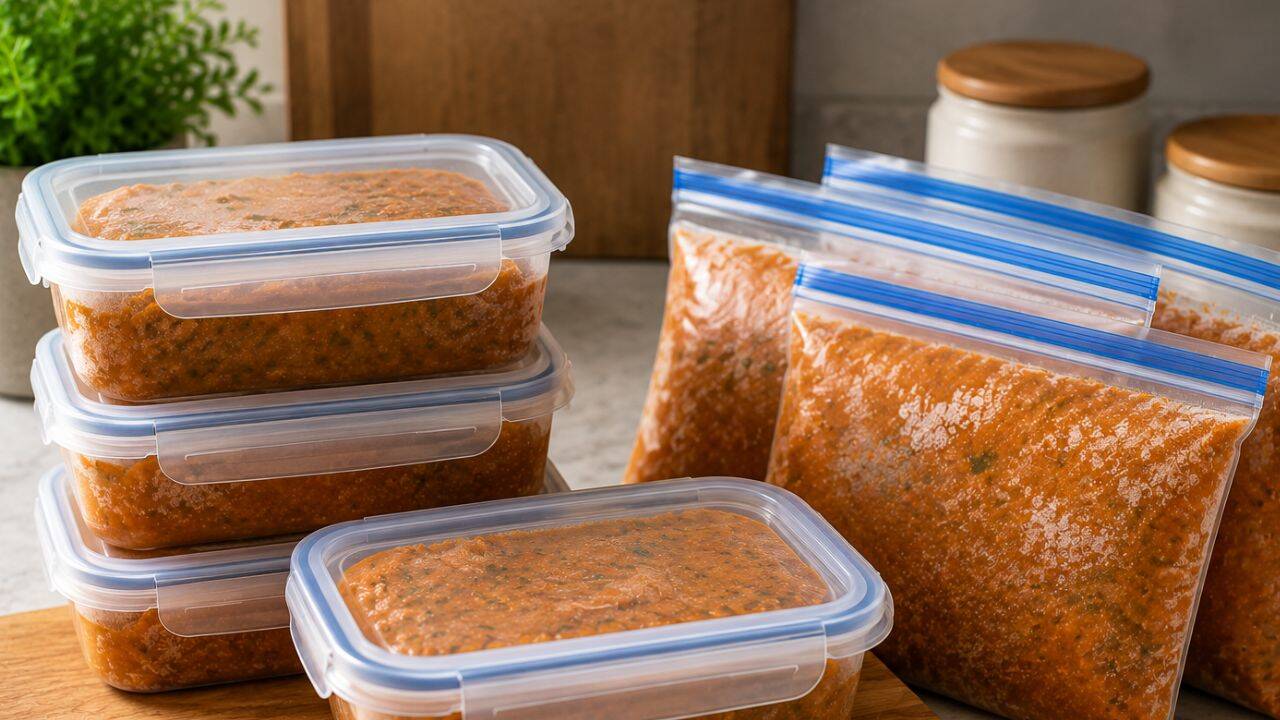
3. Freeze portions if not used within the next few days
Refrigeration keeps curry fresh only for a limited period. If some of the leftovers will not be used within the next few days, freezing them as individual portions helps preserve both flavour and texture. Small containers freeze more evenly and thaw later. Labelling each container with the date of preparation also makes storage easier to manage.
PC: AI Generated
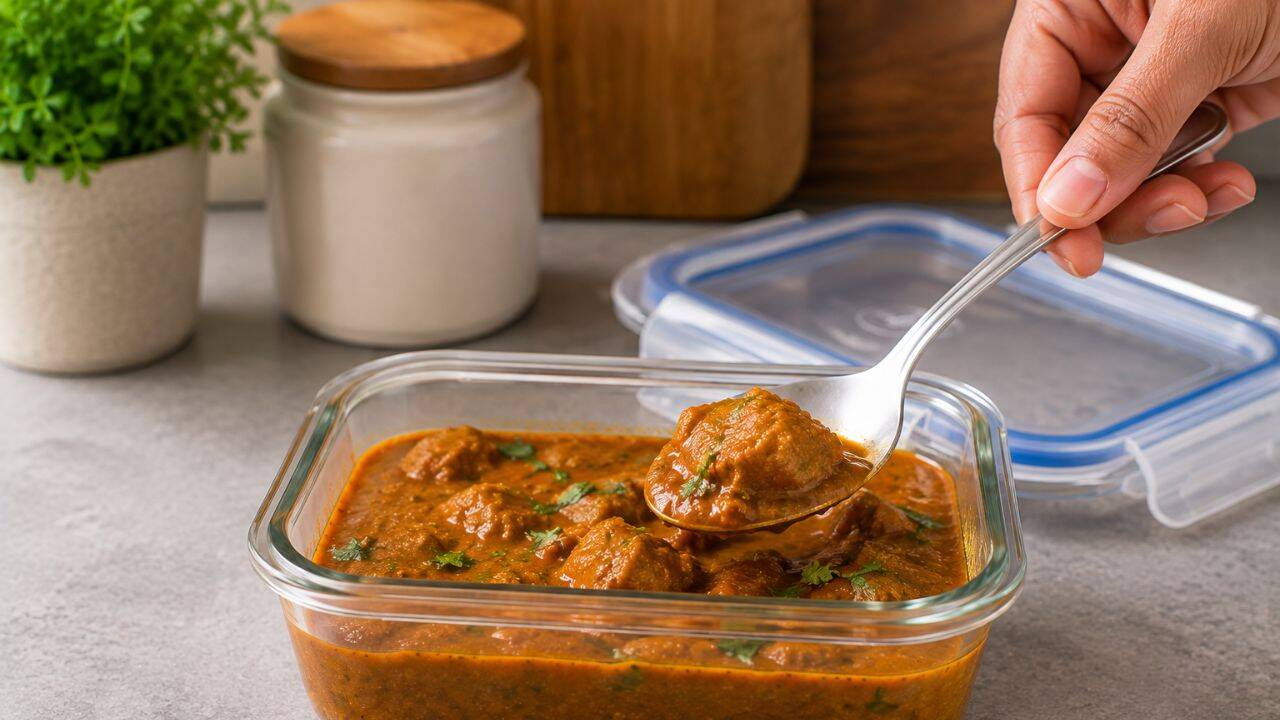
4. Always use a clean spoon when serving leftovers
Each time curry is removed from the container, the serving spoon should be completely clean and dry. Using a spoon that has already touched another dish or has been placed in someone’s mouth introduces bacteria into the remaining gravy. A clean serving utensil helps keep the rest of the curry fresher for longer.
PC: AI Generated
3 common mistakes that make leftover curry spoil faster
1. Do not refrigerate the entire cooking pot
A large cooking pot retains heat for much longer than shallow containers. The curry therefore spends more time in temperatures where bacteria multiply rapidly. Transferring leftovers into smaller containers allows them to cool more efficiently while also making storage more practical inside the refrigerator.
2. Avoid reheating
Every heating and cooling cycle reduces the quality of the curry and increases the opportunity for bacterial growth if it is not handled carefully. Reheating only the portion that is needed for one meal allows the remaining curry to stay refrigerated without repeated temperature changes that shorten its storage life.
3. Never leave the container open inside the refrigerator
An uncovered container allows the curry to dry out while absorbing odours from nearby foods. It also exposes the surface to unnecessary air circulation. Keeping the container tightly sealed helps preserve moisture, maintain flavour, and reduce contamination from other items stored in the refrigerator.