












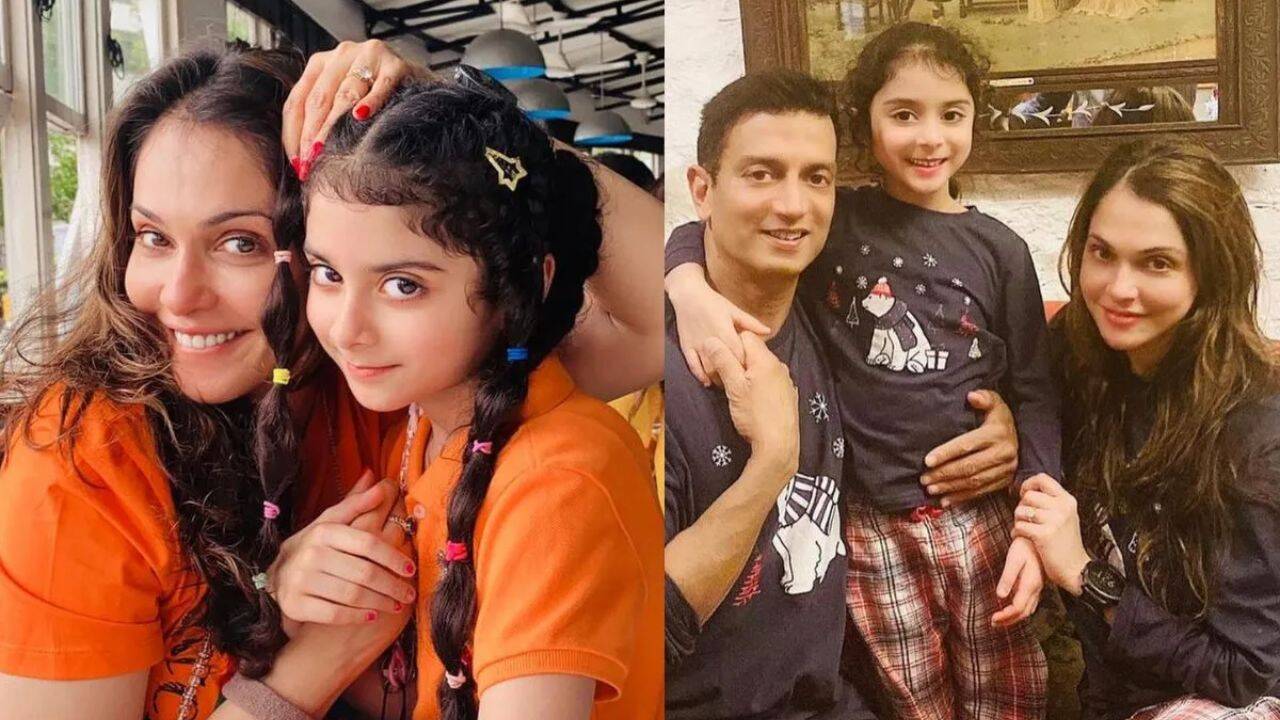
On Mother’s Day, actor Isha Koppikar received a question that many mothers would recognise. Her daughter asked her, “Mumma, aap mere liye kya chahte ho?” What do you want for me? Her answer was simple: she wants her daughter to achieve her dreams on her own and grow into a strong person. But the thought that followed made her question something much deeper about parenting. Parents often tell their children to become atmanirbhar and independent. They encourage them to study, build careers, and stand on their own feet. But are parents truly preparing children to live independently, or are they still quietly preparing them for a future where someone else will eventually take responsibility for them?That question formed the heart of Koppikar’s message, and it is one that every parent raising a child today needs to think about. Are children really being taught independence? For generations, children have been told to study hard, get a good job, and become independent. But independence cannot simply mean earning a salary. Koppikar pointed out that a child may have a job and earn money, yet still believe that someone else will eventually take care of the difficult parts of life. For girls, that person is often imagined as a future husband. For boys, it can sometimes be a future wife.
28 Jul 2026 | 16:22
How do you teach children about money and financial responsibility?
This creates a confusing message. A girl is told to become financially independent, but at the same time, she may grow up hearing that one day a husband will take care of her. A boy is told to become responsible but may also be raised with the idea that marriage will bring someone who will manage his life, home, or emotions. True independence requires something much deeper.
A daughter should not marry because someone will ‘take care’ of her

A daughter should not marry because someone will ‘take care’ of her
Koppikar said that one of her greatest joys as a mother would be seeing her daughter achieve her dreams and make her own life decisions with maturity. That does not mean teaching children that they should never need anyone. It means teaching them that they should not enter a relationship because they are unable to manage their own lives. A daughter should not feel that marriage is her escape from responsibility. She should not marry because she needs someone to provide security or take charge of her life. Instead, she should enter a relationship when she is capable of taking care of herself and genuinely wants the companionship of another person. There is an important difference between needing someone for security and choosing someone for companionship.
The same lesson applies to sons
One of the strongest parts of Koppikar’s message is that this is not only about raising independent daughters. It applies equally to sons. Parents should not raise boys believing that a future wife will come into their lives and make them responsible. A wife is not a project. She is not someone who should have to teach a grown man how to manage his responsibilities. A boy should learn to cook, clean, manage money, make decisions, handle his emotions, and take responsibility for his own life before marriage. Marriage should bring two responsible adults together, not one adult and another person expected to take care of them.
Earning money is only one part of independence

Earning money is only one part of independence
One of the most important points in Koppikar’s message is that simply earning money does not automatically make someone independent. Real independence includes the ability to make decisions, accept their consequences, manage responsibilities, and understand what is right for one’s own life. A financially independent person can still be emotionally dependent on others to make every decision. Someone can have a successful career but struggle to manage basic responsibilities. Someone can earn well but have no idea how to handle failure, relationships, or difficult choices. Children need to be prepared for all of these realities. They need to learn how to think, communicate, solve problems, manage money, care for themselves, and understand their responsibilities.
Parenting is not about preparing children to be ‘looked after’
Perhaps the most powerful thought in Koppikar’s message is that children are not growing up to become someone else’s responsibility. They are growing up to live their own lives. Parents naturally want to protect their children. They want to make sure their sons and daughters are safe, successful, and happy. But protection should eventually make space for independence. A child who is never allowed to make decisions may struggle to make them as an adult. A child whose parents solve every problem may not learn how to face problems. And a child who is constantly told that someone else will eventually take care of them may never fully understand the value of standing on their own feet.
Let marriage be a choice, not a safety net
Let marriage be a choice, not a safety net
Koppikar’s message does not reject marriage. Instead, it puts marriage in a healthier place. Marriage should not be an escape from responsibility. It should not be a financial safety net. It should not be a solution to loneliness, helplessness, or the inability to manage life independently. Marriage can be about love, companionship, partnership, and building a life together. But two people should enter that partnership because they want to share their lives, not because they cannot manage without someone else. That may be one of the most meaningful lessons parents can give their children.Raise daughters who know they can stand on their own. Raise sons who know they are responsible for themselves. And raise both to understand that another person should come into their life not to complete the responsibilities they could not handle but to share a life they are already capable of living. Perhaps, as Koppikar suggests, that is what parenting is really about: not raising children who need someone to take care of them, but raising adults who know how to take care of themselves and choose companionship because they want it, not because they need saving.