










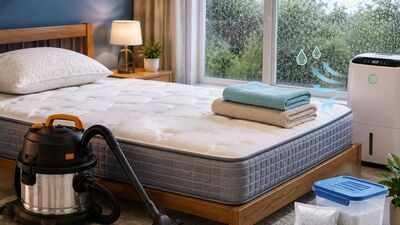
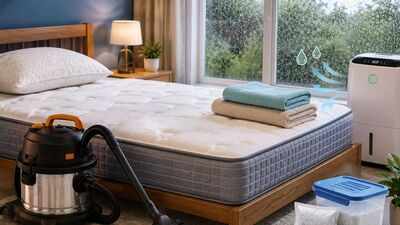
Monsoon humidity can make a mattress feel damp even when it has never been directly exposed to rain. Moisture from humid air, perspiration, and damp bedding can slowly build up inside the fabric and foam. The main issue is that it is often harder to notice because the mattress may feel dry on the surface while being more moist from deep inside. If it stays damp for so long, it can develop a musty smell and create conditions that can increase mould growth. Simply opening a window may not be enough for particularly humid days. The most effective approach is to remove moisture when it appears and then reduce the amount that reaches the mattress. Here are a few tools that can help with the first step, while suitable bedding and moisture-control products can protect throughout the rainy season.
5 practical ways to dry a damp mattress during monsoon
1. Use a dehumidifier
A dehumidifier is one of the most useful tools when indoor humidity remains high during the monsoon. Place it in the room, keep doors and windows closed, and let it run according to the manufacturer’s instructions. It removes moisture from the air, which helps the mattress release trapped moisture more effectively.
2. Use a fan to move air across the mattress
A strong room fan can speed up evaporation when a mattress feels slightly damp. Remove the bedsheet first and position the fan so that air moves across the surface rather than directly into one small spot. Leave enough space around the mattress for air to move around. Continue until the surface feels completely dry before putting fresh bedding back on.
3. Use a wet and dry vacuum for liquid spills
If a liquid has actually soaked into the mattress, then a wet and dry vacuum can remove more moisture than dampening with a towel alone. Follow the vacuum manufacturer’s instructions and use only an attachment suitable for the mattress surface. Extract and remove as much liquid as possible, then use a fan or dehumidifier to remove the remaining moisture.
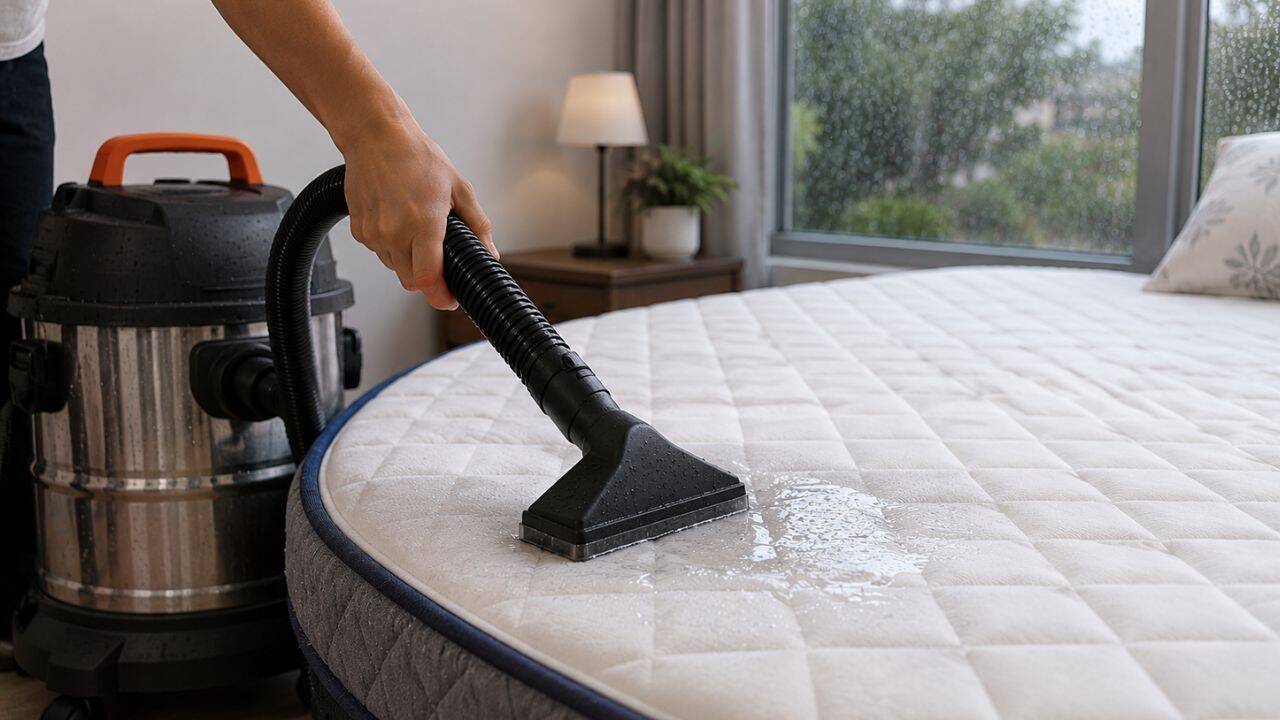
PC: AI Generated
4. Use a moisture absorber
Moisture-absorbing products such as calcium chloride crystals can help reduce humidity in spaces that are not open enough. Place the absorber near the bed rather than directly on the mattress and keep it away from children and pets. These products work best as an additional measure in smaller rooms. They are not a replacement for a dehumidifier when the entire room is very humid.
5. Use a vacuum cleaner after surface cleaning
If the mattress has been lightly cleaned with a damp cloth or suitable cleaner, remove as much moisture as possible before covering it. A vacuum cleaner designed for wet extraction can help if the manufacturer permits its use on the mattress. After extraction, use a fan or dehumidifier nearby until the mattress is fully dry.
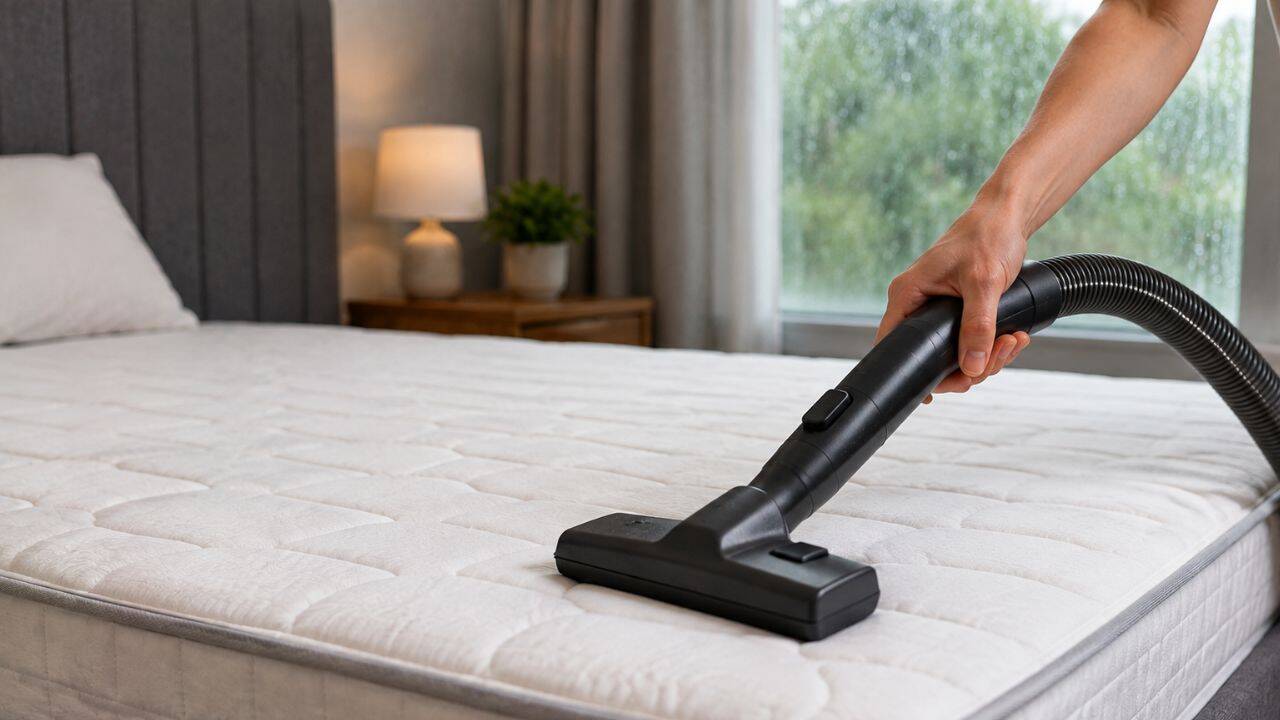
PC: AI Generated
3 ways to prevent moisture from reaching your mattress
1. Use a breathable waterproof mattress protector
A waterproof mattress protector creates a barrier against sweat, accidental spills, and other liquid moisture. Choose a breathable protector which is specifically made for mattresses rather than a simple plastic sheet. A breathable material allows some air and water vapour movement while protecting the mattress from liquid. Wash the protector regularly and make sure it is completely dry before putting it back.
2. Use moisture-resistant bedding
Bedsheets, blankets and mattress covers can transfer considerable moisture to a mattress when they are even slightly damp. During the monsoon, dry the washed bedding thoroughly before using it. If outdoor drying is difficult, use a dryer or a well-ventilated indoor space. Never cover the mattress with damp bedding simply because the fabric feels almost dry.
3. Do not rely on sunlight entirely
Sunlight can help to dry a mattress when conditions are suitable, but monsoon weather does not always provide suitable conditions. On humid or rainy days, opening windows allows more moisture into the room. Using a dehumidifier or air conditioner with a dehumidifying function can provide more regular humidity control.