









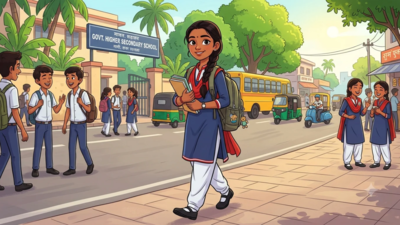
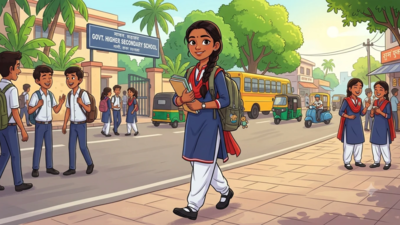
“I realized the excuses that society was giving me – safety, tradition, responsibility – were not really for my protection. They were to keep me quiet,” Tannu told UNICEF.When 17-year-old Tannu Kumari began questioning why her younger brother attended a private school while she and her sister studied at a government residential school, she was challenging a family decision that had long been presented as a matter of safety.Her parents had said it was unsafe for the girls to cycle through neighbouring hamlets to reach school. The explanation had seemed reasonable to Tannu. Then she began to notice a pattern: her mother, Ratna Devi, had been taken out of school after Class 9, while her uncles had been allowed to continue their education despite similar concerns about the journey.What changed Tannu’s perspective was not a confrontation with her parents or a lecture about equality. It began with a comic book.In a story published on April 29, 2026, UNICEF India described how reading the Aadha Full comic series helped Tannu recognise gender discrimination in everyday decisions and find the confidence to challenge it. The change would eventually reach beyond her own education, influencing conversations at home and among girls in her village.The stories feature young characters confronting everyday injustice and questioning expectations about how girls and boys should behave. Through illustrated narratives and role-play activities at school, Tannu began to recognise how ideas about safety, tradition and responsibility could be used to restrict girls’ choices.“I realized the excuses that society was giving me – safety, tradition, responsibility – were not really for my protection. They were to keep me quiet,” Tannu told UNICEF.Tannu took the conversation home. She asked why her brother was expected to go to college while she and her sister were not being given the same opportunity.According to UNICEF, her mother listened, and her father, who had initially resisted, eventually agreed.The change was not limited to educational opportunities. Tannu also challenged comments about her darker skin. When her grandmother criticised her complexion, Tannu replied: “There must be someone in our family who looks like me.”Her principal, Anjali Gupta, described the transformation in UNICEF’s report: “The change in Tannu has been extraordinary.”Gupta recalled that Tannu had arrived at the school frail and frightened but had developed the confidence to speak before large audiences.
Why stories can help children question gender stereotypes
Tannu’s experience offers a useful lesson for parents and educators: children may find it easier to recognise unfairness in a fictional character’s life before identifying it in their own.A story can give a child the language to question a rule, recognise a double standard or imagine a different outcome. Role-play can then provide a relatively safe space to practise expressing that disagreement.The wider lesson is that gender equality is not taught only through formal lessons. Children also learn it through the everyday choices adults make: whose education receives priority, whose safety restricts their freedom, how appearance is discussed and whether girls are encouraged to express disagreement.