










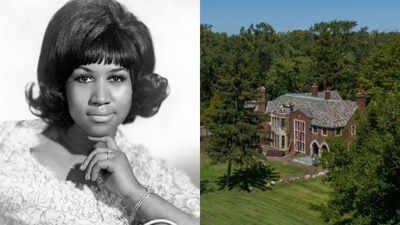
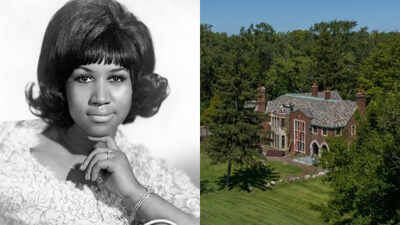
Behind the boarded windows of a once-grand Detroit mansion lay more than years of neglect. The house had witnessed the private life of Aretha Franklin, the Queen of Soul, and belonged to a chapter of the city’s cultural history that risked fading away. Today, the Rose Estate is finding its way back to life, thanks to two new owners determined to preserve its architectural beauty and the stories held within its walls, states an online report by the USA TODAY.According to the March 2025 report, since acquiring the historic property, Detroit residents Trevor Thomas and Brandon Lynum have invested more than $2 million in an ambitious restoration, turning a deteriorating mansion into a tribute to two remarkable women. Scroll down to read the details of the shift of the ownership.
A home with a remarkable past
Built in 1927, the 5,623-square-foot Tudor-style house sits in the leafy Palmer Woods neighbourhood, overlooking the ninth hole of the Detroit Golf Club. Before Franklin purchased it in March 1994, the property belonged to Patricia Hill Burnett, a portrait artist, feminist advocate and former Miss America runner-up, explains the online report.Burnett’s artistic career brought her into contact with some of the most prominent figures of her time. Her portraits included Rosa Parks, Betty Ford, Margaret Thatcher and Ruth Bader Ginsburg, adds the report.Franklin, who already owned a primary residence in Bloomfield Hills, chose the house as a second home and a place to entertain. Its spacious interiors and distinctive architectural details suited her taste for grand gatherings. She retained much of the original character while adding personal touches, including gold sconces, a purple-tinted chandelier and a striking red acrylic bathtub.
Years of neglect
According to As Franklin’s health deteriorated, the property gradually fell into disrepair. Its windows were eventually boarded up, and years of water damage took a heavy toll on the interiors. Wildlife also found its way inside, leaving behind additional damage.Following Franklin’s death in 2018, her estate sold the house for $300,000 to a Michigan developer. By the time Thomas and Lynum purchased it in June 2023, the restoration required substantial work.The couple, who had previously renovated two homes, approached the project with an understanding that this was no ordinary property. They researched its history through old newspaper clippings, archival material at the University of Michigan and original documents discovered in a concealed compartment in the house’s library.
Restoring the details
The first phase of the restoration has focused on preserving the mansion’s original features. Limestone-framed windows, hardwood floors and decorative plasterwork have been carefully revived, while distinctive elements such as Detroit-made Pewabic tiles have retained their place in the house.If we go by the report of USA TODAY, the project has involved nearly 50 contractors, craftsmen and workers. Thomas and Lynum plan to continue restoring the property over the next five years, with further work expected on the slate roof, third floor and basement, which suffered extensive water damage.Alongside the physical restoration, the couple have created a space that celebrates the home’s former residents. Photographs, museum-style displays and memorabilia honour both Franklin and Burnett, including a signed Andy Warhol print, outfits from the biopic Respect and a gold-record plaque for Franklin’s 1998 album A Rose Is Still a Rose.
More than a mansion
The restored Rose Estate is already welcoming nonprofit events, school groups and visitors drawn by Franklin’s legacy. For some, the experience is deeply personal, reflecting not only her music but also her commitment to civil rights and women’s empowerment, explains the online report.Images Courtesy: Rent Like a Champion and Wikipedia