










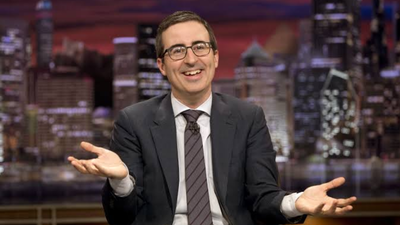
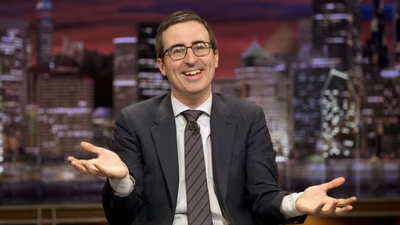
In June 2016, television comedy host John Oliver bought nearly $15 million (£11.8 million) in unpaid medical debt for just $60,000 (£47,000) through a debt collection company created for the purpose. Instead of using debt collectors to demand payment from the roughly 9,000 patients linked to the accounts, the producers of HBO’s Last Week Tonight with John Oliver transferred the entire debt portfolio to a specialist charity to have it wiped out. The television segment showed how the little-known American market for buying and selling unpaid debt works. In this market, third-party collection agencies buy unpaid consumer and medical bills for a small part of their original value.
Setting up a collection agency for $50
To carry out the debt giveaway, the production team behind Last Week Tonight registered a debt collection company called CARP (Central Asset Recovery Professionals) Inc. in Mississippi. It paid just $50 (£39) to set up the company. Although the newly formed company had no previous experience in finance or debt collection, it passed basic regulatory checks without difficulty. This allowed the producers to buy a group of overdue medical bills from hospitals in Texas. The bills had a total face value of $14,922,261.76 (£11.7 million), but CARP Inc. bought them for a single payment of $60,000. Under normal collection practices, debt agencies try to recover money from individual borrowers through letters, phone calls and warnings about possible damage to their credit records. These companies can still make large profits even if they recover only a small share of the total debt they purchase. Oliver took a different approach. During the broadcast, he pressed a red button on stage to officially transfer the entire group of debts to RIP Medical Debt, a nonprofit organisation now known as Undue Medical Debt.
Partnering with a specialized charity
Undue Medical Debt was founded in 2014 by Craig Antico and Jerry Ashton. Both were former executives in the debt collection industry who used their knowledge of the market to help people get relief from medical debt. After Oliver’s production company transferred the accounts, the charity sent letters to the 9,000 people affected. The letters told them that their medical debts had been cleared completely, with no tax liability attached. According to statements published by Undue Medical Debt, the television broadcast brought the charity national attention and showed how donations could be used to remove the financial burden of medical bills. A donation of $1 can help erase about $100 in medical debt at its original value. The charity selects debt portfolios linked to people earning less than twice the federal poverty line or facing serious financial hardship. Health policy analysts writing in The British Medical Journal noted that the stunt exposed a wider problem in the United States healthcare system. Unexpected medical emergencies can leave uninsured or underinsured patients facing long-term financial hardship and debt they cannot repay.
A landmark television moment
During the broadcast, Oliver explained that buying medical debt was legally simple and surprisingly cheap, given the serious financial problems these bills can cause for families. “As it stands, debt buying is a scummy business, and it needs much stricter oversight,” Oliver said during the episode. “Because as it stands, any idiot can get into it. And I can prove that to you, because I’m an idiot, and I started a debt-buying company.” Oliver said the giveaway broke the previous record for the largest financial giveaway in American television history. That record had been held by Oprah Winfrey, who famously gave new cars worth about $7.9 million (£6.2 million) to her studio audience in 2004. “We are forgiving $15 million in medical debt,” Oliver told viewers as he triggered the transfer. “It seems clear that medical debt collection is bad, and we need to fix it.” After the episode aired, the production team shut down CARP Inc. and handed all its records to Undue Medical Debt. This ensured that no one could try to collect payment on the accounts in the future.
Broader institutional initiatives
The approach shown on Last Week Tonight has since been used by local governments and groups that buy healthcare services to help reduce medical debt across communities. An official press release from Undue Medical Debt explained how the nonprofit worked with the Campaign to End Medical Debt and the National Alliance of Healthcare Purchaser Coalitions to expand regional debt relief projects across the United States. Through these partnerships, local government grants and private donations are used to buy medical debt directly from hospitals and companies that trade in unpaid accounts. Recent updates from the organisation show that state and county governments, including authorities in New Jersey, Kentucky and Arizona, as well as Cook County, Illinois, have committed public money to erase billions of dollars in medical debt for lower-income residents. These efforts use the same debt-buying methods highlighted in Oliver’s 2016 broadcast.