









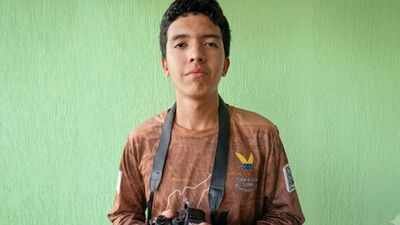
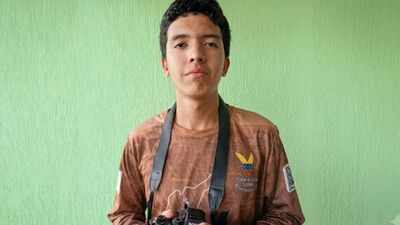
At 14, Juan Sebastian Avila Perez is using technology to make it easier for deaf people to experience and identify birds through their calls in Colombia. Sebastian began his conservation work five years ago with a campaign focused on protecting Colombia’s avian biodiversity and preventing species extinctions. During birdwatching activities and environmental education sessions, he noticed that deaf children were excluded because they could not hear bird communication. According to Action for Nature, Sebastian started ‘Wings of Inclusion’ in 2025 to make ecological spaces accessible for all. The project centres on a wearable vibrotactile device that captures birdsong and turns different sound frequencies into physical vibrations.
How Sebastian’s device turns birdsong into vibrations
Sebastian developed ‘Wings of Inclusion’ after noticing that deaf children could not take part in outdoor conservation activities because they could not hear standard avian communication. He collaborated with a school teacher to program an original vibrotactile prototype device.The wearable tool uses an external receiver to capture acoustic birdsong and translates its unique frequencies into distinct physical vibrations. Because different bird species have different acoustic signatures, the device changes its physical vibration patterns. This allows deaf users to feel and identify different bird calls through tactile feedback on their arms.
Sebastian’s wider work to protect Colombia’s birds
The device is part of a wider conservation effort that Sebastian began five years ago. His campaign focuses on protecting Colombia’s rich avian biodiversity and preventing further species extinctions. During his work as a birdwatcher, he has organised playful workshops, lectures and educational talks designed to raise civic awareness. He has also included tree-planting days and waste-collection drives in these sessions.Before developing the device, Sebastian faced doubts from adults who questioned what a young child could teach the community about biodiversity. He created informational brochures and placed biodiversity signs in green spaces. He also launched interactive field tours with QR codes that hikers can scan to access biographies of native birds. These efforts formed part of his outreach.
His conservation work has reached wider audiences
Sebastian’s conservation work has also reached audiences beyond his local community. He was selected to appear as a conservation protagonist in episode four, ‘Cantar de las aves’ (Song of the Birds), of the national animated television series El frailejon Ernesto Perez y las sombras siniestras. He has presented his research at the International Bird Congress in Manizales and travelled to Peru for the CIENTEC Science and Technology event.He was also scheduled to speak at an event in Asuncion, Paraguay, in September. Sebastian represented the Guardians for Life and Bird Guardians collectives at the United Nations Biodiversity Conference, COP 16, in Colombia. His work has connected bird conservation with environmental education and climate justice discussions while continuing his focus on public participation.
What challenges has Sebastian faced while developing the device
Sebastian is continuing to develop ‘Wings of Inclusion’ while working with young people. He is currently conducting field trials with deaf youth as he refines the technology. The project began in 2025 after he identified a barrier during his environmental education activities. Since then, he has worked on a device designed to help deaf users experience bird calls through touch rather than sound.He faced severe economic limitations and difficulty sourcing hardware parts while developing the prototype. Despite those challenges, the device passed its initial technical proof-of-concept phase. Sebastian is also studying foreign languages so he can eventually deliver his specialised biodiversity workshops to international audiences. His work combines accessible birdwatching with his conservation education work.