









For thousands of years, the mud beneath the fields near Peterborough quietly held onto a remarkable secret. Timber posts, worked wood and other fragile traces of Bronze Age life survived because they were buried deep in wet peat, protected from the air and the decay it brings. Now that protection is failing. According to an official release by the Gov.uk website, one of Britain’s most important prehistoric sites, Flag Fen Archaeology Park in Cambridgeshire, is facing a race against time. Falling groundwater levels are drying the surrounding peat, putting delicate organic remains at risk of disappearing. Archaeologists are preparing to return to the site with £700,000 in new funding to document evidence before environmental changes erase it.
A monument built 3,500 years ago
According to the release, Flag Fen lies at the centre of a prehistoric landscape shaped by water, marshland and human ingenuity. The site is best known for its enormous timber causeway and platform, constructed around 3,500 years ago by Bronze Age communities. Structures of this kind are exceptionally rare. The survival of Flag Fen’s timber remains, together with the site’s scale and complexity, makes it one of Britain’s most significant Bronze Age archaeological discoveries.For centuries, the wet conditions helped preserve materials that would normally have vanished. Wood, plant material and other organic remains can survive remarkably well when sealed away from oxygen in waterlogged ground.
The ground beneath flag Fen is drying
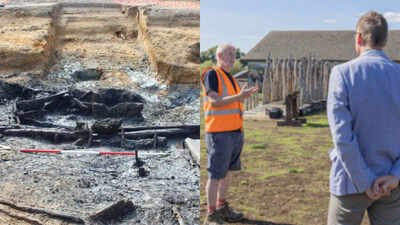
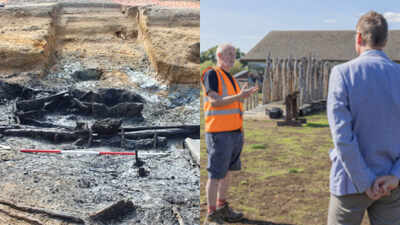
The release states that Flag Fen has been listed on Historic England’s Heritage at Risk Register since 2012. Changes in groundwater levels have begun affecting the peat that surrounds the archaeological remains, exposing organic material to conditions that accelerate decomposition. Recent evaluation excavations confirmed that ancient worked timber and other organic evidence are already deteriorating. The danger is particularly urgent because around 40% of the site’s buried archaeology could be lost within just a few months if the deterioration continues.As per the report, the new excavation will focus on the western post alignment, an area that could reveal more about how and why Bronze Age communities constructed the monumental causeway. Rather than simply uncovering objects, archaeologists will carefully record the position, construction and condition of the remains. That information could help researchers piece together how people adapted to a landscape that was becoming increasingly wet and difficult to inhabit.
A bronze age response to a changing landscape
Flag Fen is more than a collection of ancient timbers. It offers a glimpse into how prehistoric communities responded to environmental change. Around 3,500 years ago, the landscape around Peterborough was transforming into marshland. The causeway appears to have been part of a sophisticated response to those changing conditions, allowing people to move through and make use of a difficult landscape. The new research could shed light on the decisions behind that construction and provide a clearer picture of everyday life in Bronze Age Britain. It may also offer a striking historical parallel to modern concerns about changing environments, showing how communities in the distant past adapted when the landscape around them shifted.
Bringing the site back to life
According to the report, the £700,000 project is being funded through the Countryside Stewardship Heritage Service, a partnership between Defra and Historic England. The excavation will also involve the local community. Volunteers, university students, young carers and people who have taken part in earlier surveys will have opportunities to participate. Progressive training will allow volunteers to develop archaeological skills, with some eventually taking on roles as supervisors and tour leaders. The wider ambition is to eventually remove Flag Fen from the Heritage at Risk Register and establish it as a stronger cultural and educational destination for Peterborough.
Saving evidence before it vanishes
The challenge at Flag Fen is unusual: archaeologists are not simply trying to uncover the past. They are trying to record it before the conditions that preserved it for millennia disappear. Every timber post and fragment of worked wood carries information about the people who built the causeway and the world they inhabited. Once those organic remains decay, much of that information cannot be recovered. The excavation therefore represents a race against the clock, one aimed at ensuring that a prehistoric landscape that has survived for 3,500 years does not disappear in a matter of months.