









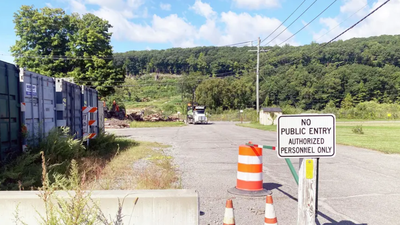
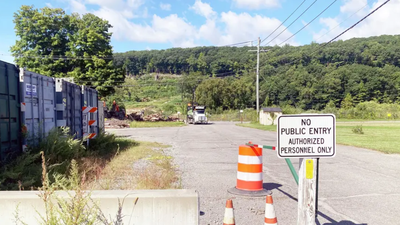
Nearly 40 years after a brass mill shut down on the banks of the West Aspetuck River, the long-vacant industrial property in New Milford is finally being lined up for a new purpose, one that could turn a contaminated brownfield into a working municipal campus and, eventually, help create new public riverfront space elsewhere in town. The first step is surprisingly small: a three-story fire-training tower assembled from five repurposed shipping containers. The tower is proposed for the former Century Brass Mill property on Scovill Street, where the town plans to eventually build a 60,000-square-foot public works complex. The latest plans were reported by the News-Times and CT Insider, while New Milford’s 2026-27 budget confirms that the Century Brass project remains an active municipal priority.
From factory floor to brownfield
Century Brass was once a significant industrial presence in New Milford. The mill closed in 1986, leaving behind a large industrial property that would spend decades caught between environmental cleanup, demolition and redevelopment efforts.The site was contaminated with substances including PCBs and asbestos. After the town acquired the property through foreclosure in 1999, plans to clear the former mill became entangled in a legal dispute with a demolition contractor.That dispute ultimately went to court. In 2019, a Connecticut judge ruled in New Milford’s favor and awarded the town nearly $490,000 after finding that the contractor had breached its demolition contract. The state’s Appellate Court later upheld the town’s victory and sent the question of additional damages back for further consideration. The industrial buildings are now gone. What remains is a mostly vacant 66-acre property, with only a portion considered suitable for development.
A new home for public works
The town’s long-term plan is to move its public works operations from Young’s Field Road to the former brass mill property. The proposed campus would bring the engineering, highway and facilities departments together, while also providing space for fleet maintenance, indoor storage for vehicles and equipment and a helipad with a garage.Because wetlands and other environmental constraints limit the developable portion of the property, the town expects much of the site to remain natural. The fire-training tower would be the opening move. Firefighters would use the structure for smoke-filled training exercises, giving the town a practical facility while work toward the larger campus continues. The proposal still requires consideration by New Milford’s Zoning Commission.
The cleanup is not quite the end of the story
The redevelopment also shows how complicated the afterlife of an industrial property can be. New Milford has continued allocating money to the Century Brass project. The town’s 2026-27 budget includes funding for environmental work at the site, underscoring that redevelopment is taking place alongside the continuing obligations associated with the property’s industrial past.For a community that once watched the brass mill dominate this stretch of town, the eventual transformation could be significant: an abandoned factory site becoming a place where municipal crews maintain roads, equipment and public infrastructure. But the plan reaches beyond the former mill property.
A riverside park could follow
Moving public works away from Young’s Field Road would free up the town’s existing materials-storage yard along the Housatonic River. The town envisions restoring that property and turning it into a small public park, with native vegetation and opportunities for passive recreation.That means the Century Brass redevelopment could ultimately produce two very different outcomes: an old industrial brownfield put back into productive use, and an existing municipal yard converted into green space beside the river. For New Milford, the transformation is less about erasing the past than finding a new use for land that has been waiting for one for decades.