









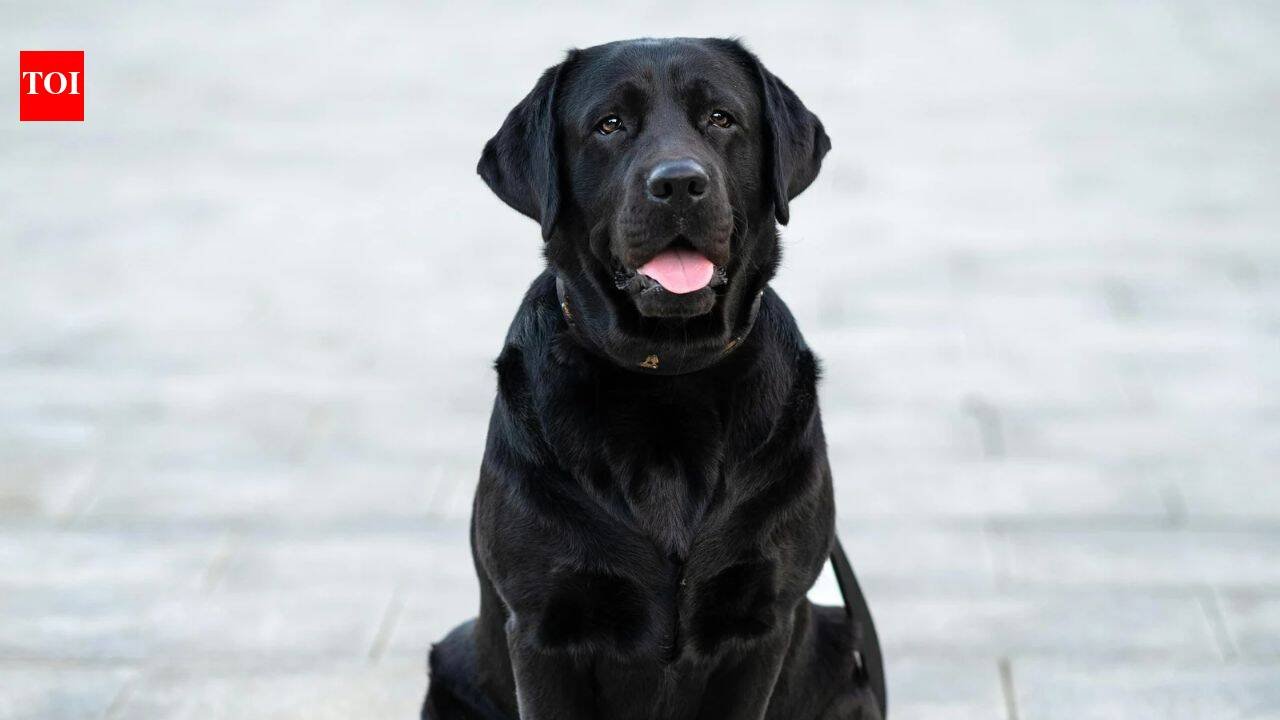

A black Labrador from the Scottish Highlands has found an unusual new calling beneath the waves, and it has earned her international recognition. Sgiath, a six-year-old dog once trained for mountain rescue, has become the first dog in the world trained to detect an invasive marine organism nicknamed “sea vomit”. Her remarkable ability to locate the creature, even when it is concealed among other marine life, has helped her win the Animal of the Year award from the International Fund for Animal Welfare (IFAW).The award recognises more than an extraordinary canine skill. It highlights a creative approach to marine conservation, where a dog’s powerful sense of smell could help scientists identify a damaging invasive species before it spreads further. Sgiath’s work offers conservationists another way to monitor vulnerable coastal environments and protect native marine life.
From mountain rescue missions to an unexpected underwater mission
Sgiath’s career took a surprising turn when her handler, marine ecologist Dr Texa Sim, began exploring whether a dog could help address a problem facing Scotland’s west coast. Sim, originally from Glasgow and now based near Glencoe, was working on a native oyster restoration project when she became increasingly concerned about invasive marine species. One species in particular caught her attention: Didemnum vexillum, commonly called carpet sea squirt and sometimes referred to as “sea vomit”. The organism can spread across harbours, oyster farms and other marine structures, forming dense colonies that smother native species and disrupt local ecosystems.Detecting it is not always straightforward. Identification can require specialist laboratory work and DNA testing, making early detection challenging for people managing marine sites. Sim wondered whether a dog’s exceptional sense of smell could offer a faster and more practical way to locate the organism. The idea was experimental. Dogs are widely known for detecting scents in search-and-rescue operations, but using one to identify a marine organism presented a different challenge. Sim began training Sgiath to recognise the target species among a range of similar smells.The early results surprised her. “The first time I asked her to identify the target species among lots of similar scents, she went straight to it,” Sim recalled. “That was the moment I thought: maybe this is actually going to work.” Sgiath’s performance helped turn an uncertain experiment into a promising conservation project. According to Sim, the work has resulted in the detection of hundreds of colonies, demonstrating how scent detection could complement existing monitoring methods.
How one dog could help protect marine ecosystems
Carpet sea squirt is a concern because it can establish itself quickly and spread over surfaces in coastal waters. Once dense colonies take hold, they can smother other organisms and create difficulties for marine habitats and industries such as oyster farming. Finding an invasive species early gives conservationists a better opportunity to assess the problem and decide how to respond. Sgiath’s ability to identify its scent could help direct attention to areas that need closer examination, potentially reducing the time and effort required to locate colonies.Sim has been candid about the experimental nature of the work. She did not know at the outset whether the training would succeed, as the use of dogs to detect this kind of marine organism had not been widely explored. “When I first started this project, I genuinely didn’t know whether it would work,” she said. “No one had really explored whether dogs could help tackle this problem in the marine environment. It began as a proof-of-concept project and has exceeded every expectation I had.”The approach is not intended to replace scientific testing or eliminate the threat posed by invasive species. Instead, it could provide an additional tool for researchers and site managers, helping them locate suspected colonies for further investigation. Climate change makes such efforts increasingly relevant. Warmer seas can create more favourable conditions for some invasive marine organisms to spread into new areas. Recent summer heatwaves have also raised concerns about the effects of elevated sea temperatures on marine ecosystems.“We’re not going to solve the problem entirely with dogs,” Sim said. “But they give us another tool. If we can identify the species earlier and more efficiently, it gives conservationists and site managers a much better chance of responding before the problem gets out of hand.”
A global award for a four-legged conservation pioneer
Sgiath received IFAW’s Animal of the Year award at a ceremony in London on Thursday. The annual honour recognises animals whose actions have made an extraordinary contribution, and the charity said Sgiath’s work stood out for opening up a new possibility in conservation science. Sharon Livermore, IFAW’s director of marine conservation, praised the dog’s unusual contribution and the potential of the project.“Every year, the Animal of the Year award celebrates animals doing extraordinary things, but Sgiath’s story is like nothing we’ve seen before,” Livermore said. She added that the dog’s work demonstrated how dogs could contribute to conservation science in new ways. Livermore also pointed to warmer seas and the increased urgency of detecting invasive species early. She noted that Sgiath’s previous mountain rescue abilities would already have made her worthy of recognition, but her pioneering marine detection work had added another dimension to her contribution.For Sgiath, the journey from mountain rescue training to marine conservation is a reminder that an animal’s abilities can find unexpected uses. For scientists, her success offers a practical question worth pursuing: could scent-trained dogs help spot other invasive species before they become harder to control? Dogs alone will not solve the challenges facing the world’s oceans. But Sgiath has shown that an extraordinary nose, paired with careful scientific training, can become a valuable ally in the effort to protect marine life.