










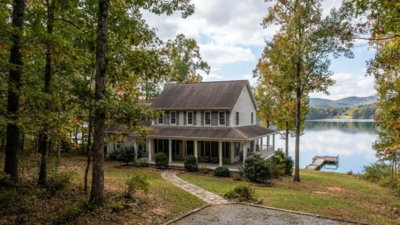
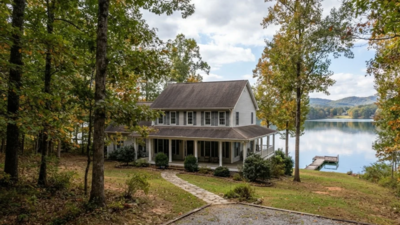
A family fight over who owns a lakeside house in Virginia has reached the state’s Court of Appeals, where judges clarified the property rights of a widow, her late husband’s children, and a couple who received an inherited share through a deed. The dispute focuses on a home on a 0.7-acre lot at Smith Mountain Lake in Bedford County. The Virginia Court of Appeals ruled on November 17, 2026, that Joan Cabaniss owns half of the property, while her late husband’s children inherited his half through his will. One of those children later signed his share over to another couple. The decision overturned parts of an earlier ruling by the Bedford County Circuit Court and cleared the way for a partition sale. That is a court-ordered sale used to sell shared property when co-owners cannot agree on how to split it.The appeals court also clarified that Joan did not receive a life estate under her husband’s will. In addition, judges said her written statement saying she planned to live in the house for the rest of her life did not change who owned the property. The ruling came in combined appeals involving Karla Cabaniss Denney v. Joan C. Cabaniss and a separate claim filed by Keith Allen Tuck and Catherine Lord Lovern-Tuck.
Marriage and ownership of the lakeside home
According to the court’s written opinion, Joan and James Cabaniss co-owned the Smith Mountain Lake property before James died in 2016. The original 1983 deed gave the property to them “jointly and equally”. The appeals court decided that this wording created joint ownership without automatic transfer rights under Virginia law. That legal detail became the heart of the fight. Even though each spouse owned half of the home, James’s half did not automatically go to Joan when he passed away. Instead, his share became part of his estate and followed the instructions in his will.James and Joan had a blended family. Karla Denney and Keith Cabaniss were James’s children from an earlier marriage. James’s will included a specific line giving Joan the right to stay in the home for as long as she wanted. It stated: “I do specifically devise unto my wife the right to live in the house for as long as she chooses.” The will also spelled out what should happen if Joan decided to move out. It said: “Should my wife choose not to live in this home, I direct that it should be sold and my one-half interest in said property is to be given to my two children [Karla Denney and Keith Cabaniss].” The will also left the rest of James’s estate to his two children.
Widow’s declaration became part of the dispute
Six years after James died, Joan filed a written declaration in 2022 stating that she still lived at the home and planned to stay there for “the duration of her life”. She had also transferred her interest into the Joan C. Cabaniss Trust through a deed signed in 2019. The ownership questions grew more tangled after Keith Cabaniss signed a quitclaim deed in 2020, passing his rights and interests in the property to Keith Tuck and his wife, Catherine. The deed called the transfer a gift and covered “all of his rights and interest, if any, in the property”.Keith later passed away. Joan filed a partition lawsuit in 2021 to settle the ownership fight and buy out her stepchildren’s shares. Because the house sat on a small 0.7-acre plot, it was hard to split the land physically among the owners. Joan therefore asked for a court-ordered sale instead of dividing the lot into separate pieces.
Lower court rejected some inheritance claims
The Bedford County Circuit Court weighed the different readings of James’s will. In February 2024, it ruled that Joan was a co-owner and had the right to ask for a partition sale. The lower court also found that James’s will gave her permission to live on his half of the property, along with the sole right to stay there as long as she wanted. It ruled that she had not been given a life estate.The circuit court further decided that Karla and Keith did not own direct future shares in the home. Instead, it treated their inheritance as a cash gift that would only be paid from sale money if Joan chose to move out. The lower court also dismissed the claim brought by the Tucks, ruling that Keith’s quitclaim deed had passed no property rights to them. Karla and the Tucks appealed parts of that ruling, which led to the combined appeals.
Appeals court clarifies who owns the property
In its November 17 written opinion, the Virginia Court of Appeals reviewed the original deed and the exact wording of James’s will. The judges explained that the 1983 deed created shared ownership without survivorship rights. Because of that, James’s half passed to his heirs when he died rather than automatically going to Joan. The court therefore confirmed that Joan kept her original half share, while James’s children inherited his half under the will’s catch-all clause.The judges rejected the claim that Joan had received a life estate. A life estate normally lets someone use a property for the rest of their life without giving them full ownership. The appeals court noted that Joan already owned half of the house outright on her own. It also pointed out that James’s will did not include the words “for life”, which Virginia law requires to create that kind of right.The judges decided that Joan’s 2022 declaration had no legal power over who owned the home. Recording her plan to stay in the house could not alter the ownership rules set by the original deed and will. The court also rejected the idea that James could force Joan to sell her own half of the property simply because she eventually decided to leave. It explained that one co-owner cannot control what happens to another co-owner’s share without their consent.
Stepchildren inherited property, not just sale proceeds
Another major part of the ruling focused on what Karla and Keith actually inherited. The circuit court had treated their share as a legacy, which is a gift of cash or personal items from an estate. The appeals court disagreed. It found that James’s will and its catch-all clause gave his children real ownership stakes in the property itself. That meant they were co-owners, not people simply waiting to collect cash after a future sale. The judges said the line asking for the house to be sold if Joan moved out could not cancel out her existing ownership rights. As a result, Karla and Keith held real ownership shares in the property right away, rather than just a future claim to sale money. This difference also changed where the Tucks stood in the case.
Quitclaim deed gives Tucks standing
The appeals court overturned the lower court’s finding that Keith had passed nothing to the Tucks. It ruled that Keith had inherited a real property share from his father and had properly transferred that share through the 2020 quitclaim deed. The deed alone was sufficient to hand over his rights without needing extra paperwork. As a result, Keith Tuck and Catherine Tuck became co-owners alongside Joan and Karla, giving them the legal right to take part in the partition case. The court stressed that having legal standing requires a person to show a direct financial stake in how a case turns out. Because the Tucks received Keith’s property share, they met that standard.
Partition sale can now proceed
The Virginia Court of Appeals answered seven specific legal questions about ownership, the meaning of James’s will, the quitclaim deed, and the Tucks’ right to take part in the lawsuit. It backed parts of the Bedford County Circuit Court’s ruling, overturned others, and sent the case back to the lower court. The judges ordered the circuit court to move forward with the partition sale based on the appeals court’s findings. The decision means Joan keeps her half of the Smith Mountain Lake house, while the other half belongs to Karla and the Tucks through the inheritance and later deed transfer. The ruling does not record a finished sale or set a final price tag. Instead, it settles the legal fight over who owns the home so the court-ordered sale can go ahead.