









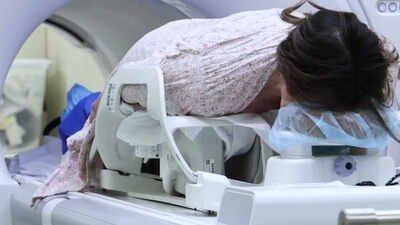
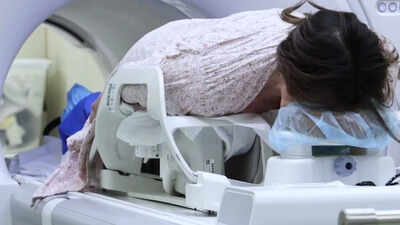
A medical negligence case in Oregon has ended with a jury awarding nearly $8 million to the family of a woman whose lung cancer was allegedly overlooked during a breast MRI. The scan was performed in 2019, but the abnormality in her lung was not identified until she returned for another examination the following year. By then, the cancer had spread to her lymph nodes.The case concerned Wendi K. Lui, who underwent regular breast cancer screening because she was considered at higher risk. According to healthcare trade publication Radiology Business, in April 2019, Lui visited Legacy Good Samaritan for an MRI as part of her annual screening. She also underwent mammography.The radiologist reviewing the images, Kari A. Thomas of Diagnostic Imaging NW, found no suspicious signs of breast cancer. However, the legal claim brought by Lui’s family centred on another part of the scan. They argued that an abnormal mass in her lung was visible but was not reported or referred for further examination.The significance of that finding emerged more than a year later. During a second breast MRI in June 2020, another radiologist noticed a mass in Lui’s left lung and advised additional testing. A PET scan in July confirmed non-small cell lung cancer. Lui had never smoked, according to the report.She later developed metastatic lung cancer and died on December 6, 2023, aged 51. Her husband, Gene Lui, subsequently took legal action against the healthcare providers involved in her treatment. On November 9, after an 11-day trial, a Multnomah County jury awarded nearly $8 million to her estate and husband.
How the lung abnormality went undetected
The family’s case also involved earlier imaging records that showed the lung mass had been present for some time. Lui first underwent a breast MRI in 2018, aged 46. She had dense breast tissue, which can make it more difficult to identify abnormalities during breast imaging.According to the report, the lung mass measured approximately 1 centimetre in 2018. It had increased to around 2 centimetres by the time of her April 2019 examination. Despite the change, the finding was not flagged for further investigation during that scan.When Lui returned in June 2020, radiologist Sam Gruner of Diagnostic Imaging NW identified the mass in her left lung. He recommended a CT scan to examine it further. Subsequent PET imaging confirmed the cancer diagnosis.The delay meant that the disease had reached her lymph nodes before it was detected. The family’s legal argument was that the earlier scan should have prompted additional medical checks.
Husband wanted the case heard in court
Gene Lui pursued the legal battle after his wife’s death. His background as a psychiatrist and his previous employment with Legacy Health System helped him examine the medical care she had received, The Oregonian reported.He filed the lawsuit in 2024. However, the case had a limitation because the 2018 scan fell outside the applicable statute of limitations. The legal claim therefore focused on the radiologist’s interpretation of the April 2019 examination.The defence questioned whether the radiology group could be held liable for failing to identify the mass. Its lawyer, Mike Wiswall, argued that the assessment had to be based on what a radiologist could reasonably have recognised at the time, without knowing that Lui would later be diagnosed with cancer.“The issue at trial was whether a careful radiologist interpreting the 2019 MRI, without knowledge of the later diagnosis, should have flagged that area for further evaluation,” Wiswall said in a statement to local media.Gene Lui also faced the option of settling the dispute before trial. The healthcare providers had reportedly made several settlement offers, but he declined them. He wanted the circumstances surrounding his wife’s diagnosis to be examined publicly rather than resolved through a private agreement. “From the beginning, I was hell-bent to get this to a trial,” he told The Oregonian.Explaining his decision, he said he was concerned that a settlement could allow the providers to avoid acknowledging any wrongdoing.“Because if this got settled, these people who I used to work for would say, ‘We didn’t do anything wrong.’ And nothing will ever change,” he said.Rachel O’Neal, the lawyer representing the family, said the decision was not simply about securing financial compensation. She said Gene wanted the case to receive public attention and explain what had happened to his wife.“There was no sum of money that was worth sweeping it under the rug. … Gene wanted to be able to tell his story. He wanted to be interviewed by the press. He wanted people to know what happened,” O’Neal told The Oregonian.
Verdict highlights importance of incidental findings
Following the verdict, O’Neal said the case should encourage radiologists to examine all the structures visible on imaging scans, rather than concentrating only on the area mentioned in the examination request.She said breast MRI examinations also require attention to structures inside the chest because they can reveal abnormalities unrelated to breast cancer.“We hope this verdict brings awareness to the importance of radiologists evaluating the intrathoracic structures on breast MRIs. Radiologists need a systematic process that ensures they review everything on the images,” she told Radiology Business.O’Neal added that identifying an abnormality is essential before it can be reported and investigated. “Incidental extra-mammary findings must be reported, and they cannot be reported if no one looks for them. The jury applied that standard here,” she said.