










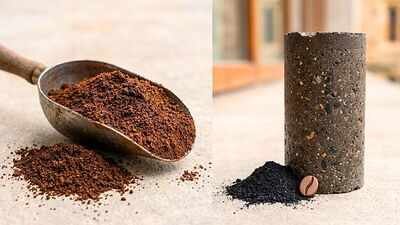
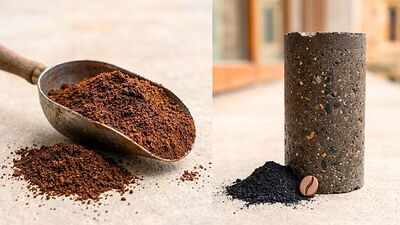
After a cup of coffee is brewed, the grounds left behind are often discarded as waste. But researchers have found a way to turn them into a useful material for concrete. A 2023 study examined whether spent coffee grounds (SCG) could replace part of the sand used in concrete after being converted into biochar through pyrolysis. The study, published in the Journal of Cleaner Production titled ‘Transforming spent coffee grounds into a valuable resource for the enhancement of concrete strength’, found that biochar made from coffee grounds at 350°C and 500°C could improve compressive strength when used as a partial sand replacement. The strongest results came when 15% of the sand was replaced with the coffee-ground biochar, which increased the concrete’s strength by 29.3%. The finding highlights that coffee waste could be turned into a useful construction material while reducing the need for natural resources.
How spent coffee grounds were turned into stronger concrete
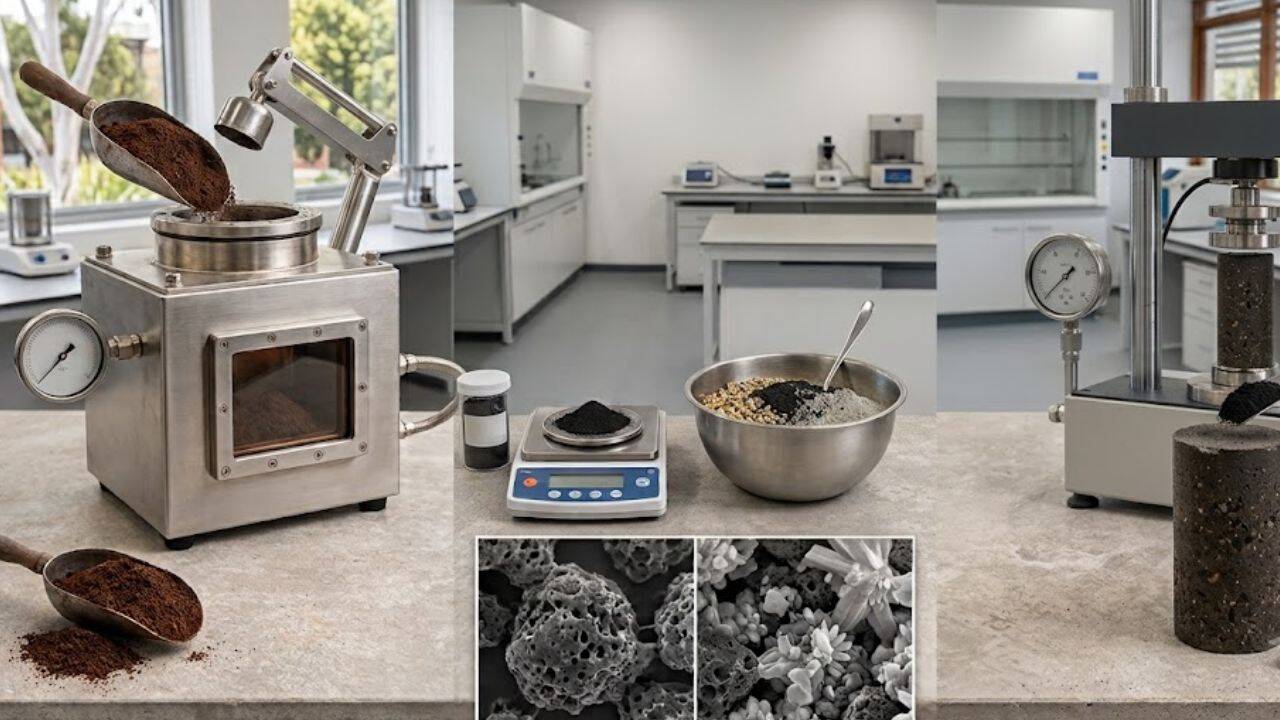
Researchers investigated whether spent coffee grounds could become an ingredient in concrete. The study focused on biochar produced by heating the grounds through pyrolysis. This treatment changes the waste material and makes it more suitable for interaction with the cement matrix. The researchers tested coffee-ground material at different pyrolysis temperatures and replacement levels. Their results showed that biochar produced at 350°C performed strongly. When it replaced part of the sand in concrete, the material increased its compressive strength. The 15% volume replacement with 350°C biochar delivered about 30% higher strength than the conventional concrete mix.
PC: AI Generated
Why processed coffee grounds performed better in concrete
Raw grounds contain organic compounds that can release into the mixture and interfere with cement hydration. This can weaken concrete rather than strengthen it. Pyrolysis offered a way to address this problem. The process heated the grounds without burning them completely, producing a porous carbon-rich material called biochar. The researchers found that biochar made at 350°C formed a strong bond with the cement matrix. Its structure supported internal curing. These characteristics help explain why the treated coffee waste performed better than untreated grounds when used as a partial replacement for sand.
How researchers found the right coffee biochar mix for concrete
Researchers tested several replacement levels to measure its effect on concrete. The material replaced sand at 5, 10, 15, and 20%. The 350°C biochar performed best at 15%. At that point, compressive strength increased by roughly 30% compared with the conventional concrete mix. Also, increasing the replacement to 20% was less effective. The results reveal that more waste material does not automatically mean better performance. Instead, the proportion and processing conditions both matter. The right balance will be important if coffee-ground biochar is to be used in construction. The results show that both the amount added and the way it is processed can affect concrete performance.
Turning coffee waste into a construction resource
The study also addresses a wider problem in construction. Concrete production requires large quantities of raw materials, including sand and gravel. At the same time, spent coffee grounds are produced in large amounts and can become a waste-management burden. Turning the grounds into biochar creates a route for using one waste material in another industry. The researchers presented the approach as a way to transform spent coffee grounds into a resource rather than treating them simply as a waste product. However, the study’s results are based on laboratory testing, so further work is needed before broad commercial use.
What the coffee-ground concrete study means for future construction
The findings do not mean used coffee grounds can be mixed into concrete. The material was pyrolysed coffee-ground biochar produced under controlled conditions. Researchers identified the 350°C treatment and 15% sand replacement as the most suitable combination. The work shows how an organic waste product can be redesigned into a functional construction material. Instead of viewing coffee grounds as waste, the study offers an effective approach where organic waste can return to the economy through construction products.