










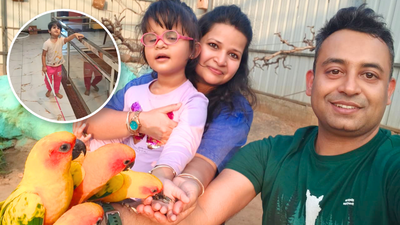
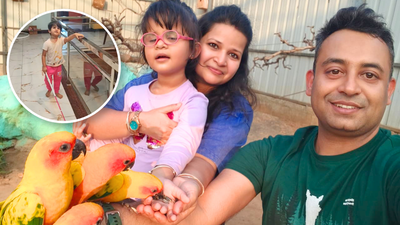
The internet came across Aeny’s story through a video posted on her Instagram account. In the clip, 5-year-old Aeny is learning to walk with a cane, taking careful steps as her mother, Lopamudra Kar, guides her from a distance.Aeny moves forward, feeling her way with the cane. There are moments when she stumbles and pauses, but she keeps going. It is a simple moment between a mother and her five-year-old daughter. But for Lopamudra, it represents something much bigger, the journey of teaching Aeny not to see her visual impairment as a limit to the life she can lead.The clip has garnered over 3.5 million views on Instagram. Everyone who saw the clip couldn’t stop praising Aeny’s confidence, determination and her mother’s courage. However, those steps are a part of a much larger journey for Aeny and her family- one shaped by curiosity, independence, inclusion and her determination to explore the world around her.
More than a cane: Aeny is learning, exploring and finding her own way
Aeny’s days are filled with the things that make up any energetic five-year-old’s childhood- school, play, travel, learning and exploring. Along the way, she is also learning Braille, piano and abacus, cycling and practising karate. At four-and-a-half, she earned an orange belt in karate.For her parents, JyotiRanjan Mishra and Lopamudra, both IT professionals in Bengaluru, these are not extraordinary activities. They are simply opportunities they want their daughter to have.
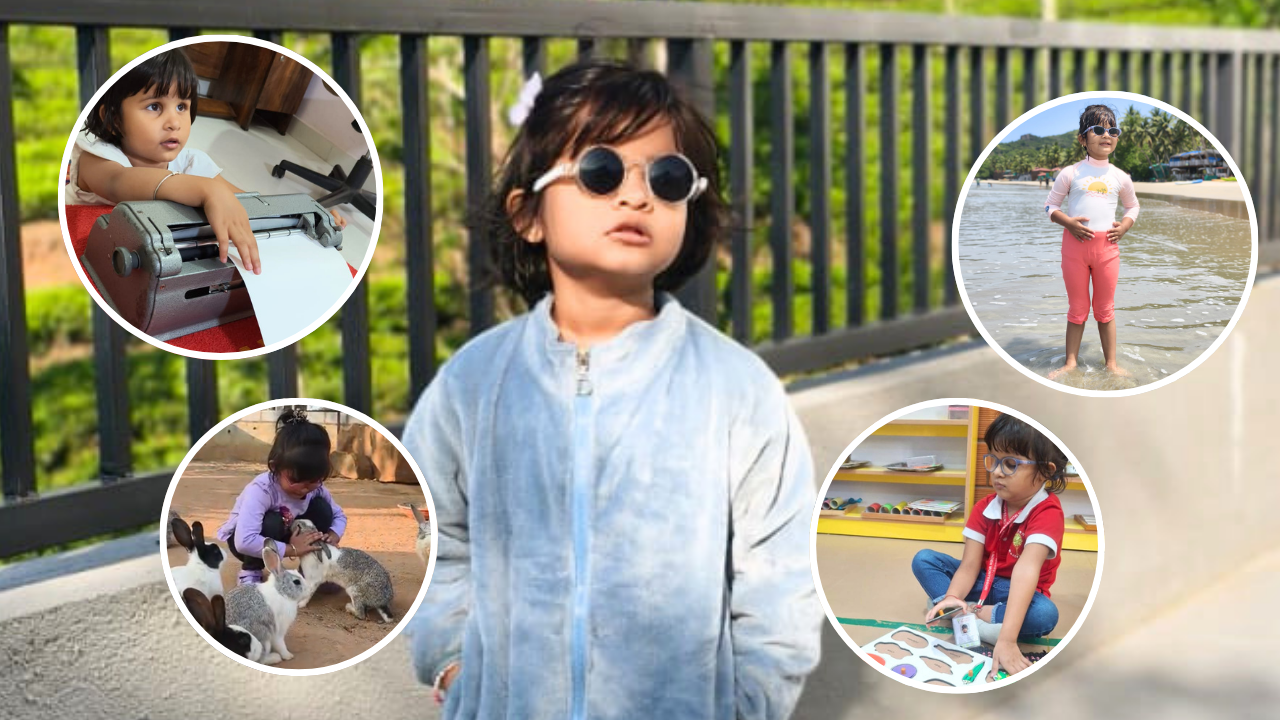
Aeny’s routine includes school, Braille, piano, abacus, cycling and karate, alongside regular play and exploration.
“Aeny’s day is much like any other child’s- school, learning, play in the park and lots of energy,” Lopamudra told. “What makes her journey special is not that she does everything differently, but that she continues to find her own way of doing things.”
‘It took us months to accept that she couldn’t see’
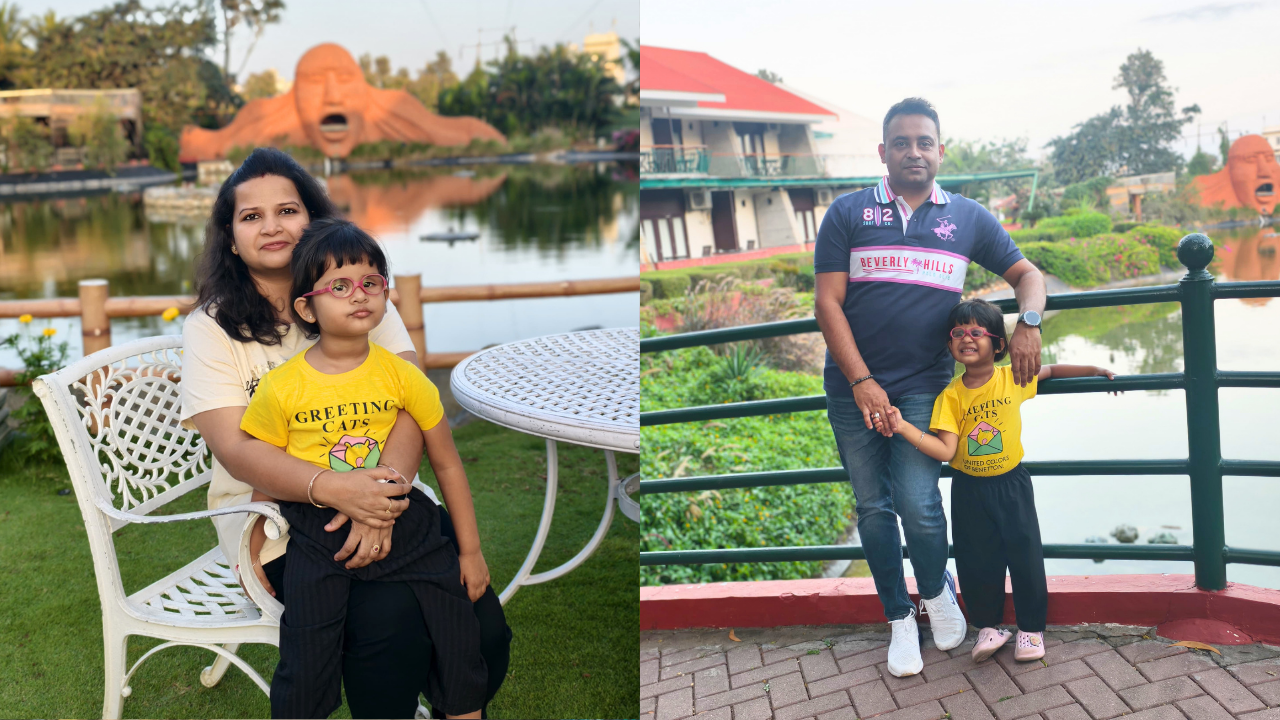
Aeny’s parents have supported her every step of the way, helping her learn, explore and grow independently.
“As parents, it was extremely difficult to hear that our child couldn’t see. It took us months to accept the fact that she was visually impaired.” For Lopamudra, accepting Aeny’s visual impairment brought fear, grief and a question: What will my child’s future look like?“As they say, grief comes in waves. There are still days when I feel extremely low just thinking that my amazing girl may never see us.”But alongside that grief came support. Lopamudra’s parents eventually moved in with the family to help raise Aeny. Her father became one of the most important people in the little girl’s world. “He became her best friend,” Lopamudra said.
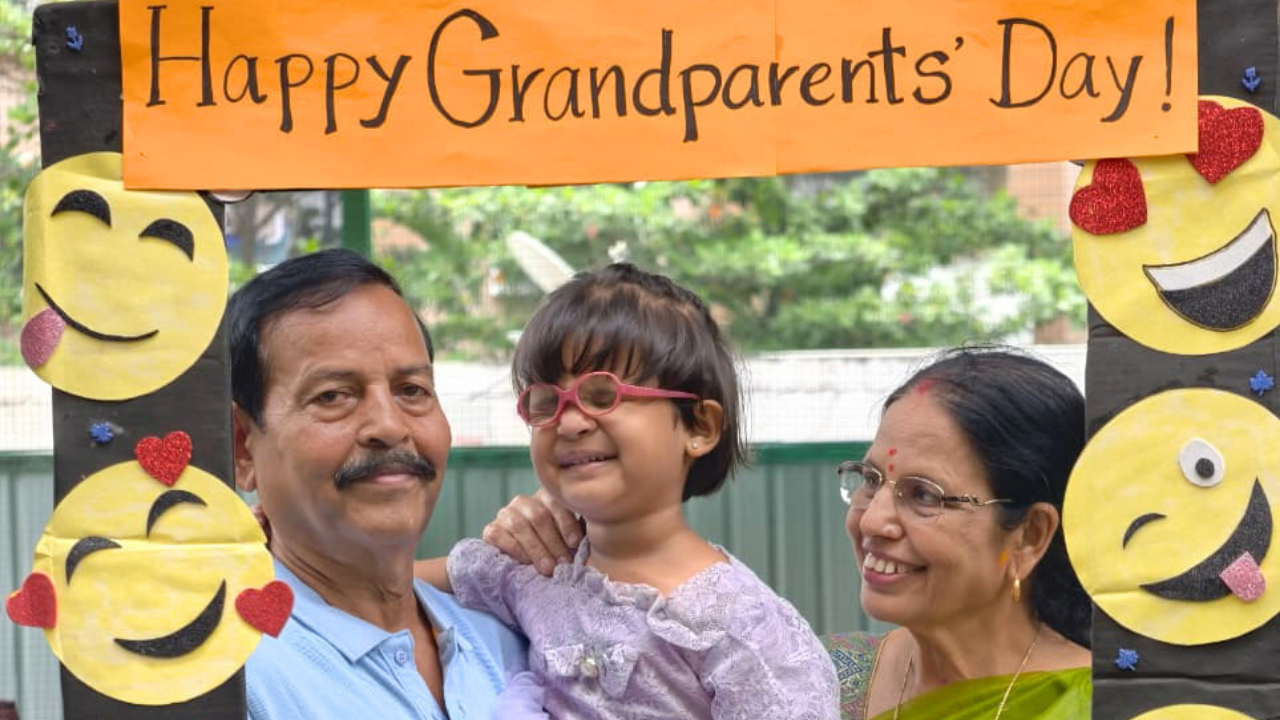
Aeny’s grandparents have played an important role in her upbringing, supporting the family as she learns and explores.
For Lopamudra, having her parents beside her made a difficult phase a little more manageable. Her father would take Aeny to the park, talk to her, describe the world around her and encourage her to explore. Their presence also meant that Lopamudra could continue working while knowing that Aeny was surrounded by people she trusted.There were also strangers who offered prayers and good wishes when they learnt about Aeny. “Every prayer counts,” Lopamudra said. But not every comment was comforting.
‘People told me it was because of karma’
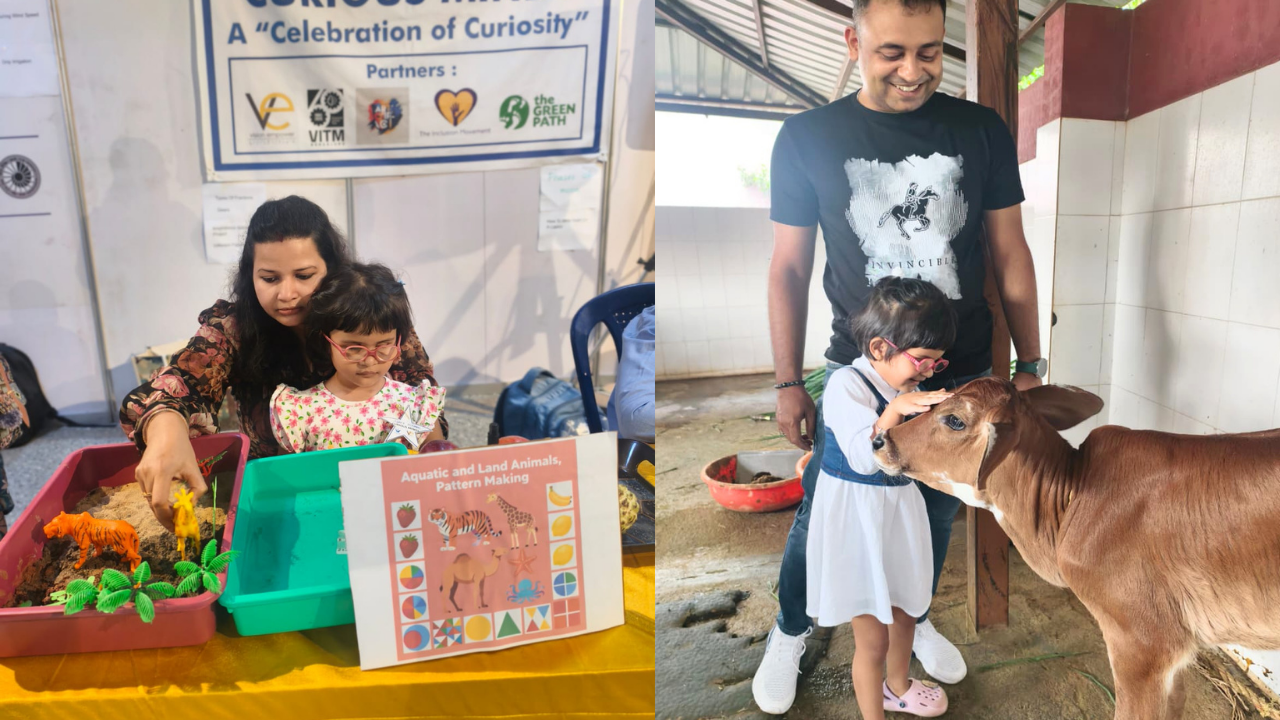
Aeny enjoys travelling and exploring new environments, with her family encouraging her to experience the world independently.
In the early years, when Lopamudra was still trying to understand what had happened to her daughter, some people told her that Aeny’s visual impairment was the result of “karma”- something she or her parents had supposedly done in a previous life.Others suggested visiting temples, performing pujas or following particular rituals to change the situation. For a frightened mother searching desperately for answers, such suggestions were difficult to dismiss. “I listened to people. I visited temples, performed pujas and tried different things for almost two years,” she said.It was not, she explained, because she wanted to blame anyone. It was because Aeny was her child and, at that point, Lopamudra was willing to try anything she believed might help.
Eventually, however, her thinking changed
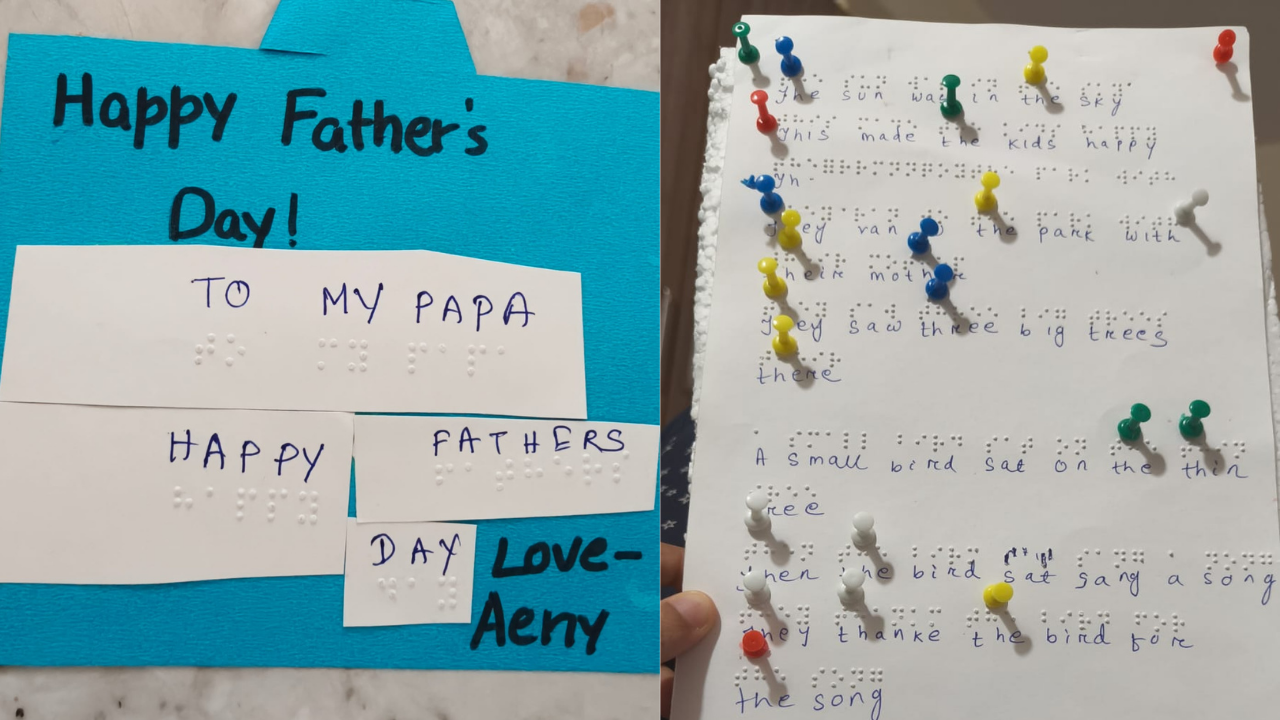
Aeny is learning Braille and independent living skills with support from Vividha Trust in Bengaluru.
She realised that looking for a reason to explain Aeny’s disability was taking her away from the question that mattered more: what could she do to help her daughter build a fulfilling and independent life? “Aeny didn’t need guilt, pity or explanations about why this had happened. She needed support, education, accessibility and people who believed in her,” Lopamudra said. “That was a turning point for me. I stopped asking, ‘Why did this happen to my child?’ and started asking, ‘What can I do to make sure my child gets the best possible life?’”That shift is visible in the way Aeny’s childhood has unfolded.She is learning Braille and independent living skills, attends activities designed to build confidence and independence, and enjoys cycling. She is learning piano and abacus and participates in events related to STEM. Karate has become another part of her journey. At just four-and-a-half, she earned an orange belt. For Aeny, these activities are not framed as limitations she must overcome. They are simply things she enjoys learning.As part of that effort to help Aeny become more independent, the family has also found support in Vividha Trust in Bengaluru. The organisation has been helping her learn Braille and develop independent living skills- tools that Lopamudra sees as important not just for Aeny’s education today, but for the independence she will need as she grows.Her mother says the family wants her to experience the world rather than grow up believing that disability should determine what she can or cannot attempt.
Bengaluru gave her support- but inclusion remains a struggle
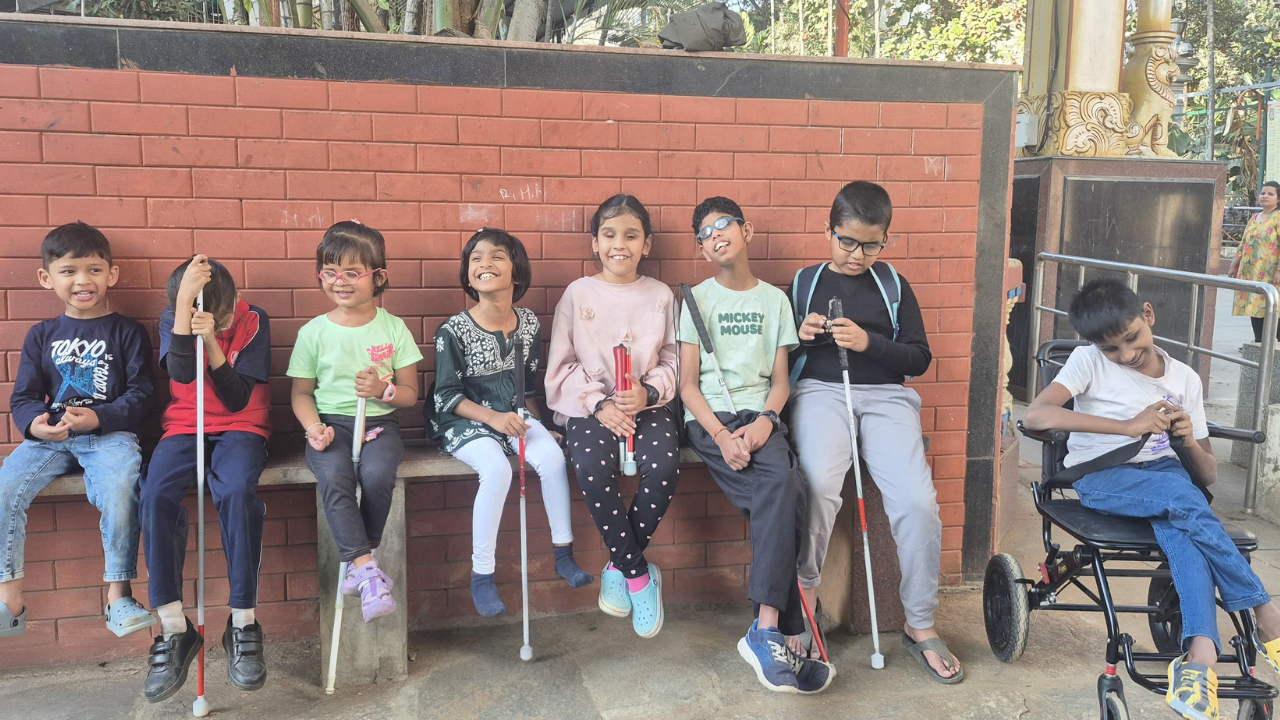
Lopamudra says finding an inclusive school remains a challenge, after the family approached more than 15 primary schools in Bengaluru.
Living in a Tier 1 city has given Aeny access to therapies, support networks, inclusive events and people who have helped the family navigate unfamiliar territory.But when asked if the city is genuinely accessible and inclusive for Aeny, Lopamudra says she wouldn’t call it so. As the mother of a specially-abled child, Lopamudra says Bengaluru is still far from being genuinely accessible and inclusive for children with disabilities.The biggest challenge came when the family began looking for a school. Lopamudra recalls approaching more than 15 primary schools in Bengaluru, including several well-known institutions, but was unable to secure admission for Aeny. In some cases, she says, admission was offered only on the condition that the family arrange a shadow teacher.For a child at the LKG level, she says, the financial burden can also be significant, with the family spending around Rs 3.2 lakh a year. Her concern is not simply about getting Aeny into a classroom. It is about finding a school that can support her as she grows. “No school has accessible devices for special-needs children,” she said, adding that she worries about what the future will look like as Aeny moves into higher classes.
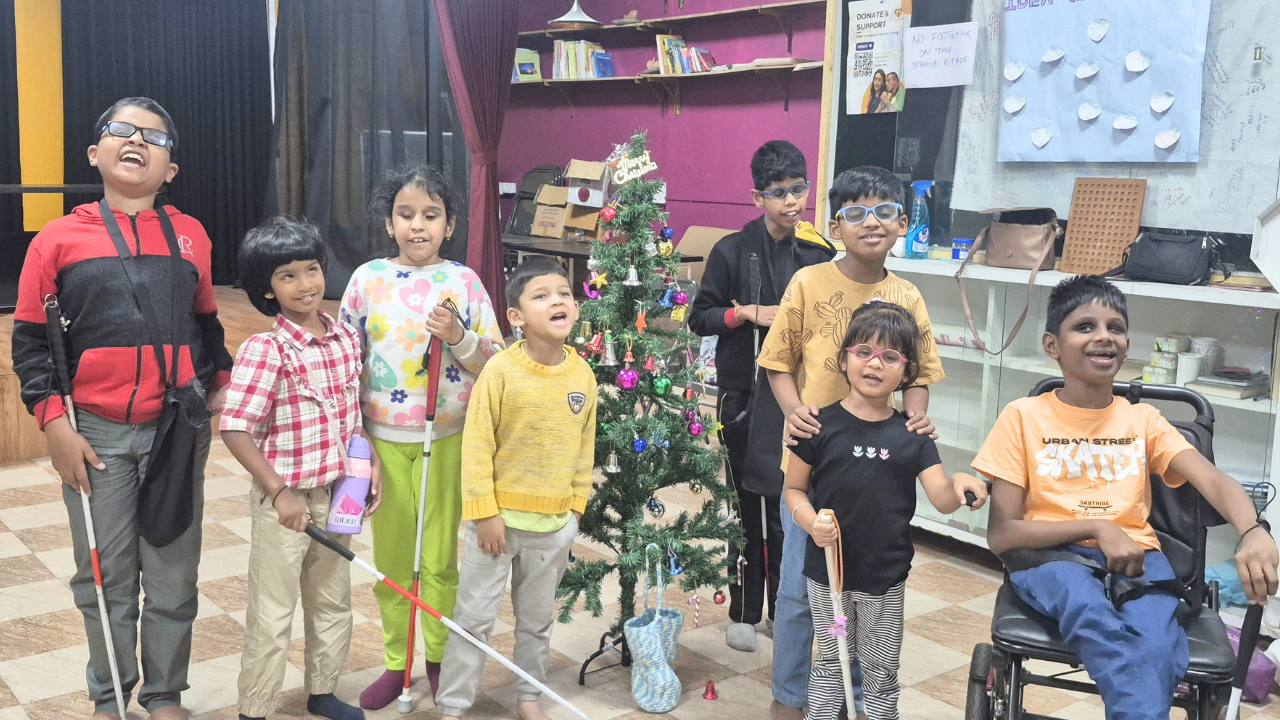
Aeny’s story highlights the importance of accessible education, learning support and equal opportunities for children with disabilities.
The concerns come against the backdrop of India’s Rights of Persons with Disabilities Act, 2016. Section 16 says educational institutions funded or recognised by the government and local authorities should provide inclusive education, including non-discriminatory admission, accessible facilities, reasonable accommodation and necessary individualised support.For Lopamudra, the issue goes beyond Aeny. She worries about the many children with disabilities who have the ability and potential to learn but continue to struggle to find schools that are willing and equipped to include them. A child’s visual impairment, she believes, should not become a reason to narrow their educational opportunities. What families need is not simply admission, but schools that have the accessible learning tools, trained support and understanding needed to help children participate and progress alongside their peers.For families like Aeny’s, however, the challenge is turning those principles into everyday reality. Lopamudra says there are many bright children with disabilities who continue to struggle to find schools equipped to meet their needs. “I am really worried about better schooling for her as she grows,” she said. “She is a really intelligent girl and the right path is required for her future.”
‘Our children don’t need sympathy’
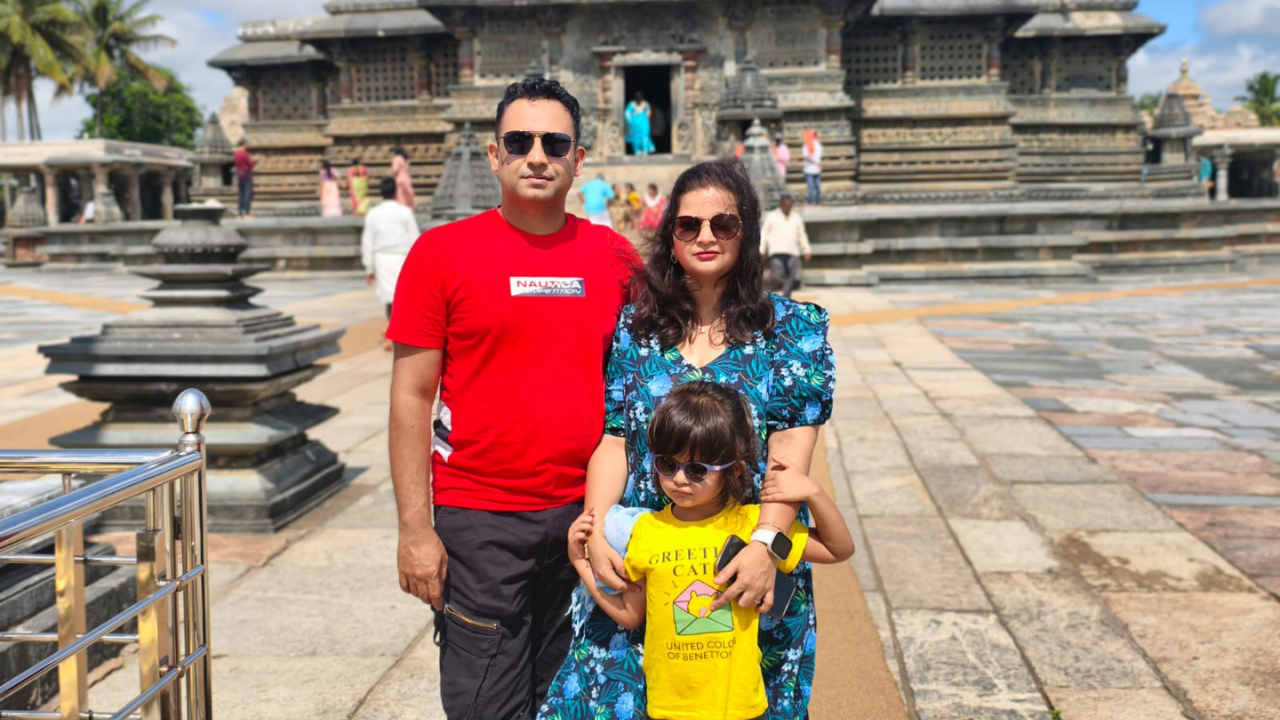
Aeny’s mother says children with disabilities need acceptance, accessibility and equal opportunities rather than sympathy.
If there is one thing Lopamudra wants other parents to know, it is that a diagnosis should never become a child’s identity. “Never let a diagnosis define your child’s dreams or their future,” she said. The journey, she acknowledges, can come with judgement, uncertainty and moments when parents question whether they are doing enough.Her advice is to notice the small victories.“Celebrate every small achievement, because what may seem like a small step to others can be a huge victory for your child,” she said. Most importantly, she wants children with disabilities to be given opportunities to become independent rather than being constantly protected or pitied. “Just believe in your child, give them opportunities to be independent, and never stop advocating for their right to be included,” she said.And perhaps that is the heart of Aeny’s story. She is not extraordinary because she is visually impaired. Nor does she need to be described only through what she cannot see. She is five. She is learning, travelling, cycling, practising karate, discovering music, asking questions and exploring the world around her.Her parents are simply asking that the world make room for her- not as an exception, not as an object of sympathy, but as a child who deserves the same chance to discover how far she can go. As Aeny’s mother puts it, “Our children don’t need sympathy. They need acceptance, accessibility, equal opportunities and the freedom to show the world what they can do.”