











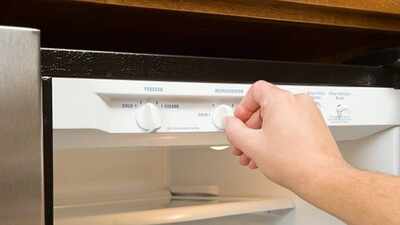
Most Indian kitchens have a fridge with a small dial marked with nothing more than a row of numbers, no actual temperature readout, and no clear indication of what “3” or “5” is actually supposed to mean inside the appliance. It’s a genuinely confusing system, and a lot of households end up guessing, nudging the dial up when milk starts souring faster than expected or down when vegetables come out looking suspiciously frosted. There is a real, correct target temperature behind all of this, and understanding it, along with how India’s seasons should change your settings, makes a genuine difference to both food safety and your electricity bill. Here’s how to actually get it right.
The actual target temperature you’re aiming for
Regardless of what the dial says, the number that actually matters is the real internal temperature, and food safety guidance is fairly consistent on this across manufacturers. The refrigerator compartment should stay somewhere between 1°C and 4°C, with many experts pointing to around 2°C to 3°C as the genuine sweet spot for keeping food fresh without wasting energy. The freezer, separately, should sit between -18°C and -20°C. Crossing above 4°C in the fridge matters more than it might seem, since that’s roughly the threshold above which bacteria like Salmonella and E. coli begin multiplying at a noticeably faster rate, turning a food safety non-issue into a real risk.
Why your fridge’s dial numbers don’t mean what you think
Here’s the detail that trips up most people. On most manual-dial refrigerators, the numbers don’t directly correspond to a specific temperature at all, setting your fridge to “1” doesn’t mean the inside will sit at exactly one degree. Instead, these numbers typically represent power or cooling intensity levels, usually on a scale of 1 to 5 or 1 to 7, with the highest number meaning the strongest, most aggressive cooling rather than a literal reading. Worse, this convention isn’t even fully standardised; different brands and different models can interpret the same numbers differently, which is why checking your specific fridge’s user manual is genuinely worth the five minutes it takes.
Adjusting for India’s seasons
This is where Indian conditions genuinely change the advice compared to cooler climates. Because ambient kitchen temperatures swing so dramatically between a mild winter and a brutal summer across most of the country, the same dial setting simply can’t maintain the same internal temperature year-round, a fridge working against 40°C summer heat needs considerably more cooling power than one sitting in a cool winter kitchen. As a representative example, one major manufacturer’s guidance for a typical single-door refrigerator recommends keeping the dial around 1 to 2 during winter, shifting up to 3 to 4 through the monsoon, and pushing it to 5 to 6 during peak summer heat. The exact numbers will vary by brand, but the underlying principle holds everywhere: dial it down when it’s cool outside, and turn it up as the heat climbs.
Signs your setting is off
A few visible clues tell you fairly quickly if your current setting isn’t right. If milk sours faster than it should, vegetables wilt within a couple of days, or the fridge simply doesn’t feel properly cold when you open the door, the setting is likely too warm for current conditions and needs to go up a notch. On the other end, produce that’s freezing and turning mushy, drinks with ice forming inside sealed bottles, or a fridge running constantly and driving up your electricity bill are all signs the setting has drifted too cold, especially common if a summer setting gets left unchanged once the weather actually cools down.
A few habits that matter as much as the dial
Getting the temperature dial right only goes so far if everyday habits work against it. Overcrowded shelves block the airflow a fridge relies on to cool evenly, leaving some spots colder than others and some dangerously warmer. Placing hot food directly inside forces the whole compartment to work harder just to recover its baseline temperature, so letting food cool down first makes a genuine difference. Keeping the door closed as much as possible, and using designated drawers for fruits and vegetables rather than piling everything onto open shelves, rounds out the basics that keep a correctly set fridge actually performing the way it’s meant to.
Getting the setting right, season by season
None of this requires a smart fridge or an expensive upgrade, just an understanding that the dial isn’t a “set it and forget it” control the way it’s often treated. Checking your fridge’s manual for its specific number-to-cooling relationship, then adjusting it as the seasons shift between India’s winter, monsoon, and summer extremes, is genuinely one of the simplest, most overlooked ways to keep food both fresher and safer throughout the year.
Disclaimer:
This article is intended for general informational purposes only. Exact temperature settings and dial conventions vary by refrigerator brand and model. Refer to your appliance’s user manual for specific guidance, and consult a technician if your refrigerator is not maintaining a consistent, safe internal temperature.